Govee Bluetooth Low Energy Smart Thermo-Hygrometer Review
A 23.5 g Bluetooth temperature and humidity sensor that excels at home and gear-storage monitoring but isn't built for the trail.
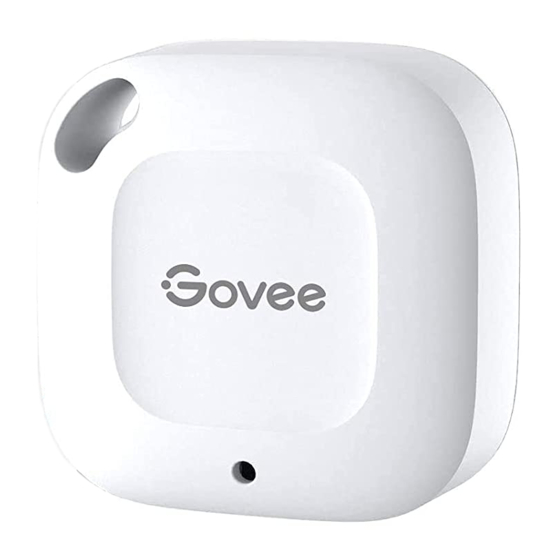
Overview
Govee’s Bluetooth Low Energy Smart Thermo-Hygrometer is a coin-sized sensor that streams temperature and humidity readings to a phone through the Govee Home app. At 23.5 g it weighs about as much as two AA batteries, and it costs little more than a restaurant sandwich. The trade-off is purpose: it was designed for living rooms, wine cellars and greenhouses, not for a pack’s hip belt pocket, so its value to a hiker lies mostly off the trail.
Key Specs
| Spec | Detail |
|---|---|
| Weight | 23.5 g |
| Connectivity | Bluetooth Low Energy |
| Range | 80 m / 262 ft, unobstructed |
| Battery | CR2477 button cell (built-in) |
| Temperature accuracy | ±0.3°C / ±0.54°F |
| Humidity accuracy | ±3% RH |
| Operating temperature | -20°C to 60°C (-4°F to 140°F) |
| Operating humidity | 0% to 99% |
| App | Govee Home (iOS and Android) |

Would the Bluetooth Low Energy Smart Thermo-Hygrometer earn its spot in your pack?
24 g · 0.8 ozAdd the Govee Bluetooth Low Energy Smart Thermo-Hygrometer to your Gear Closet and see exactly what it does to your base weight, then start packing for your next trip.
Free · No credit card · iOS, Android & web · Trusted by 3,000+ backpackers
Performance
Accuracy. Govee rates the sensor at ±0.3°C and ±3% RH, which is the same spec sheet the company prints across much of its Bluetooth lineup, and owners generally find it holds up. One long-term user of a Govee Bluetooth unit reported readings that stayed spot-on against other thermometers without any calibration. A reviewer at Pocketables ran a Govee Bluetooth sensor against a decade-old Honeywell hygrometer and saw matching results. The app also lets owners apply a manual offset, handy for anyone with a reference instrument. Humidity at ±3% RH is typical for sensors in this price class, and it is more than good enough to tell a dry cabin from a damp one.
Response time. Owners note that readings take a few minutes to settle when the sensor moves between rooms. Expect the same lag when going from a warm car to a cold porch. This is a monitoring tool, not an instant-read thermometer.
Range and connection. The rated 80 m is a line-of-sight figure. Walls, a closed car door or a body between phone and sensor will cut it sharply. Reviewers of Govee’s Bluetooth-only sensors make the same practical point: this class of device only helps when the phone is nearby. It does not warn the user when the connection drops, and phones that aggressively kill background apps can silence alerts without notice. Govee sells a separate gateway that bridges its Bluetooth sensors to Wi-Fi for remote viewing, but that adds cost and a power outlet, which rules it out for field use.
Data and app. The Govee Home app logs readings, plots them, and sets alert thresholds for out-of-range temperature or humidity. Govee’s Bluetooth sensors typically keep about 20 days of graphs in the app and allow export of longer histories. Owners also report that the family works with Home Assistant over Bluetooth, which suits tinkerers who want a local log without the cloud.
Cold and heat. The -20°C to 60°C operating window covers a closed car in July and a tent vestibule in a hard freeze. Cold drains button cells faster, though, and the CR2477 is built in, so a dead battery means a dead sensor rather than a quick swap. Battery life figures for the broader Govee Bluetooth line run from about six months to a year or more, depending on model and conditions. No trail-specific endurance test of this unit has been published.
On the trail. There is no published water-resistance rating for this unit, and the listing makes no weatherproofing claim. Rain, condensation inside a pack and sweat all count as risks. Hikers who want a Govee sensor outdoors are better served by the company’s IP65-rated portable model, which ships with a lanyard and is marketed for camping. It is heavier, but it is built for the job.
Pros & Cons
Pros
- 23.5 g, small enough to drop into a gear bin or hang in a tent without noticing the weight
- ±0.3°C temperature accuracy is solid for a sensor at this price
- App offers alerts, graphs, data export and manual calibration
- Wide operating range, from -20°C to 60°C and 0–99% humidity
- Works with Home Assistant for local logging
Cons
- Needs a phone within Bluetooth range; no standalone readout is listed
- The built-in CR2477 battery is not meant to be swapped
- No stated water or dust resistance, so it is a risk in wet conditions
- Slow to settle after big temperature changes
- Alerts depend on the app staying alive in the background
- Adds weight and a phone dependency for little benefit on a thru-hike
Who Should Buy This
This sensor suits the gear-obsessed hiker who stores down quilts, tents and food-grade supplies at home and wants an alert if humidity creeps up. It also suits anyone who wants a small, cheap logger for a van, a car, a hut or a basement. For a base-weight counter, it can also serve as a short-trip curiosity, such as checking tent microclimate on a weekend, where 23.5 g won’t ruin anyone’s spreadsheet.
Thru-hikers looking for a dependable trail thermometer should look elsewhere. A zipper-pull thermometer weighs a fraction as much, needs no phone and doesn’t care about a rainstorm. Hikers who want a weather-ready sensor should consider Govee’s IP65-rated outdoor model instead. Anyone who wants remote alerts away from home will need a gateway and a Wi-Fi connection, and at that point the money is better spent on a Wi-Fi sensor.
Verdict
The Govee Bluetooth Low Energy Smart Thermo-Hygrometer is a good, accurate and cheap indoor sensor, and it belongs in a hiker’s life only as a home or storage tool. On the trail it asks for a phone, offers no listed weather protection and does little a zipper-pull thermometer can’t. Buy it for the garage and the gear closet, not for the long-distance carry.