Google Pixel 10 Pro Fold Review
A field-focused look at whether Google's IP68 foldable makes sense as a hiking companion, or whether it should stay in the glovebox.
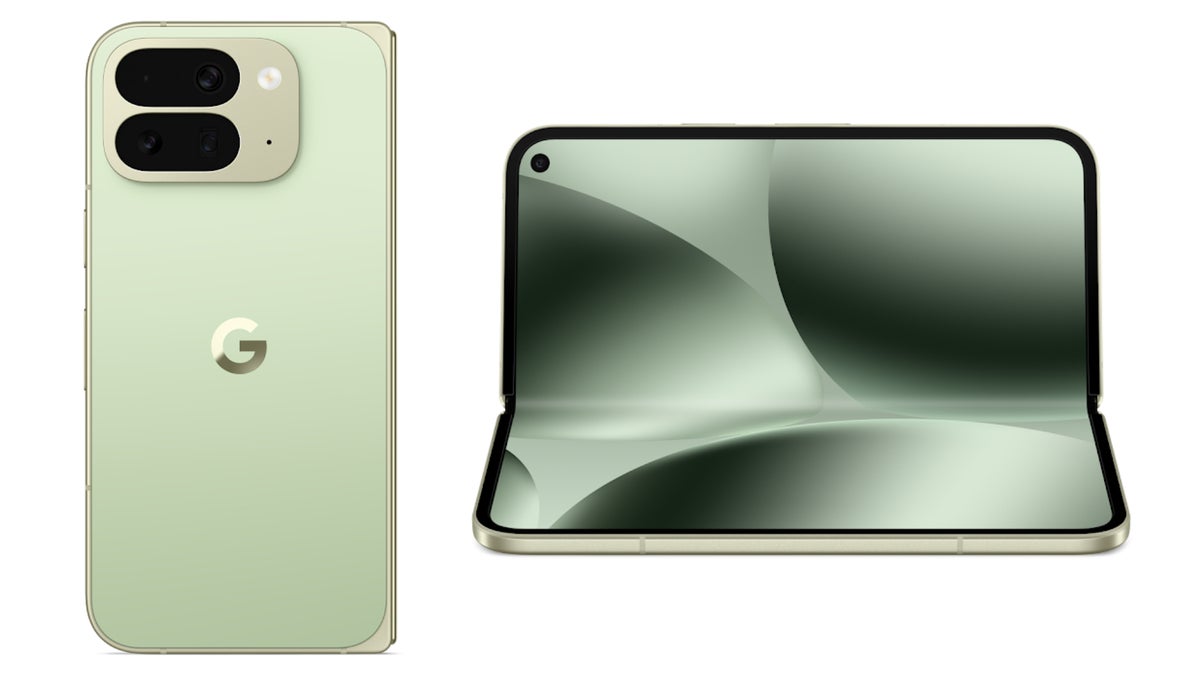
Overview
The Pixel 10 Pro Fold is Google’s third-generation book-style foldable — an 8-inch tablet that folds down into a 6.4-inch phone, running the Tensor G5 chip and, notably, the first IP68 dust-and-water rating on any foldable. I’m reviewing it here through a backpacking lens: is this a phone you’d actually want as your GPS, camera, and comms device on trail, or is it strictly a couch-and-coffee-shop gadget? Short answer: it’s a fascinating piece of engineering, but there are real reasons to hesitate before it becomes your only device 40 miles from the trailhead.
Key Specs
| Spec | Detail |
|---|---|
| Weight | 258 g (9.1 oz) |
| Chipset | Google Tensor G5 |
| RAM | 16 GB |
| Storage | 256 / 512 / 1024 GB |
| Battery | 5,015 mAh, 24+ hrs claimed |
| Inner display | 8” Super Actua Flex OLED, 2076×2152, 1–120Hz LTPO |
| Outer display | 6.4” Actua OLED, 1080×2364, 60–120Hz |
| Ingress protection | IP68 (dust + water) |
| Main camera | 48MP, OIS |
| Ultrawide | 10.5MP |
| Telephoto | 10.8MP, 5x optical / 20x Super Res |
| Wired charging | 30W (up to 39W in some tests) |
| Wireless charging | Qi2 / Pixelsnap, 15W |
| OS | Android 16 |
| Colors | Moonstone, Jade |
Would the Pixel 10 Pro Fold earn its spot in your pack?
258 g · 9.1 ozAdd the Google Pixel 10 Pro Fold to your gear closet and see exactly what it does to your base weight — then build your next packing list around it. Free, in about two minutes.
Free · No credit card · iOS & Android · Trusted by 3,000+ backpackers
Performance
Durability — the headline, and the asterisk. Google leaned hard on the IP68 rating in its marketing, and on paper it’s a genuine first: the redesigned hinge gave Google room to fit in a larger 5,015mAh battery and achieve an IP68 rating for dust and water resistance, making the Pixel 10 Pro Fold the first foldable phone to carry that certification. Google’s engineering writeups describe a gearless, CAM-based hinge using stainless steel that’s meant to seal more effectively than traditional geared designs.
That said, teardown/stress testing painted a messier picture. JerryRigEverything’s bend test made the phone snap at one of its antenna lines, which damaged the device’s battery, causing a short circuit and an intense thermal reaction — the first battery explosion in the decade-long history of durability tests on JerryRigEverything’s YouTube channel. The same test also found that Beyond the battery failure, Nelson also questioned the IP rating of the Pixel 10 Pro Fold, which failed the JerryRigEverything sand test. Despite the IP68 rating, fine particles made their way into the hinge, leading to crunching sounds. Nelson concluded that probably only the display is dust-proof, but not the hinge.
To be fair, that’s an extreme, deliberately abusive test, and at least one repair outlet pushed back on the fire scare specifically — the folks over at iFixit told The Verge that this isn’t a need to worry, because the incident occurred because his battery was not low enough before completing his tests, and a battery percentage below 25% would be considered safe before tinkering. In a long-term follow-up, one reviewer noted the hinge feels very good, and even after thousands of folds, it feels reassuringly firm and precise — but tellingly, they also still worry about the mechanism and have avoided using the Pixel 10 Pro Fold at places like the beach, despite the improved IP68 rating. That’s the practical takeaway for backpackers: the IP68 rating is real and a genuine first for the category, but even people who cover this phone for a living aren’t fully trusting it around sand and grit yet. If you’re the type who wants a phone to survive a dusty desert section or a dunk in a creek without a second thought, I’d still baby this one rather than treat it like a rugged phone.
Battery life on trail. This is where the Fold actually earns some backpacking credibility. Google claims at least 24 hours of battery life in regular use, and up to 84 hours when using Extreme Battery Saver, and independent testing backs up a real-world improvement over the Z Fold 7: Tom’s Guide measured 12:16 battery life versus 10:44 for the Z Fold 7 in their web-surfing benchmark. One long-term reviewer said battery life was hard to kill in a single day — I typically unplugged around 7am, and then by the time I go to bed around 11pm, I was typically around 20-30%, though they flagged that battery life really differs based on how you use the Fold — if you use the outer screen a lot, it will last much longer, compared to using the inner display a lot more. For navigation apps like Gaia GPS or AllTrails, that means running everything off the 6.4-inch cover screen instead of unfolding to the big display will meaningfully extend your days between charges. Charging is quick when you do need it — Google claims 50% in 30 minutes, and the 39W wired ceiling plus Qi2/Pixelsnap wireless support means a small power bank tops it up fast at camp.
Camera as a trail tool. The 48MP main/10.5MP ultrawide/10.8MP telephoto (5x optical, 20x digital) array is solid for a foldable but noticeably a step below the standalone Pixel 10 Pro’s camera hardware. Consumer Reports rated it very good — the main camera is among our top performers for shooting stills, and Tom’s Guide preferred its shots over the Z Fold 7’s in several tests. A recurring theme across reviews, though, is that it’s a “Pro” phone without fully Pro-tier optics — one long-term reviewer put it plainly: Google’s folding phone camera systems are right in the middle ground between the A-series, base model, and way below the Pro tier despite having “Pro” in the name. For trip photos and trail-map screenshots it’s plenty; if landscape photography is your priority, a standalone Pixel 10 Pro or dedicated camera will still outresolve it.
Weight and bulk. At 258g, this is nearly double the weight of a typical ultralight-friendly phone (an iPhone 15 is roughly 171g), and Consumer Reports’ lab measurements confirm it’s heavier than most phones on the market. For a solo ultralight setup where every gram in your pocket or hip belt counts, that’s a real consideration — this isn’t a phone you forget you’re carrying.
Pros & Cons
Pros
- First foldable with a true IP68 rating, and the hinge feel is reportedly firm and precise even after heavy use
- Genuinely strong battery life for a foldable — beats the Z Fold 7 in independent testing and easily gets through a full day for most users
- Bright, sharp displays on both inner and outer screens, useful for reading maps or checking trip photos in daylight
- Fast wired (up to ~39W) and Qi2/Pixelsnap wireless charging
- Camera quality is very good for stills, even if it undercuts the standalone Pixel 10 Pro
Cons
- Durability testing raised real questions about hinge sealing against dust/sand and a scary (if disputed) battery failure under stress
- At 258g, it’s meaningfully heavier and bulkier than both slab phones and rival foldables like the Z Fold 7
- Camera hardware is a notch below the “Pro” name would suggest
- $1,799 starting price is a lot to risk on a device you’re taking into the backcountry
- Battery life varies a lot depending on whether you’re using the outer or inner screen — heavy inner-display navigation use will drain it faster than the headline numbers suggest
Who Should Buy This
This is a phone for someone who wants one device to do everything — a big-screen map and photo-editing tablet that folds into a pocketable phone — and who’s willing to pay a premium and accept some fragility risk for that versatility. It makes more sense for day hikes, car camping, or trips where you’re not fully off-grid and can baby the phone a bit, than for a multi-week thru-hike where a cracked hinge or dead battery has no easy fix. If your priority is a bombproof, lightweight backcountry communicator, a dedicated satellite messenger plus a cheaper, lighter slab phone will serve you better.
Verdict
The Pixel 10 Pro Fold is a genuinely impressive piece of engineering — first IP68 foldable, best-in-class foldable battery life, and a big, bright screen that’s legitimately useful for maps and photo review. But the durability story is more marketing claim than proven fact so far, and the weight and price put it firmly in “nice to have at basecamp” territory rather than “trust it with your life in the backcountry.” I’d rate it a 6.5/10 as a piece of outdoor gear specifically — as a everyday foldable it’s more competitive, but the backpacking use case exposes its weak points.