Garmin fēnix 6 Review
The Garmin fēnix 6 is a rugged 83 g multisport GPS watch with two weeks of smartwatch battery and 36 hours of GPS, at the cost of weight and middling GPS accuracy.
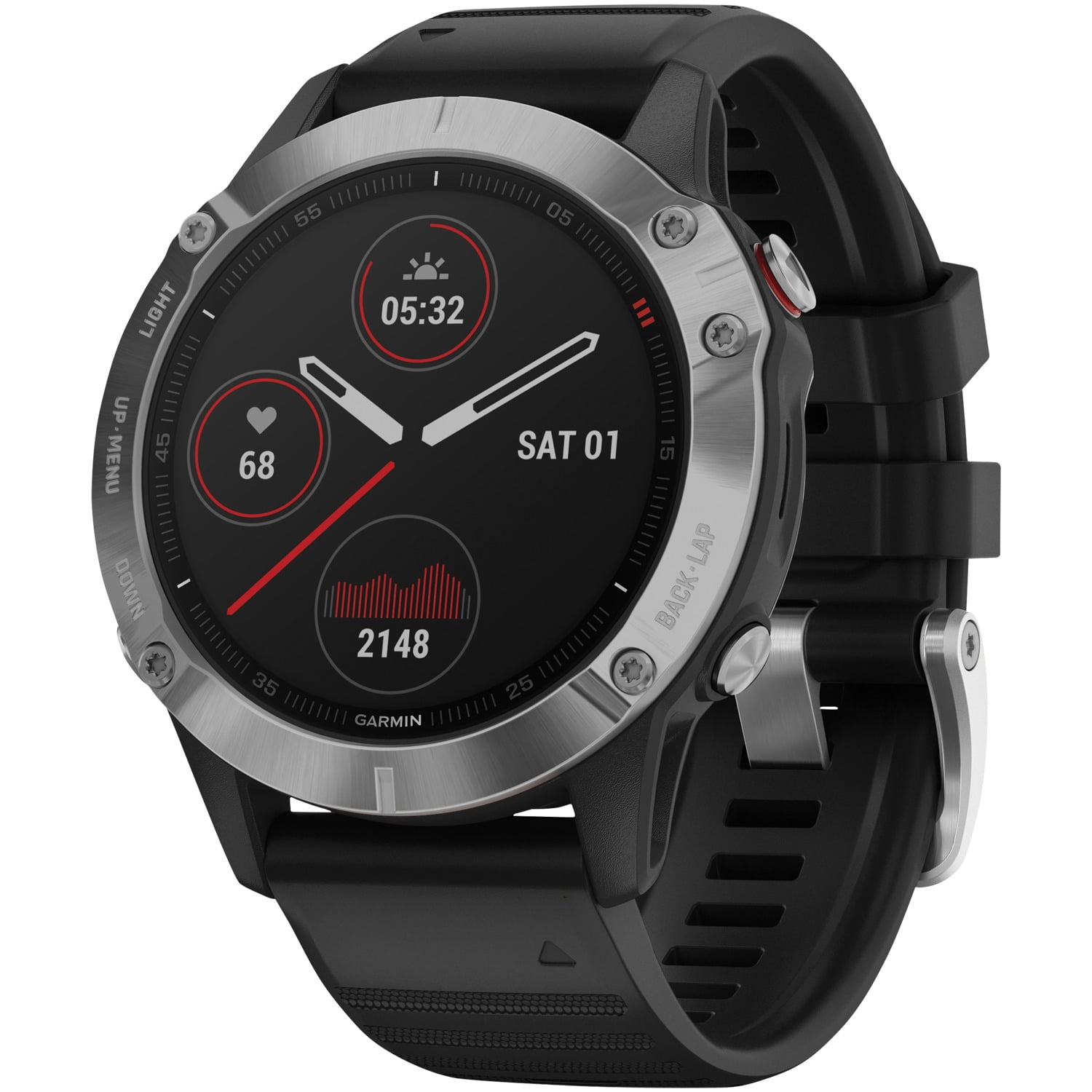
Overview
The fēnix 6 is Garmin’s 47 mm multisport GPS watch, built for people who want a single device to record a trail run, a 10-day section hike and a night of sleep without hunting for a charger. It was the top of Garmin’s lineup until the fēnix 7 and Epix arrived in 2022. The trade-off is familiar to anyone who has worn one: excellent battery management and a rugged case, paid for in wrist weight and a menu system with a lot of layers.
Key Specs
| Spec | Detail |
|---|---|
| Weight | 83 g |
| Case diameter | 47 mm |
| Display | 1.3 in, 260×260, color Memory-in-Pixel |
| Battery (smartwatch mode) | Up to 14 days |
| Battery (max battery mode) | Up to 48 days |
| Battery (GPS) | Up to 36 hours; up to 72 hours in Max Battery GPS mode |
| Water rating | 10 ATM |
| Satellite systems | GPS, GLONASS, Galileo |
| Heart rate | Wrist-based, with Pulse Ox |
| Sports modes | 31 |
| Bands | Interchangeable 22 mm |

Would the fēnix 6 earn its spot in your pack?
83 g · 2.9 ozAdd the Garmin fēnix 6 to your Gear Closet and see exactly what it does to your base weight, then start packing for your next trip.
Free · No credit card · iOS, Android & web · Trusted by 3,000+ backpackers
Performance
Battery. This is the fēnix 6’s calling card, and reviewers who ran the numbers found Garmin’s claims largely honest. Wareable’s testers saw no worrying drop-offs against the rated 14 days of smartwatch use and 36 hours of GPS. Running Max Battery GPS mode stretches tracking to 72 hours, and the Expedition mode, ported over from Garmin’s MARQ line, wakes the watch once an hour to take a position fix, which can stretch to roughly 28 days of track points. The Power Manager menu lets users pick which hungry features to shut off (heart rate, music, notifications, GPS) and shows remaining life in days rather than a percentage. A full charge from flat takes under three hours, according to TechRadar. For a four-to-five-day resupply leg, the watch can record every hike day and still have charge to spare. For a multi-week stretch with no outlet, it will need a power bank or a mode downgrade.
GPS. Lock-on is fast. TechRadar’s testers saw a fix within seconds of starting an activity, and another reviewer reported that a signal almost always arrives in under 30 seconds. Accuracy is where opinions split. DC Rainmaker found it mostly good and excellent in the high alpine terrain of the French Alps, including near sharp cliffs and in denser woods. The5kRunner put it on par with the previous fēnix 5 Plus: good, but not the pick for runners chasing precision. Owners on Garmin’s forums have posted more critical accounts, including tracks drifting off the road, jumpy barometer readings, and a recommendation to switch off barometer auto-calibration. Those reports are a minority, but they are consistent enough to note. Hikers following a trail will rarely notice. Anyone who needs exact pace on a track will.
Heart rate and health tracking. The wrist sensor works underwater, so swimmers no longer need a chest strap. The Pulse Ox reading is meant to help with altitude acclimatization, and VO2 Max estimates feed Garmin’s training metrics. The5kRunner rated optical heart rate accuracy as “OK” rather than great, which is typical of wrist sensors in this class.
Display and controls. The Memory-in-Pixel screen is always readable in direct sun and sips power, though reviewers found its colors flat compared with an AMOLED panel. There is no touchscreen, and owners say the five buttons are an advantage: they work with wet or gloved hands and give positive feedback. Navigation through the menus takes some learning.
Build. The fiber-reinforced polymer case with steel bezel is rated to 10 ATM. Outdoor reviewers called the design solid and robust, if not stylish. The Gorilla Glass lens and 22 mm quick-release bands round out a package that owners describe as rugged enough to stop thinking about.
Weight. At 83 g, it is not a gram-counter’s watch. It sits well above minimalist trackers, and the 47 mm case is about 15 mm thick, which can snag on sleeve cuffs and become noticeable overnight. Garmin’s smaller 6S is the lighter option in the family.
Pros & Cons
Pros
- Up to 14 days in smartwatch mode and 48 days in battery saver mode
- 36 hours of GPS, extendable to 72 hours in Max Battery GPS mode
- Power Manager gives control over what drains the battery
- Quick GPS acquisition and multi-constellation support
- Physical buttons work wet or gloved
- 10 ATM water rating and a sturdy case
- Wrist heart rate works while swimming
Cons
- 83 g is heavy for ultralight use
- GPS accuracy trails the best trackers, and some owners report drift
- Menu system is deep and takes time to learn
- Flat, uninspiring screen colors next to AMOLED rivals
- Few new features over the fēnix 5 Plus, per TechRadar
- Proprietary charging cable
Who Should Buy This
The fēnix 6 suits the hiker or trail runner who wants one watch for everything: week-long section hikes, weekend runs, training metrics and sleep data, with enough battery to ignore it for days. It is also a strong pick for buyers who prefer buttons to a touchscreen. Anyone counting every gram on the wrist, or a runner who needs track-grade pace precision, should look elsewhere. Thru-hikers on 10-plus-day stretches without resupply should also plan on carrying a charging solution or choosing a solar variant.
Verdict
The fēnix 6 remains a capable, durable outdoor watch whose battery management is its best feature. Its weight and merely good GPS accuracy keep it from being the right tool for ultralight purists, but for general backpackers who want training data and long battery life in one case, it earns a solid recommendation.