BOOX Go 7 Review
A compact Android e-reader with page-turn buttons and stylus support that trades battery life and polish for open-ecosystem freedom.
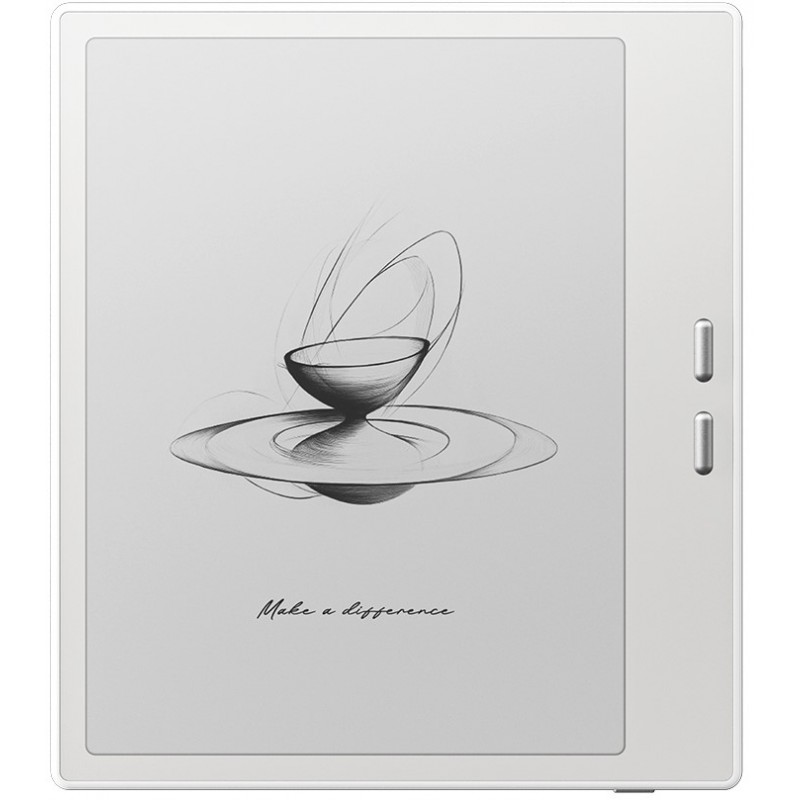
Overview
The BOOX Go 7 is a 7-inch, Android-based e-reader aimed at people who are done being locked into one bookstore’s ecosystem. It’s not really trying to be a distraction-free reading appliance like a Kindle — it’s a genuinely open device that happens to be shaped like one, with full Google Play access, physical page-turn buttons, and enough horsepower to run Libby, Kobo, Kindle, and BookFusion apps side by side. For backpackers and thru-hikers, that combination matters: one device replaces however many reading apps you’d otherwise juggle on a phone.
Key Specs
| Spec | Detail |
|---|---|
| Weight | 195 g (6.9 oz) |
| Screen | 7” E Ink Carta 1300, 1680 x 1264 (300 PPI) |
| OS | Android 13 |
| CPU | Octa-core |
| RAM / Storage | 4GB / 64GB (expandable via microSD) |
| Connectivity | Wi-Fi + Bluetooth 5.1 |
| Front light | Yes, warm/cold adjustable |
| Stylus | BOOX InkSense / InkSense Plus (sold separately) |
| Battery | 2,300 mAh Li-ion |
| Dimensions | 156 x 137 x 6.4 mm |
| Water resistance | None |
Would the Go 7 earn its spot in your pack?
195 g · 6.9 ozAdd the BOOX Go 7 to your gear closet and see exactly what it does to your base weight — then build your next packing list around it. Free, in about two minutes.
Free · No credit card · iOS & Android · Trusted by 3,000+ backpackers
Performance
Display and reading experience. The Carta 1300 panel is the standout feature here. The Go 7 boasts a Carta 1300 monochrome display with a resolution of 300 PPI, offering sharp text clarity that mimics traditional paper. Multiple reviewers echo that the panel handles standard e-book and comic reading well, with most digital content occupying the entire screen with minimal negative space, and flipping pages ultra-fast. That said, it’s not flawless — one reviewer found a fantastic design hampered by a shadow that runs the length of the screen, with uneven screen lighting that impacts the experience, likely tied to the front light’s diffusion at the edges. PDF handling is a weaker point: the 7-inch screen doesn’t perform exceptionally well when reading PDF files, which matters if you’re planning to load trail guides or topo PDFs rather than straight e-books.
Build and ergonomics. At 195g and 6.4mm thick, this is genuinely one of the lighter e-ink devices on the market. One long-term reviewer noted it’s the lightest e-ink tablet they’d ever reviewed, making it very comfortable to hold with one hand for long periods. The offset bezel with physical page-turn buttons draws obvious comparisons to the old Kindle Oasis design, and reviewers consistently call those buttons a highlight of the reading experience.
Performance and multitasking. As a full Android device, the Go 7 needs real processing power to stay usable, and it seems to deliver. The Go 7 packs a Snapdragon octa-core processor and 4GB of RAM — serious power for an E-Ink device that stays fast, responsive, and handles multitasking well, without performance issues. That’s a meaningful upgrade over older Boox devices that could feel sluggish switching between reading apps.
Battery life — the weak spot. This is where nearly every review lands on the same complaint. With a 2,300mAh battery and full Android OS, you’ll likely need to charge every 1–2 days with heavy use — far from the weeks-long battery life of traditional e-readers. TechRadar’s testing flagged the same issue, listing disappointing battery life and the lack of waterproofing as its main complaints. If you’re used to a Kindle or Kobo lasting a week or two per charge, this is a real adjustment — and a real liability on a multi-day trip without reliable charging.
Writing experience. The Go 7 supports Onyx’s InkSense stylus (sold separately) and includes a full notes app, but reviewers are lukewarm on how it actually feels to write with. One reviewer summed it up as an excellent little e-reader, but the writing experience is poor, citing a sub-par tactile feel and small canvas. If note-taking is your primary use case, look at Boox’s dedicated Note-series devices instead — the Go 7 treats the stylus as a bonus feature, not its main event.
Software and learning curve. Because it’s full Android with Boox’s custom E Ink Control Center layered on top, there’s more to learn than a typical e-reader. Reviewers across the board mention a steeper learning curve and a somewhat cluttered menu system, though this eases with firmware updates.
Pros & Cons
Pros
- Genuinely lightweight (195g) and thin (6.4mm), comfortable for one-handed reading
- Sharp 300 PPI Carta 1300 display for text and line art
- Full Android 13 with Play Store access — run Kindle, Kobo, Libby, and more on one device
- Physical, customizable page-turn buttons
- 64GB storage plus microSD expansion
- Snappy octa-core performance, no noticeable lag switching apps
Cons
- Battery life is the biggest complaint — expect daily or near-daily charging with regular use
- Stylus sold separately, and the writing experience itself is considered mediocre
- No waterproofing, a real concern for backpacking use
- PDF rendering on the 7” screen isn’t ideal for trail maps or guidebooks
- Some units show uneven front-light diffusion/shadowing
- Steeper software learning curve than a closed ecosystem reader
Who Should Buy This
The Go 7 makes the most sense for hikers who already have a sprawling digital library spread across Kindle, Kobo, and library apps like Libby, and who’d rather carry one lightweight device than several. It’s also a reasonable pick if you want light note-taking or annotation on the trail without buying a full-size Boox Note tablet. If you just want to read books and want the best possible battery life for a long resupply stretch, a dedicated Kindle or Kobo will serve you better and require far less thought about charging logistics.
Verdict
The BOOX Go 7 is a compelling idea — an open, Android-powered e-reader in genuinely ultralight, pocketable hardware — let down mainly by battery life that doesn’t match the multi-week expectations backpackers have for e-ink devices. For a car-camping bookworm or day-to-day reader who charges nightly anyway, it’s an easy 8. For a thru-hiker counting on long stretches between towns, the charging demands knock it down to a solid but conditional 7.2 out of 10.