Apple Watch Ultra Review
A hands-on look at the original Apple Watch Ultra for hikers and backpackers, weighing its GPS, safety features, and battery life against dedicated outdoor watches.
Overview
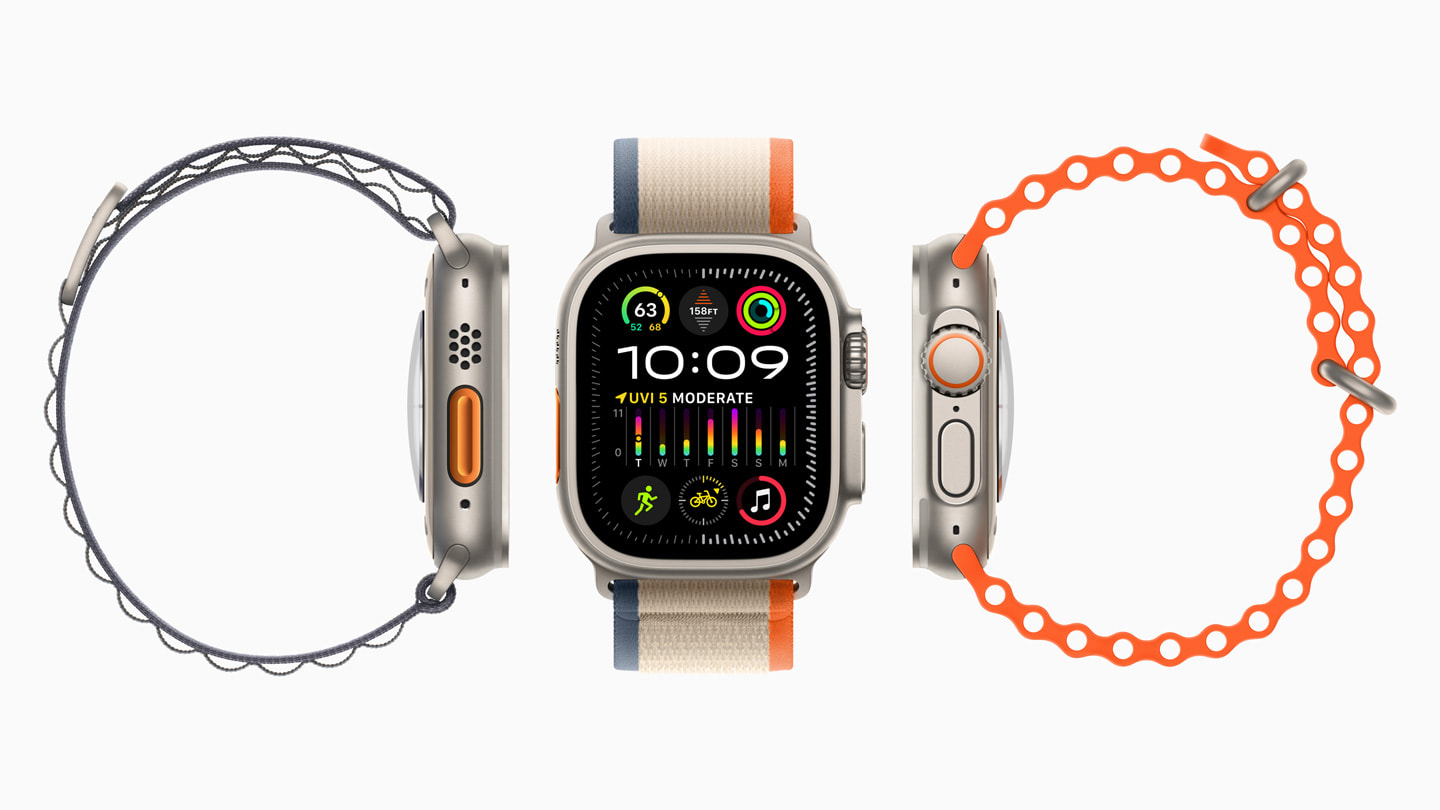
The Apple Watch Ultra is Apple’s first outdoor-focused smartwatch, built around a 49mm titanium case, a brighter always-on display, and a customizable Action Button. It’s aimed at trail runners, hikers, divers, and anyone who wants a single device that handles daily smartwatch duties and doubles as a rugged GPS tool on trail. For backpackers specifically, it’s best thought of as a very capable day-hike and short-trip companion rather than a true multi-day expedition watch — more on that below.
Key Specs
| Spec | Detail |
|---|---|
| Case size | 49mm |
| Weight | 61.3 g (case only, titanium) |
| Chip | Apple S8 |
| Storage | 32 GB |
| Display | 1.92 in, LTPO OLED, always-on |
| Water resistance | 100m (ISO 22810) |
| Battery life | 36 hours (normal use) |
| Durability rating | MIL-STD-810H |
| Connectivity | GPS + Cellular |
| Release year | 2022 |

Would the Apple Watch Ultra earn its spot in your pack?
61 g · 2.2 ozAdd the Apple Watch Ultra to your Gear Closet and see exactly what it does to your base weight, then start packing for your next trip.
Free · No credit card · iOS, Android & web · Trusted by 3,000+ backpackers
Performance
Battery life is the whole story here, for better and worse. Apple rates the original Ultra at 36 hours of normal use, and reviewers who took it on multi-day trips generally confirm that’s realistic if you’re not running GPS tracking the entire time. Outdoor Gear Lab tested the Ultra on a 3-day backpacking trip and recorded 9 hours of continuous workout tracking before the battery ran out — which tells you the real constraint isn’t “can it survive three days on your wrist,” it’s “can it survive three days of actively recording a hike.” If you want it running Backtrack or a workout session non-stop over a multi-day trip, you’re going to be reaching for a power bank well before day three. Low power mode helps stretch things, but Outdoor Gear Lab found it detracts from the benefits of the device, leaving it feeling more of a liability than an enhancement to the outdoor experience. On a typical day hike, US Mobile’s tester found about 12-13 hours of activity tracking before needing a charge, which comfortably covers a long day but not back-to-back big days without a recharge.
GPS and navigation are genuinely strong for a smartwatch. The dual-frequency GPS system holds up well in tricky terrain — TechRadar called out GPS tracking up there with the best as one of the watch’s clear pros. Where the original Ultra falls short is dedicated offline topo mapping; TechRadar noted an odd lack of on-device mapping for when you’re out on a hike or run at launch. That gap has since been addressed through third-party apps like AllTrails and WorkOutDoors, which add real turn-by-turn navigation and detailed topo layers the stock Compass app doesn’t provide on its own.
Durability holds up to real trail abuse. One hiker who put the Ultra through hundreds of miles reported that even after trekking hundreds of miles, its bright screen stayed pristine, and those oversized buttons were a breeze to use. The one annoyance worth flagging: with long sleeves or wet cuffs, the oversized buttons and screen can register accidental taps — the same reviewer suggested if you wear long sleeves, the buttons can accidentally be pressed. Try switching the watch to your right wrist or flip the screen around.
Safety features are the standout for backcountry use. Fall detection, crash detection, the 86-decibel siren, and Emergency SOS via satellite (added on later iPhone/Ultra combos) give you a real safety net when you’re off-grid but still in cellular or satellite range. One backcountry skier and trail runner on a gear forum summed up the practical use case: I like having it for emergencies trail running / backcountry skiing. Can confirm that it calls out when I have big falls. Good safety when in range — pairing it with a dedicated satellite communicator or a Garmin for true out-of-range trips.
Compared to dedicated GPS/outdoor watches, the verdict from most testers is consistent. Outside’s reviewer, after six weeks of testing, concluded the Ultra falls short of top-end Garmin, Coros, and Suunto watches when it comes to longevity, which eliminates it from bigger adventures in the woods or mountains, whether you’re backpacking, hunting, backcountry skiing, or using it on some other multi-day journey. Outdoor Gear Lab landed in the same place, recommending it for those who can live with two-day battery life but pointing thru-hikers and expedition users elsewhere: if you are an ultra-athlete or someone that uses your watch for expedition use or finds yourself outside of service for extended periods of time, we’d recommend a high-level Garmin or Coros model. If you can live with two-day battery life, the Ultra is a great option.
Pros & Cons
Pros
- Bright, legible 1.92” always-on display, even in direct sun
- Dual-frequency GPS that holds its own against dedicated outdoor watches
- MIL-STD-810H durability and a titanium case that shrugs off real trail abuse
- Genuinely useful safety net: fall/crash detection, siren, Emergency SOS
- Full smartwatch functionality (messages, apps, payments, music) that a Garmin or Coros can’t match
- Action Button is a fast, glove-friendly way to start workouts or trigger features
Cons
- 36-hour rated battery life is closer to 9-13 hours of continuous GPS tracking in real-world multi-day use
- Low power mode meaningfully cripples GPS/HR update frequency and app functionality
- No native offline topo maps at launch — you need a third-party app like AllTrails or WorkOutDoors
- Heavier and bulkier on the wrist than a standard Apple Watch or most running watches
- Requires nightly (or near-nightly) charging, which conflicts with sleep tracking on longer trips
- Buttons can be triggered accidentally by wet or long sleeves
Who Should Buy This
The Ultra makes the most sense for hikers and backpackers who are already in the Apple ecosystem and want one watch that handles daily life, workouts, and day hikes, plus a real safety net for shorter overnight trips within cell or satellite range. If your trips regularly stretch past two days without a way to recharge, or you rely on detailed offline topo maps and multi-day battery as a baseline requirement, a Garmin Fenix/Enduro or Coros Vertix is the more honest tool for the job.
Verdict
The Apple Watch Ultra is the best smartwatch you can strap on for outdoor use, but it’s still a smartwatch first and a GPS/adventure watch second — the battery math simply doesn’t stretch to genuine multi-day backpacking without a power bank in your pack. For day hikes, weekend trips, and anyone who wants Apple’s ecosystem alongside solid trail safety features, it’s a 7/10. For dedicated thru-hikers and expedition users, save your money for a Garmin.