Apple AirTag Review
Apple's 11 g AirTag is a cheap, nearly weightless way to track a bag or bear canister, but it is not a GPS beacon and goes quiet far from other iPhones.
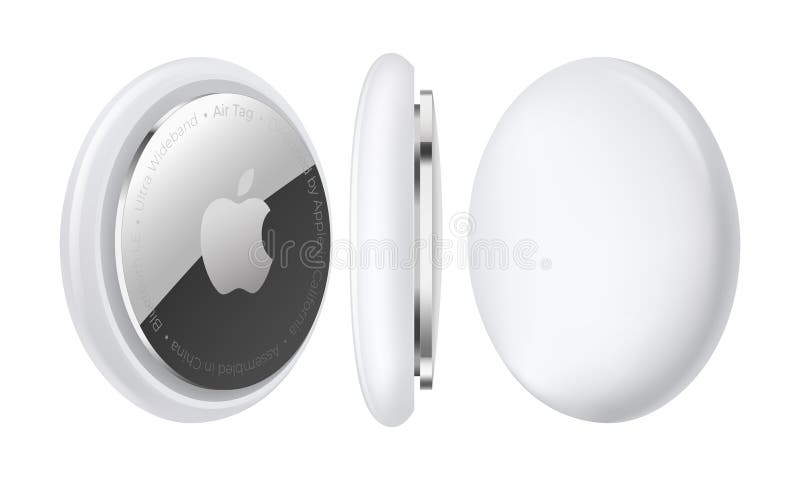
Overview
The AirTag is an 11 g coin-cell Bluetooth tag that reports its location through Apple’s Find My network. It is built for lost luggage, hiker-box mix-ups and forgotten keys, not for wilderness navigation. For a thru-hiker with an iPhone, it is a nearly weightless insurance policy on a pack or bear canister. Out past the last trailhead, it is much less useful.
Key Specs
| Spec | Detail |
|---|---|
| Weight | 11 g (0.39 oz) |
| Dimensions | 31.9 mm diameter × 8.0 mm thick |
| Battery | CR2032, user-replaceable; roughly one year per cell |
| Connectivity | Bluetooth LE, Ultra Wideband (U1 chip) |
| Water resistance | IP67; 1 m for up to 30 minutes |
| Location method | Crowdsourced via Find My; no GPS, no cellular |
| Phone compatibility | iPhone and iPad; Android phones cannot be used for tracking |
| Subscription | None |
| Retail price | $29 single, $99 four-pack (frequently discounted at retailers) |

Would the AirTag earn its spot in your pack?
11 g · 0.4 ozAdd the Apple AirTag to your Gear Closet and see exactly what it does to your base weight, then start packing for your next trip.
Free · No credit card · iOS, Android & web · Trusted by 3,000+ backpackers
Performance
What it actually does. The AirTag has no GPS and no cellular radio. It broadcasts an encrypted Bluetooth signal, and any iPhone, iPad or Mac in Apple’s Find My network that passes within range relays the location to Apple anonymously. The owner sees the result as a pin on a map. That works well in cities, where a tag can update every few minutes. It works poorly in empty country: where no Apple device comes within Bluetooth range, which is roughly 30 to 100 feet, the pin goes stale and shows only a timestamped last-known location.
On trail. The Find My network is thinnest in the places thru-hikers spend most of their time. Reports from remote areas describe gaps of hours or days between updates, and nothing at all deep in wilderness. The tag still keeps broadcasting, so it will ping when a hiker with an iPhone walks by. The real value comes at the edges of a hike. Town stops, hostels, shuttles, hiker boxes, airport baggage claim and a car left at a trailhead are all places with plenty of phones. Travel writer Michael Harlow, who hiked the John Muir Trail, attached AirTags to his bear canister, and that is the sort of high-value, hard-to-replace item the tag suits. One hiker also reported using the tag in his tent as a homing beacon after losing his way near camp. That only works inside Bluetooth and Ultra Wideband range, so it is a party trick, not a navigation plan.
Close-range finding. Once within range, the U1 chip gives iPhone owners Precision Finding, which shows distance and direction to the tag. First-generation range is modest. Tom’s Guide testers lost the connection at about 50 feet. MacRumors found the original struggled with walls and obstacles and needed the user to be close to the bag. The built-in speaker is quiet. Cult of Mac’s decibel-meter test put it at up to 66 dB, against 87 dB for the successor. In a loud hostel common room, or a pack buried under a bunk, that gap matters.
Durability and battery. IP67 means the tag shrugs off rain, stream splashes and a dunking up to 1 m for 30 minutes. It is not rated for being left submerged. The CR2032 lasts about a year and swaps without tools, so a thru-hiker can start a season on a fresh cell and forget about it. Spare cells are cheap and light. A tag in a hip-belt pocket or sewn into a pack lid adds weight a hiker will not notice.
Privacy and safety. The tag will alert nearby iPhone users if it travels with them and is not registered to their device. Hikers who tuck one into a shared shuttle bag or a borrowed pack should expect that alert.
The newer model. Apple has since replaced the original with the AirTag 2. It looks identical and uses the same CR2032 and IP67 rating. It adds a second-generation Ultra Wideband chip with up to 1.5× the Precision Finding range, a speaker up to 50% louder, and Precision Finding on recent Apple Watches. It weighs 11.8 g, about 0.8 g more than this model. Tom’s Guide measured about 74 feet of Precision Finding range on the newer tag versus 50 feet on the original. Find My network range depends on how many Apple devices are nearby, so the two tags perform the same there. The original is discontinued by Apple but still sold at some retailers, where discounted units make sense. At full price, the new model is the better buy.
Pros & Cons
Pros
- 11 g, small enough that carrying two or three is a rounding error on base weight
- No subscription, no charging; a CR2032 lasts about a year
- IP67 rating covers rain, stream crossings and accidental dunks
- Precision Finding is accurate within a few inches at close range
- Cheap, and the original is often discounted below $29
Cons
- No GPS or cellular, so it is unreliable for tracking anything in remote backcountry
- Useless to Android users
- Speaker is quiet, at about 66 dB in testing
- Precision Finding range is short, about 50 feet in one reviewer’s test
- Discontinued by Apple in favor of a louder, longer-range version
Who Should Buy This
An iPhone-carrying thru-hiker or section hiker who worries about a pack or bear canister going missing at a shuttle stop, hostel, airport or trailhead will get real value from one or two of these. They also suit anyone with a drop bag or resupply box in the mail. It is a poor choice for someone who wants live tracking in the backcountry, such as a solo hiker looking for a safety device, or a hunter or dog owner in rural country. That person needs a satellite messenger or a GPS tracker with its own radio. Android users should look elsewhere, and anyone paying full price should buy the AirTag 2 instead.
Verdict
The original AirTag is a smart, almost weightless way to keep tabs on a pack or bear canister around towns and transit, and it costs little. It is not a safety device and goes dark where Apple users are scarce. Buy it at a discount if you carry an iPhone, and pay the same $29 for the AirTag 2 otherwise.