Kindle Paperwhite Review
Amazon's Kindle Paperwhite packs a 300 ppi E Ink screen, IPX8 waterproofing and weeks of battery into about 7 oz. Here's how it suits the trail.
Overview
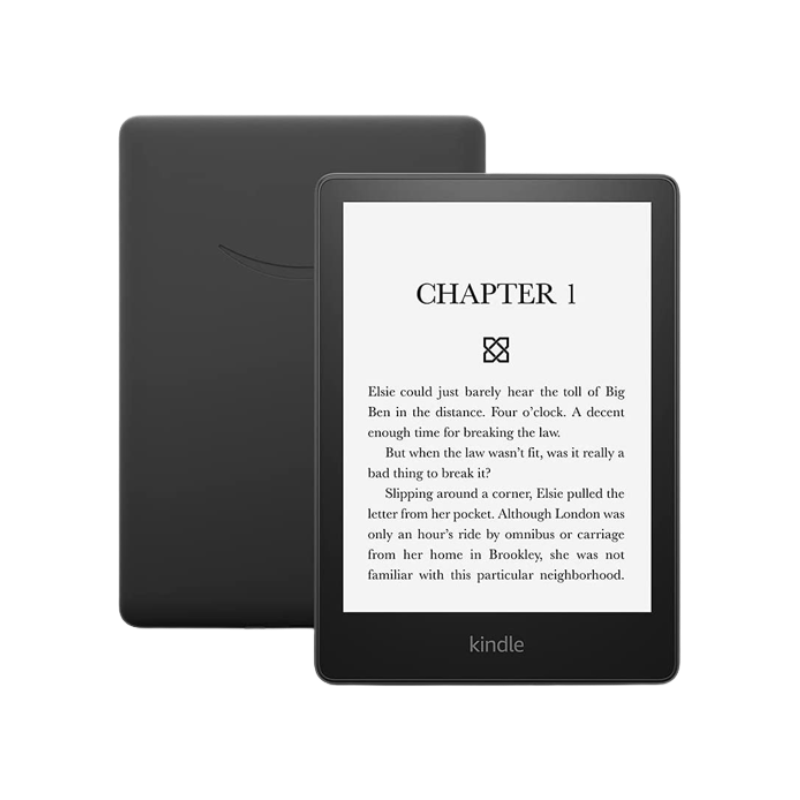
The Kindle Paperwhite is Amazon’s mid-range e-reader: a glare-free E Ink screen, an adjustable warm front light, USB-C charging and IPX8 waterproofing in a slab about the size of a trade paperback. It replaces a shelf of paperbacks with roughly 7 oz of electronics, and it is the e-reader most often named in thru-hiker gear lists. The trade-off is straightforward: at 205–211 g it is a luxury for anyone counting grams, and it has no page-turn buttons and no rugged shell.
Key Specs
| Spec | Detail |
|---|---|
| Display | 6.8” E Ink Carta 1200 (2021); 7” E Ink Carta 1300 (2024) |
| Resolution | 300 ppi (1236 x 1648 on the 6.8” model) |
| Storage | 8 GB (2021); 16 GB (2024) |
| Battery life | Up to 10 weeks (2021); up to 12 weeks (2024) |
| Waterproofing | IPX8 (2 m fresh water for 60 minutes) |
| Charging | USB-C |
| Front light | Adjustable warm light |
| Dimensions (2021) | 174.2 x 124.6 x 8.1 mm |
| Weight | 205–211 g depending on version |
Versions compared
| Image | Version | Weight | vs. lightest |
|---|---|---|---|
| 2021 (11th Gen) | 205 g (7.2 oz) | lightest |
 | 2024 (12th Generation) | 211 g (7.4 oz) | +6 g |

Build your Gear Closet
View all of your gear in one place, create packing lists and hit the trail with confidence. Available on iOS, Android and the web.
Get StartedPerformance
Screen and light. The 300 ppi panel renders text that reviewers routinely compare to print, and the matte, glare-free surface stays readable in direct sun, which is the advantage an e-reader holds over a phone at a lunch stop on an exposed ridge. After dark, the warm front light lets a hiker read in the bag without a headlamp. The 2024 model’s newer Carta 1300 panel produces darker blacks and better contrast. Reviewers at the-ebook-reader noticed it right away, especially in dark mode. Good e-Reader reports the 2024 front light uses 10 white and 9 amber LEDs.
Battery. This is where an e-reader earns its pack space. Amazon rates the 2021 model at up to 10 weeks and the 2024 model at up to 12, based on light daily reading. A section hiker reading an hour or two a night can expect to get through a long trip on a single charge, or to top up from a power bank over USB-C with the same cable that charges a phone or headlamp. Thru-hikers on long-running forum threads have described single charges lasting a month of reading, though that was with earlier, simpler Kindles.
Water and durability. The IPX8 rating covers a dunk in fresh water, which matters for the real hazards of trail life: a leaking bottle, a sweaty hip belt pocket or a tent with condensation. It does not cover being crushed. Thru-hikers have long carried Paperwhites to Katahdin by keeping them in a waterproof bag near the top of the pack, away from heavy gear, and the same advice holds. The screen is the weak point, so a cover or a padded sleeve is worth its weight. Amazon’s guidance after a liquid-detection warning is that the Kindle keeps working but can’t be charged until it dries.
Speed and software. The 2024 model’s faster processor delivers about 25% quicker page turns by Amazon’s claim, and it is the fastest Paperwhite so far. The gap is smaller than the marketing implies. One hands-on comparison found that a firmware update brought the 2021 model’s page-turn speed up to match the newer one. TechRadar’s verdict on the 2024 model was that its performance gain is slight in everyday use. The reading experience is nearly identical between generations.
Storage. Books are small, so 8 GB holds a library, but audiobooks eat space quickly. The 2024 model’s 16 GB is more comfortable, although TechRadar notes that the operating system takes about 4.5 GB of it.
Choosing a Version
2021 (11th Gen), 205 g. The 6.8” screen, 8 GB of storage and a 10-week battery rating. It is 6 g lighter than the current model, which is too little to matter on the scale, and it is the cheaper option on the used and discounted market. Owners who already have one have little reason to upgrade.
2024 (12th Generation), 211 g. A 7” Carta 1300 screen with better contrast, 16 GB of storage, a 12-week battery rating and a faster processor. Good e-Reader found it launched at about $20 more than its predecessor. For a first purchase at a modest price difference, this is the better buy. Its advantages are small ones, but they are all in the direction of reading comfort.
With Cover Bundle, 211 g. The bundle pairs the reader with a cover. The listed 211 g matches the reader’s weight, so a cover adds to what actually goes in the pack. For hikers it is the sensible way to buy: the screen is the part most likely to be damaged in a pack, and the cover makes it a little more resilient. Anyone who prefers a zip-top bag and a sleeve can skip it.
Pros & Cons
Pros
- Sharp 300 ppi screen that stays legible in direct sunlight
- Warm, adjustable front light for reading in a tent or bag
- Battery rated at 10–12 weeks, with USB-C charging
- IPX8 waterproofing covers rain, spills and accidental dunking
- Holds thousands of books in about 7 oz
Cons
- 205–211 g is heavy next to the paperback pages it replaces on a short trip
- No physical page-turn buttons
- Ad-supported lock screens in some markets unless buyers pay extra
- The screen needs protection from pack pressure
- The 2024 model costs more than its predecessor for modest gains
Who Should Buy This
This is for backpackers and thru-hikers who read every night and carry multiple paperbacks, or who want something to occupy zero-day afternoons and long tent evenings in bad weather. A section hiker on a week-long trip with a single book will save weight by carrying a paperback and tearing out the finished pages. Gram-counters whose base weight is already under 10 lb should weigh 7 oz against the pleasure of a good novel. Readers who want page-turn buttons or a bigger screen for PDFs should look at other e-readers.
Verdict
The Kindle Paperwhite is the practical choice for trail reading. Its battery, light and waterproofing cover what a backpacker needs, and the weight is modest for what it replaces. Buy the 2024 model if the price difference is small, pick up a 2021 unit if one turns up at a discount, and treat the cover as part of the kit.