Trangia Saucepan L Review
Trangia's Duossal 2.0 saucepan pairs an aluminum shell with a stainless interior for even heat and easy cleanup, at a real weight penalty over the UL pot.

Overview
The Trangia Saucepan L is the outer pot for the Trangia 25 Large stove system, built from Duossal 2.0, a laminate that bonds an aluminum exterior to a stainless steel interior. It suits trekkers, bikepackers, and kayakers who cook real meals on an alcohol or gas Trangia and want a pot that tolerates metal utensils and acidic sauces. The trade-off is weight: it is roughly twice as heavy as Trangia’s own ultralight aluminum pot.
Key Specs
| Spec | Detail |
|---|---|
| Material | Duossal 2.0: aluminum outside, stainless steel inside |
| Wall thickness | 0.8 mm total (0.5 mm aluminum, 0.3 mm stainless) |
| Capacity | 1.5 L or 1.75 L |
| Dimensions | 1.5 L: 170 x 76 mm (6.7 x 3 in); 1.75 L: 181 x 77 mm (7.1 x 3 in) |
| Weight | About 206–220 g depending on size |
| Fits | Trangia 25 Large |
| Origin | Sweden |
| Typical price | Roughly $33–36 in the US |
Versions compared
| Image | Version | Weight | vs. lightest |
|---|---|---|---|
| 1.50 L Duossal 2.0 | 111 g (3.9 oz) | lightest |
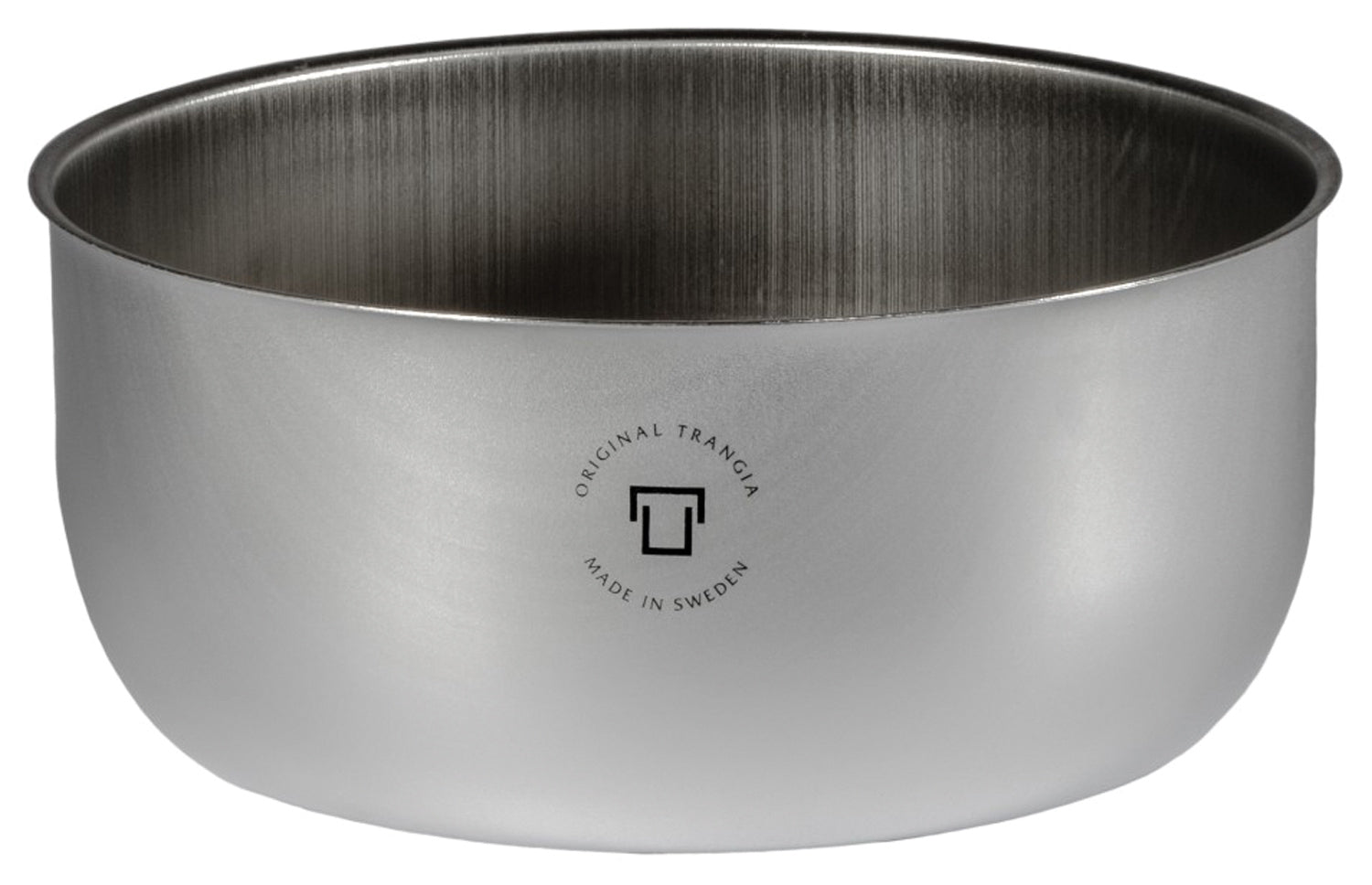 | 1.75 L Duossal 2.0 | 119 g (4.2 oz) | +8 g |

Build your Gear Closet
View all of your gear in one place, create packing lists and hit the trail with confidence. Available on iOS, Android and the web.
Get StartedPerformance
Heat and cooking. Duossal is made by pressing the two metals together under high pressure, which gives the pot aluminum’s quick heat transfer with a food-contact surface that doesn’t react. Owners who cook more than they boil tend to single this out. One kayak-expedition buyer of the matching Duossal fry pan said the stainless lining spreads heat more evenly, and a long-running thread on Classic Camp Stoves has owners praising the sets for even heating and easy cleaning. On a Trangia burner with its built-in windscreen, a full 1.5 L of water comes to a boil in about five minutes, according to one owner.
Acidic food and utensils. This is where Duossal earns its keep. Bare aluminum can leave a metallic taint in tomato sauce, a complaint that comes up repeatedly among Trangia users. The stainless interior avoids it. Buyers also report that metal spoons and whisks are fine, since there is no non-stick coating to scratch. A Finnish owner switched from plain aluminum pots after growing uneasy about aluminum residue.
Cleanup. Food releases readily from the steel surface. It is not true non-stick, and the pot lacks a coating that rescues burnt rice. But owners describe it as easy to wash, and the lack of a coating means a scouring pad is safe.
Weight and bulk. This is the cost. Forum comparisons put Trangia’s standard ultralight 1.5 L pot at about 115 g against about 200 g for the Duossal. The stainless layer is the reason. A buyer who took the 1.75 L version on a week-long trip called it heavy but much more durable than the UL pot. For anyone shaving grams, that is a poor trade. For anyone using the full 25 system, which is not a gram-counter’s kit to begin with, it is a modest premium for a better cooking surface.
Fit and finish. The pot nests into the 25 Large system and works with the standard lid, pot grip, and burner. Quality control draws occasional comment. One Finnish buyer reported sharp metal burrs along the rim, though the pot otherwise did its job. File the edge smooth if you find one.
Choosing a Version
The two versions share the same wall construction and fit the same 25 Large stove. The differences are capacity and diameter.
- 1.5 L (170 x 76 mm): The better match for one or two people. It is the smaller and lighter of the two, and the sensible choice for a solo hiker who mostly boils water and cooks one-pot dinners.
- 1.75 L (181 x 77 mm): Trangia lists it for three to four people. It has more headroom against boil-overs when cooking pasta or soup, and suits couples and small groups. It is a little wider and about 14 g heavier by retailer listings.
Solo and two-person trips are the better fit for the 1.5 L. Groups of three or more should take the 1.75 L.
Pros & Cons
Pros
- Stainless steel interior won’t taint acidic foods like tomato sauce
- Tolerates metal utensils and scouring without coating wear
- Even heat distribution that suits simmering
- Nests directly into the Trangia 25 Large system
- Made in Sweden by the maker of the stove it fits
- Two sizes, around $33–36
Cons
- Roughly 90 g heavier than Trangia’s UL pot of the same capacity
- Not non-stick, so burnt food still needs soaking
- Only useful as part of the Trangia 25 Large system, since it is sized to it
- Occasional reports of sharp edges from the factory
Who Should Buy This
The saucepan is for Trangia 25 owners who cook, not just boil: tomato-based pasta, curries, or anything that sits on the flame for a while. It is also a good upgrade for anyone who has noticed a metallic taste or pitting in an older aluminum pot. Bikepackers, canoeists, and kayakers, who carry weight on a vessel rather than on their backs, will feel the extra grams least.
Ultralight backpackers should look elsewhere. Boiling water for freeze-dried meals does not need a stainless lining, and Trangia’s own ultralight aluminum pot, or a titanium pot, will save a lot of weight. Anyone not already using the Trangia 25 Large system will also find the dimensions awkward as a standalone pot.
Verdict
The Duossal 2.0 saucepan is the best cooking pot in the Trangia 25 lineup, giving even heat, a reliable interior, and easy cleanup for a few extra ounces. It is a solid buy for Trangia users who prepare real meals and a poor one for gram counters.