Tatonka Cooking Spoon Set Review
The Tatonka Cooking Spoon Set pairs a cooking spoon and spatula in coconut wood — a natural, non-scratch option for camp chefs who cook on non-stick cookware.
Overview
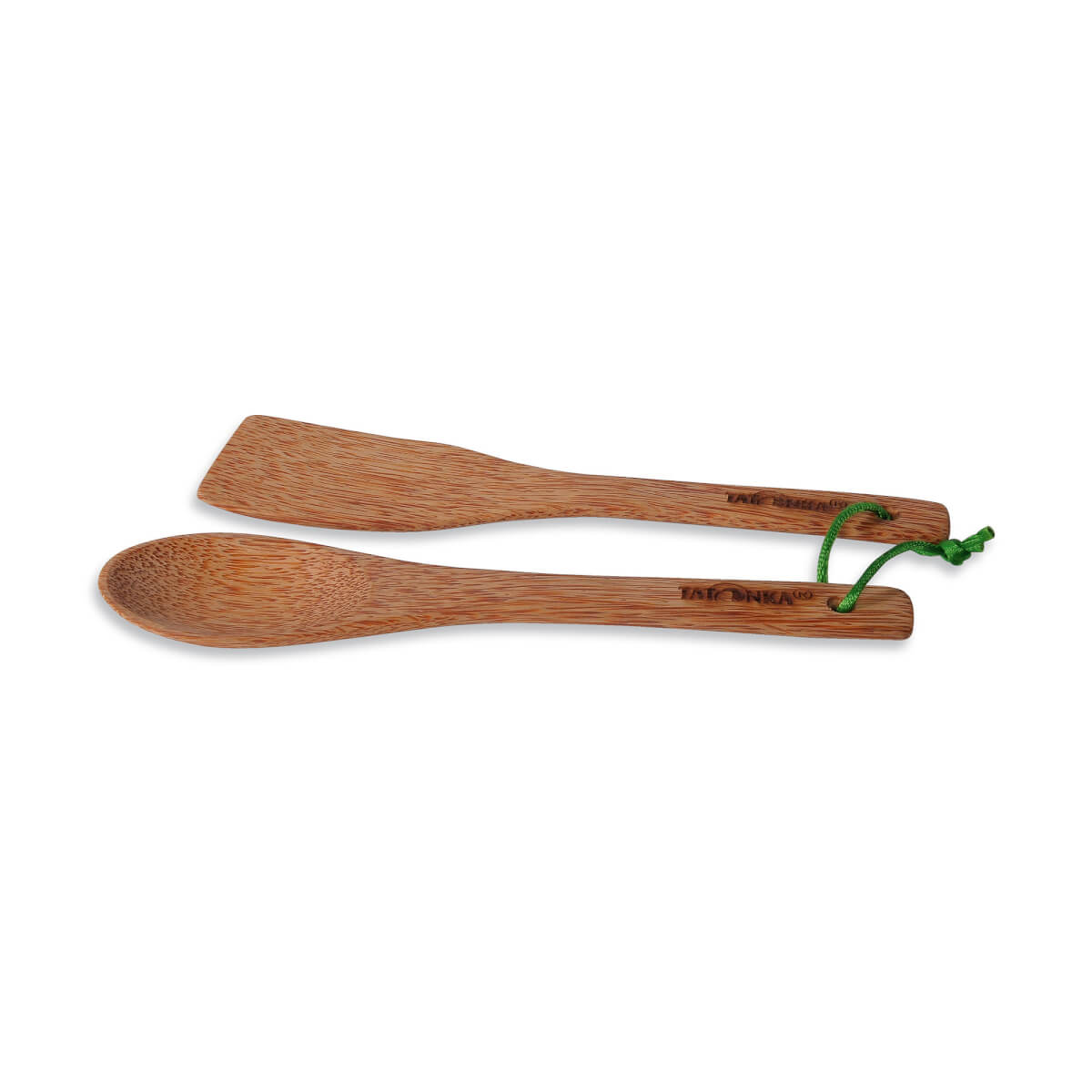
The Tatonka Cooking Spoon Set is made of coconut wood and consists of a camping spoon and a small spatula.
It’s aimed at trekkers and car campers who want a natural, low-tech cooking tool — think stirring a pot of soup or flipping a flatbread — rather than a high-tech ultralight solution. If you run non-stick cookware and want something that won’t scratch the coating, this set has a genuine reason to exist in your kit.
Key Specs
| Spec | Detail |
|---|---|
| Weight | 45 g (set) |
| Dimensions | 21 × 5 × 0.5 cm |
| Material | Coconut wood |
| Includes | 1× cooking spoon, 1× spatula |
| Handle | Hole for hanging |

Would the Cooking Spoon Set earn its spot in your pack?
45 g · 1.6 ozAdd the Tatonka Cooking Spoon Set to your Gear Closet and see exactly what it does to your base weight, then start packing for your next trip.
Free · No credit card · iOS, Android & web · Trusted by 3,000+ backpackers
Performance
The first thing worth clarifying: this is a cooking utensil set, not an eating set. The 21 cm handle is useful for stirring a pot over a flame, not shoveling noodles out of a pouch. Keep that framing in mind when you evaluate the weight.
The wood of coconut trees is described as very light and of high strength
, and that holds up in practice.
The robust wood of the coconut palm is very light and very strong, making it well suited for cooking utensils and representing the use of materials from renewable raw materials.
The spoon feels solid in hand — no flex, no creaking — and the 0.5 mm thickness keeps it slim enough to slot into most stuff sacks.
The wood’s real advantage is in what it doesn’t do. Wood is naturally antimicrobial, doesn’t scratch cookware, and doesn’t conduct heat — so it won’t burn your hands. If you’re running a coated pan in camp, these are genuinely the right tool. If you use a nonstick cook pot, wooden utensils won’t damage Teflon coatings, which is more than you can say for a stainless steel spoon or a titanium spatula.
The spatula’s thin profile works fine for flipping pancakes or scrambled eggs, though the 5 cm width is on the narrow side for anything bigger than a small crepe. The cooking spoon’s bowl is adequately sized for stirring and serving. One user noted the set is lightweight, comfortable to use, and easy to clean — though “easy to clean” in a wood context means prompt hand-washing, not throwing it in a camp basin and forgetting about it overnight.
Weight is the honest sticking point. At 45 g for two pieces, a titanium three-piece cutlery set can come in at around 1.69 oz (roughly 48 g) for three pieces — meaning you’re paying near-equivalent weight for just two wood cooking tools. For dedicated ultralight backpackers, that math is painful. For basecamp cooking, car camping, or a group kitchen kit where the tools are shared, it’s a non-issue.
Wood requires more care than metal — hand washing and occasional oiling — and may absorb flavors over time.
Applying food-grade mineral oil occasionally helps prevent drying and cracking.
Skip this step repeatedly and you’ll start to see surface checking. It’s a small ask, but it’s an ask that titanium never makes.
Some campers find wooden utensils harder to clean, and others note the uncomfortable feeling of wood on teeth
— though since this is a cooking set rather than an eating set, the tooth-contact issue is largely irrelevant here.
Pros & Cons
Pros
- Won’t scratch non-stick or coated cookware
- No heat conduction — handle stays cool while stirring
- Made from a renewable, natural material with no plastics or metals
- Coconut palm wood is very light and strong, making it suitable for cooking utensils and representing use of renewable raw materials
- Hanging hole in handle keeps it organized at camp
- Very affordable price point (~€8–10)
- Slim profile packs flat
Cons
- 45 g for two pieces is relatively heavy compared to titanium or alloy alternatives
- Requires hand-washing and periodic oiling to prevent cracking
- May absorb flavors over extended use
- No folding mechanism — 21 cm is fixed length, which can be awkward in tight kit configurations
- Minimal third-party reviews; long-term durability data is thin
Who Should Buy This
This set makes the most sense for car campers, van-lifers, and basecamp trekkers who cook real meals over a stove — think sautéed onions, pancakes, or sauces — particularly with non-stick cookware. It’s best suited for eco-conscious campers who don’t mind additional maintenance. Ultralight and thru-hikers who eat straight from a pot or freeze-dried pouch will find the 45 g weight hard to justify when a single titanium spork weighs a fraction as much. But if you care about natural materials, want to avoid scratching a pan, and cook in a style that actually benefits from separate spoon and spatula tools, this is a solid, no-fuss pick.
Verdict
The Tatonka Cooking Spoon Set is a niche product that does exactly what it promises: two well-made, natural wood cooking tools at a price that won’t make you wince. The coconut wood is genuinely appropriate for the job — heat-safe, non-scratching, renewable — but the weight and maintenance requirements put it out of contention for serious weight-conscious backpackers. Think of it as the right tool for a basecamp kitchen, not a multi-day trail kit.