Optimus Polaris Optifuel Review
A do-it-all multi-fuel stove that runs on nearly anything you can pour into a bottle — reviewed for real-world boil times, simmer control, and who actually needs this much versatility.
Overview
The Optimus Polaris Optifuel is a remote-canister/liquid-fuel hybrid stove built for people who don’t want to think about fuel logistics — it’ll run on LPG canisters, white gas, gasoline, kerosene, diesel, or jet fuel, all through a single jet with no swaps required. It’s aimed squarely at expedition users, international travelers, and cold-weather backpackers who need one stove that works regardless of what’s available at the local shop, rather than weight-weenie 3-season thru-hikers.
Key Specs
| Spec | Value |
|---|---|
| Weight | 475 g (16.8 oz) |
| Output | 4,200 W / 14,340 BTU |
| Boil time (1L) | ~4 min |
| Max burn time (400ml fuel, max output) | 100 min |
| Fuel types | LPG, white gas, gasoline, kerosene, diesel, jet fuel |
| Folded dimensions | 140 x 80 x Ø65 mm |
| Includes | Pump, fuel bottle, multitool, windscreen, heat reflector, stuff sack |

Build your Gear Closet
View all of your gear in one place, create packing lists and hit the trail with confidence. Available on iOS, Android and the web.
Get StartedPerformance
The headline feature here is the single-jet design, and it’s not just marketing spin — multiple long-term users confirm it actually works as advertised. Stoves that can use different fuels have been around for many years, but with most you need to change the jet when you change fuels, which is a fiddly business — the Polaris is different as the fitted jet will work with all fuels. That’s a meaningful practical difference if you’re the type who loses tiny jets in the dark at 12,000 feet.
Boil times land where you’d expect from a pressurized multi-fuel burner — the official spec is about 4 minutes per liter, depending on climate, altitude, etc. I’d treat that as a best-case number; wind, altitude, and pot choice will push it out, especially on liquid fuel where you’re also managing pump pressure and priming.
Build quality is the thing nearly every reviewer circles back to. At 475g it isn’t the lightest multi-fuel stove on the market, but the build quality is excellent, and the pump unit is solidly engineered — one of the best pump units testers have used. That pump quality matters more than it sounds — a mushy or leaky pump is the single most common failure point on liquid-fuel stoves, and it’s reassuring that this is consistently called out as a strength.
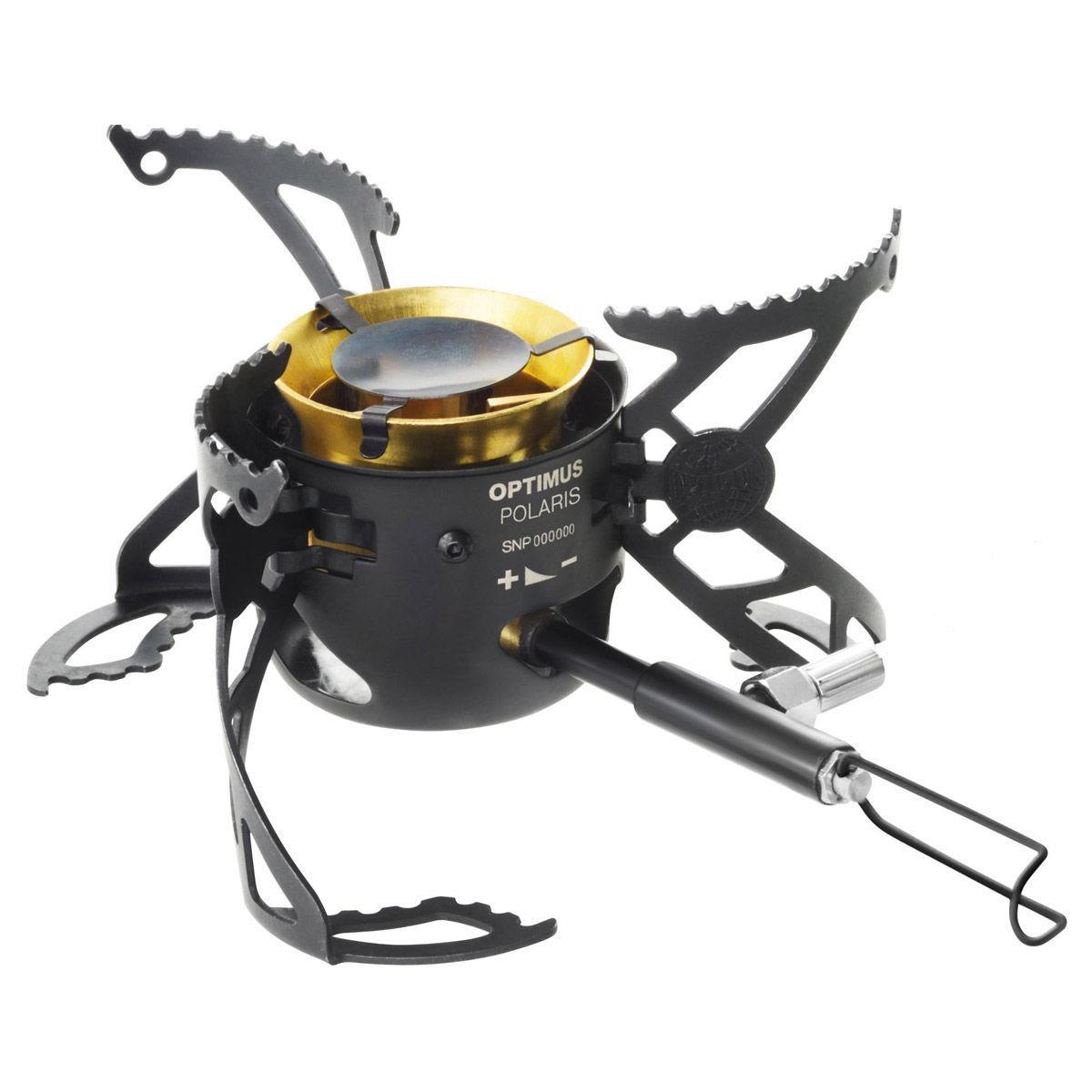
Stability and simmering are where the Polaris earns its keep over lighter alternatives. The combined legs/pot supports fold inward for a compact package, and when opened up the low-profile stove is very stable and will support heavy pots. Out of the box, simmer control is decent but not great — this is a known weak point of the stock flame spreader. The aftermarket ‘PolarDawg Silent Cap’ makes a considerable difference, not only reducing noise but also letting you turn the stove down to a really low simmer level without it blowing out like it does with the standard flame plate. If you plan to actually cook (not just boil water for freeze-dried meals), budget for that accessory — several long-term users treat it as close to mandatory. On the plus side, this one at least can simmer reasonably well without mods, which distinguishes it from a lot of liquid-fuel competitors. A lot of multi-fuel stoves are great at boiling water but generally rubbish for actual cooking due to most not being able to turn the flame down to simmer.
Noise is the other recurring complaint, though it’s endemic to the category rather than unique to Optimus. In use the Polaris roars loudly, as many multi-fuel stoves do, even with cartridges. If you’re used to a quiet canister-top stove, the first cold start will surprise you.
Cold-weather performance is a genuine strength. The burner has a pre-heat tube and there are supports for an inverted cartridge for use in cold weather, which lets you run an upside-down gas canister like a liquid-fuel stove when temperatures drop below where standard canisters perform reliably — a trick you can’t do on most canister-only stoves.
Fit and finish details that owners appreciate: there’s a windshield and heat reflector to mitigate damaging fragile ground and any fuel spillage, plus a full repair kit, pump lubricant, and a magnetic cleaning needle. One long-term liquid-fuel user on the Backpacking Light forums noted their older Optimus liquid-only version worked like a charm for over a decade, which speaks to the durability of Optimus’s burner lineage generally, though it’s not a direct data point for this specific hybrid model.
Pros & Cons
Pros
- Single jet runs all supported fuels — no swapping tiny parts in the field
- Excellent pump build quality, widely praised across owner reviews
- Genuinely stable, wide-folding pot supports handle heavy cookware
- Cold-weather capable via inverted-canister support and pre-heat tube
- Comes with a genuinely useful accessory kit (windscreen, reflector, repair tool, cleaning needle)
Cons
- At 475g, it’s heavier than dedicated canister stoves or ultralight liquid-fuel options
- Loud — a known trait of the category, but worth setting expectations
- Stock simmer control is mediocre until you add the aftermarket Silent Cap
- Liquid fuel operation still requires priming/pumping know-how — not plug-and-play like a canister stove
- Overkill (and extra weight) for straightforward 3-season canister-only trips
Who Should Buy This
This stove makes sense for expedition travelers, international trekkers who can’t count on finding the right gas canister, and cold-weather or high-altitude users who need liquid fuel reliability but still want the option to run clean LPG when it’s available. The main market for a stove of this quality, capability, and price is people going off on big trips or expeditions where they’re unsure what fuel will be available — run it on gas for weekend trips, then switch to petrol for a multiday hike abroad. If your trips are all domestic weekend trips with easy canister access, a lighter dedicated gas stove will serve you better and save you a few ounces plus a lot of noise.
Verdict
The Polaris Optifuel delivers on its core promise: one jet, any fuel, and hardware solid enough to trust on a real expedition. It’s not the stove to bring if all you care about is shaving grams off a weekend canister trip, but for anyone whose travel plans include fuel uncertainty or serious cold, it’s one of the more dependable multi-fuel options out there — especially once you add the Silent Cap for better simmering. I’d rate it an 8/10, docked slightly for the stock simmer performance and the noise that comes standard with the category.