MSR WhisperLite Review
The MSR WhisperLite is a field-repairable white-gas stove that boils a liter in 3.9 minutes and shrugs off wind, but priming is fiddly and simmering is poor.
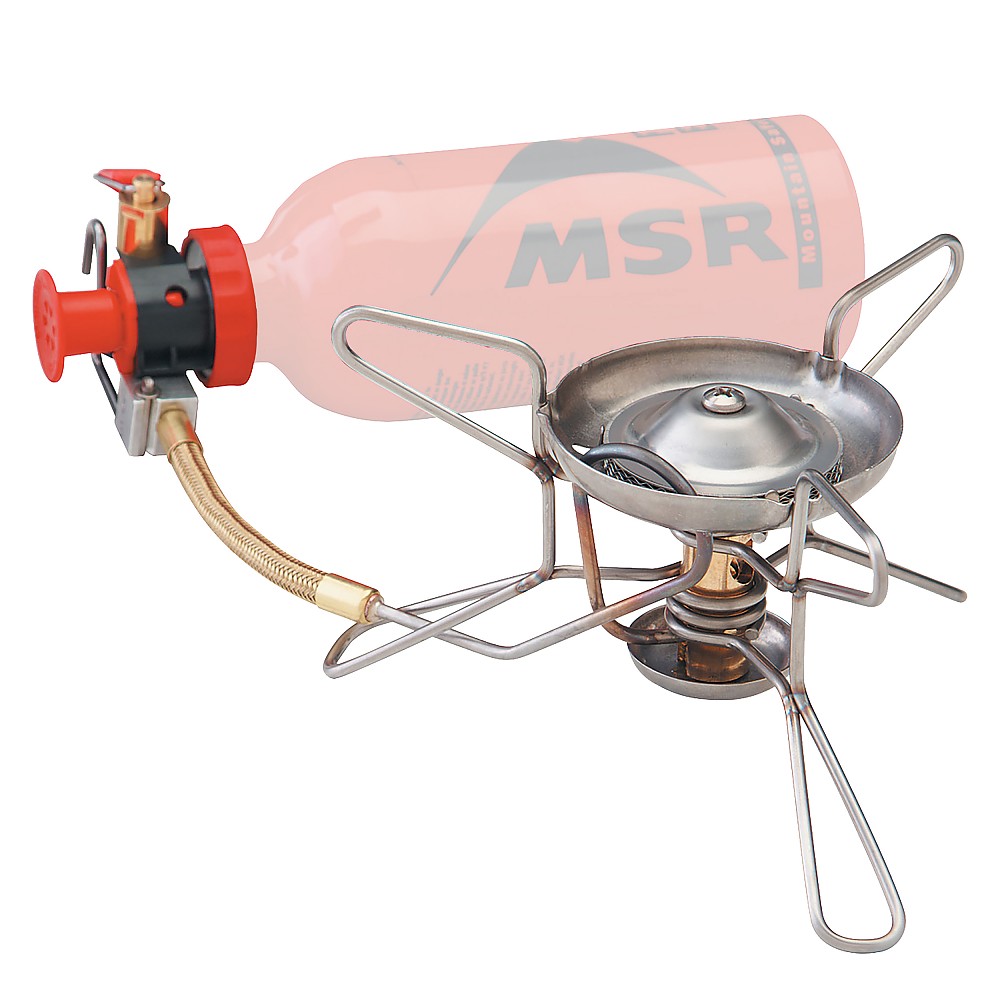
Overview
The MSR WhisperLite is a liquid-fuel backpacking stove that has been a fixture of expedition gear lists since the early 1980s, and it remains a default choice for outdoor programs that need something rugged and fixable. It suits winter campers, mountaineers, group cooks and international travelers who want to burn cheap white gas instead of canisters. The trade-off is plain: it is heavier, slower to start and fussier to tune than any push-button canister stove.
Key Specs
| Spec | Value |
|---|---|
| Weight (stove) | 305 g (10.8 oz) |
| Packed weight | 410 g (14.5 oz) |
| Fuel type | White gas (Coleman fuel) |
| Boil time (1 L) | 3.9 min |
| Burn time (600 ml fuel) | 136 min |
| Burner technology | Shaker Jet for field maintenance |
| Includes | Fuel pump, windscreen, heat reflector, small-parts kit, instructions, stuff sack |

Build your Gear Closet
View all of your gear in one place, create packing lists and hit the trail with confidence. Available on iOS, Android and the web.
Get StartedPerformance
The WhisperLite’s central appeal has barely changed in four decades: a fuel-efficient, wind-tolerant burner that runs on some of the cheapest fuel available. A liter of water reaches a boil in 3.9 minutes, a figure in line with what most reviewers report, and one 600 ml charge of fuel lasts about 136 minutes of burn time. That number depends on the windscreen. Wrapped snugly around the pot, it shields the flame and improves efficiency even on calm evenings. Outdoor Gear Lab’s testers found the stove extremely fuel efficient and nearly unaffected by wind, and said it handles full-size cookware on its stable base.
The cost is the startup routine. Where a canister stove asks for a twist and a click, the WhisperLite asks for a filled fuel bottle, a pumped-up pressure charge, a fuel-line connection, a windscreen and reflector setup, and then a priming step. Priming burns a small pool of fuel to heat the generator tube so liquid fuel vaporizes before the main burner opens. It is smoky, it can flare, and it takes practice. A long-term Trailspace reviewer called the stove temperamental during priming, with an occasional tendency to flare up. After a few dozen repetitions it becomes routine. For someone switching from canisters, it is a real adjustment.
Simmering is the other soft spot. Multiple long-term owners describe the WhisperLite as essentially roaring or off. One owner of ten years reported that turning it down too far can cause partial combustion and smoke. For boiling water and rehydrating freezer-bag meals, that hardly matters. For anything delicate, expect scorched pot bottoms until technique improves, or add a heat diffuser.
Durability is where the reputation holds up. MSR’s Shaker Jet design is meant to make field cleaning simple, and the burner and generator tube are plain, rugged and serviceable on the trail. The recurring failure point is the plastic fuel pump. Owners report broken pump handles and worn seals, and the pump connector sits where dirt and debris can find it, clogging the connector or fuel line. Retailers stock pump service kits for that reason. On a long trip, a spare O-ring kit and pump-cup lubricant add almost no weight and turn a trip-ending failure into a five-minute camp repair.
The weight is the third honest limit. At 410 g (14.5 oz) with pump, windscreen and reflector, and before a fuel bottle is added, the WhisperLite is far from ultralight. Its case rests on fuel logistics, not ounces: white gas is easy to find and cheap in many places where isobutane canisters are not, and liquid-fuel stoves keep working in cold conditions and at altitude where canister stoves tend to sputter.
Pros & Cons
Pros
- Excellent fuel efficiency, especially with the windscreen properly deployed
- Wind-resistant; testers found it nearly unaffected by gusts
- Simple, rugged burner designed for field maintenance
- Runs on inexpensive, widely available white gas
- Stable base handles full-size pots and group cooking
- Dependable in cold weather and at altitude
Cons
- Priming is smoky and fiddly, with a learning curve and occasional flare-ups
- Poor simmer control; effectively an on/off stove
- Plastic pump parts (handle, seals, connector) are the most common failure point
- 410 g packed, before fuel bottle, is heavy for solo three-season use
- Slower, more involved setup than any canister stove
Who Should Buy This
Winter backpackers, mountaineers and trip leaders cooking for several people get the most from the WhisperLite, as do international travelers who cannot count on finding canisters on arrival. It also suits anyone who values being able to strip and fix a stove with a small parts kit. Solo and duo three-season hikers who mostly boil water for dehydrated dinners should look elsewhere: a canister stove, or an alcohol stove, will save weight and hassle with little downside.
Verdict
The WhisperLite is a dependable, fuel-efficient workhorse that charges a tax in priming patience and simmer control. It earns a place on expeditions, in cold weather and on trips where canisters are scarce, but a weekend in mild conditions does not justify its weight and fuss.