GSI Outdoors Ultralight Java Drip Review
The GSI Outdoors Ultralight Java Drip is an 11g reusable pour-over dripper that nests under a fuel canister — the go-to backcountry coffee solution for weight-conscious hikers.
Overview
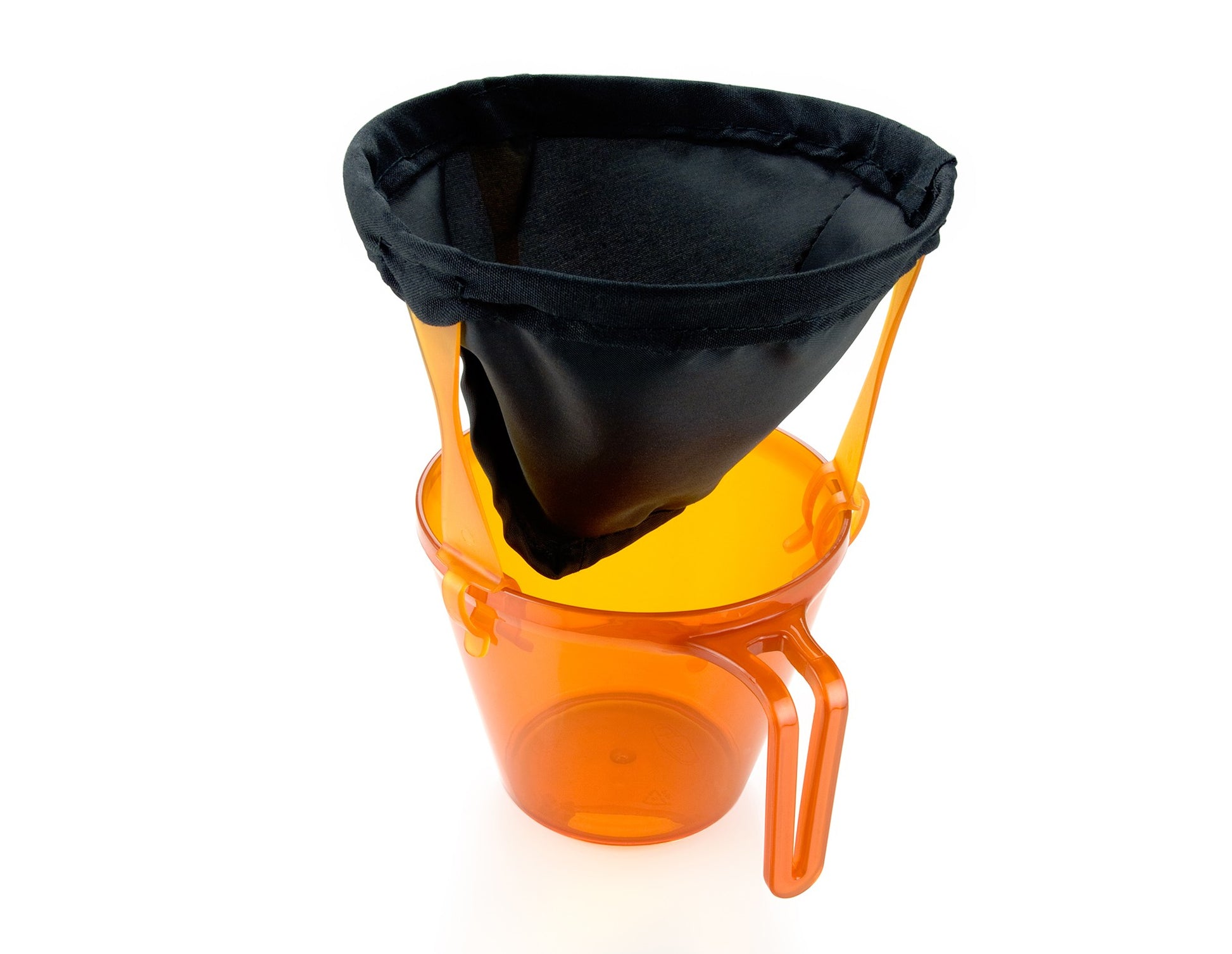
The GSI Ultralight Java Drip is a reusable mesh basket attached to a plastic frame with three arms that clip onto the rim of nearly any camp mug.
At 11g, it’s one of the lightest backcountry coffee solutions on the market — and one of the few that doesn’t ask you to sacrifice real brewed coffee for that weight savings. It’s purpose-built for solo thru-hikers and UL backpackers who want a functional pour-over without the dead weight of a collapsible dripper or the taste-compromise of instant.
Key Specs
| Spec | Detail |
|---|---|
| Weight | 11g (0.4 oz) |
| Packed Dimensions | 4.2 × 4.2 × 0.5 in |
| Material | Nylon mesh filter, clear polypropylene legs |
| Filter Type | Reusable (equivalent to #2/#4 paper filter) |
| BPA-Free | Yes |
| Price | ~$12.95 |
| Warranty | Lifetime (manufacturer defects) |

Would the Ultralight Java Drip earn its spot in your pack?
11 g · 0.4 ozAdd the GSI Outdoors Ultralight Java Drip to your Gear Closet and see exactly what it does to your base weight, then start packing for your next trip.
Free · No credit card · iOS, Android & web · Trusted by 3,000+ backpackers
Performance
Packability — the obvious strength. At just 1.1 ounces, this dripper is so compact it will nestle under a fuel canister. The GSI Ultralight is the most portable filter tested — just fold the little plastic legs and it fits under a fuel canister. The legs fold against the collapsible filter to store flat. That combination of sub-half-ounce weight and fuel-canister nesting is a genuine win for anyone running a tight kit. I’ve tucked mine inside my titanium mug without even noticing it’s in there.
Ease of use. To use it, clip it in place on the rim of your cup, add coffee grounds to the mesh filter basket, and pour hot water over it. You need to pay more attention to how much coffee and water you’re using than with devices that limit portioning, but with a digital scale, it’s easy to achieve the right ratios. During brewing, you’ll have to pour water over your grounds for 3-4 minutes. That’s standard pour-over territory — nothing unusual there.
Brew quality — the honest conversation. Here’s where expectations need tempering. The filter mesh is not fine enough to prevent the water rushing through the coffee grinds before it can absorb the flavour properly. The result with a medium-to-coarse grind is a thinner cup than you’d get from, say, a Hario V60 with a paper filter. The water drains quite quickly compared to a “real” drip filter, so you may need to change the volume/grind of coffee you usually use. Going finer with your grind and slowing your pour helps considerably.
One practical workaround: although it’s designed so you don’t need to use an additional filter with it, a filter helps slow the brew time and leads to a more robust flavor. A single paper filter adds negligible pack weight, and some users swear by it. The trade-off is slower drainage and slightly cooled coffee — particularly relevant if you’re brewing more than one cup. Without the paper filter, the cup is serviceable and noticeably better than instant, but don’t expect espresso-grade extraction.
Cup compatibility. During testing, every mug tried, from narrow to wide mouth, performed perfectly — and that tracks with broader user feedback. You also need the right cup to ensure the legs attach securely. If the rim of your cup is too thick, it’s hard to attach the legs or ensure they are stable when holding a lot of water. Most standard titanium and aluminum camp mugs are fine. Thick-walled insulated mugs with wide rims can be finicky.
Cleanup. The fine mesh cone cleans up incredibly easy. Most times, after use just flip it inside out, rinse, and sit it out to dry. It dries fast and then packs down to ideal size. The one catch: because the filter is built in, if you want to pack up and leave right after breakfast, you have to put the filter away damp. Bringing along a small stuff sack keeps the other pack contents dry and prevents the filter from picking up dirt or grime. That’s a two-gram stuff sack, not a big ask.
Durability. The Ultralight Java Drip isn’t the most robust coffee maker, and breaking this delicate device is a real possibility. That said, the materials seemed to be of good quality — no rips or tears in the mesh filter basket, the stitching was of high quality, and the plastic legs seemed to be flexible and not easily broken. The flexibility of the legs is actually a feature here, not a bug — they bend and snap back rather than snapping off. Treat it with basic care and it should last seasons. GSI Outdoors products are covered by a Lifetime Warranty against material and workmanship defects, with defective products supplied with replacement parts if possible or altogether replaced at their discretion.
Pros & Cons
Pros
- 11g / 0.4 oz — genuinely ultralight, no asterisks
- Most compact coffee filter option in its class
- Nests inside a fuel canister for near-zero packing footprint
- No disposable filters needed — reusable and eco-friendly
- Cleaner cup than a French press without adding much more space to your setup
- Dead-simple to use and clean
- Under $13 MSRP — hard to find a cheaper real-coffee solution
Cons
- Mesh drains fast; brew strength is average without technique or a paper filter
- You need the right cup to ensure the legs attach securely — if the rim of your cup is too thick, it’s hard to attach the legs or ensure they are stable
- Must be packed away damp if you’re breaking camp quickly
- One-cup-at-a-time design can delay a group’s morning routine
- Fragile construction relative to silicone or metal competitors
- Cleaning requires more water than other models because of a larger surface area
Who Should Buy This
This is a slam-dunk for the solo gram-counter who drinks one cup in the morning and values packability above all else. While other models may produce a tastier cup of coffee, this ultralight and compact device is a great option for thru-hikers, backpackers, and weight weenies alike. It’s also a smart pick for travelers who want a pour-over in a hotel room without packing a dedicated brewer. Where it falls short is in a group context — the low capacity and slow drip process is worth it for some, but hikers who prefer an instant option to get moving quicker may not find it worth the trade-off.
Verdict
The GSI Ultralight Java Drip does one thing exceptionally well: it gets real brewed coffee into your pack for the cost of 11 grams and about $13. The brew quality won’t beat a Hario V60 setup, and you’ll want to dial in your grind size (fine-medium) and slow your pour to get the most out of the mesh. But for solo thru-hikers treating this as a daily driver, it’s hard to argue against the size-to-functionality ratio — there’s genuinely nothing more compact in this category. At this weight and price, even if you end up throwing a half-gram paper filter inside it, you’re still winning.