Esbit Solid Fuel Tablets Review
Esbit solid fuel tablets are ultralight hexamine-based fuel cubes with a decade-long shelf life—ideal for minimalist backpackers who prioritize simplicity over speed.
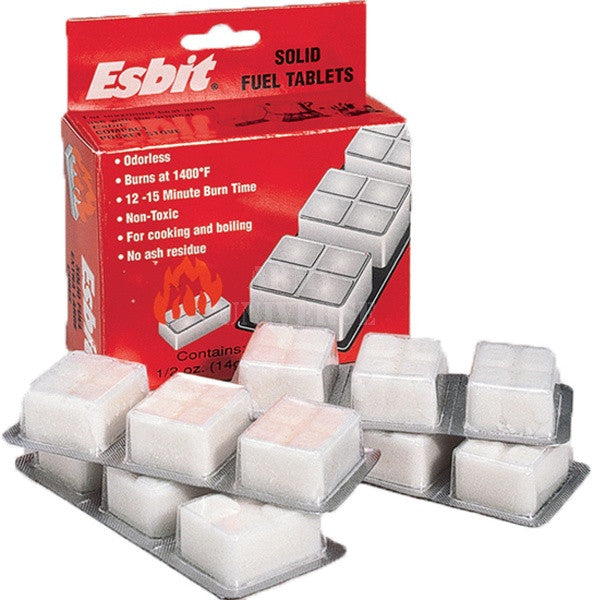
Overview
Esbit solid fuel tablets are compressed hexamine-and-wax tablets that have powered camp kitchens since 1936. At 14g per tablet (the size most backpackers reach for), they’re about as simple as camp fuel gets: light one with a match, set a pot over it, boil water, done. They appeal most to ultralight and minimalist hikers who want a no-spill, no-canister, no-measuring fuel system — and to anyone who needs reliable emergency heat that will still work after a decade in a drawer.
Key Specs
| Spec | Value |
|---|---|
| Tablet Weight | 14g (0.49 oz) — primary backpacking size |
| Sizes Available | 4g, 5g, 14g, 27g |
| Burn Time (14g) | ~12 minutes |
| Burn Time Range | 5–15 minutes (size-dependent) |
| Max Heat Output | up to 1,300–1,400°F (760°C) |
| Calorific Value | ~28,400 kJ/kg |
| Composition | Methenamine (hexamine) & wax |
| Packaging | Waterproof (5g, 14g, 27g); not waterproof (4g) |
| Shelf Life | 10+ years stored dry |
| Made In | Germany |

Would the Solid Fuel Tablets earn its spot in your pack?
14 g · 0.5 ozAdd the Esbit Solid Fuel Tablets to your Gear Closet and see exactly what it does to your base weight, then start packing for your next trip.
Free · No credit card · iOS, Android & web · Trusted by 3,000+ backpackers
Performance
Heat output and boil times
The 14g tablet is the workhorse of the lineup, and under decent conditions it performs respectably. Each 14g tablet burns about 12 minutes at up to 1,300°F (760°C), and is capable of boiling 500ml of water in about 8 minutes. That’s fine for a single-serve freeze-dried meal or a morning cup of coffee, but keep your expectations realistic. Depending on conditions — wind, temperature, elevation — a single tablet may bring two cups of water to a simmer, but don’t expect a rolling boil. They’re more reliable for one-cup meals.
The 27g tablet extends burn time to around 15 minutes and is worth considering for larger pots or cold mornings when you’re working against both the air temp and the wind. It’s good insurance in wind and cold if you want Esbit’s classic predictability with more BTUs on tap.
Wind sensitivity
This is the single biggest variable with solid fuel. A windscreen isn’t optional here — it’s the difference between a functional stove and a frustrating one. A windscreen is a must when there’s any breeze; without one, it can take two tablets to boil two cups of water. Real-world testers typically see around 8–10 minutes to boil 500ml with a 14g tablet in average conditions — plan to double your fuel in strong wind or cold, or carry a better windscreen. Users who pair Esbit with a Caldera Cone-style enclosure consistently report the best efficiency; one longtime user found the Caldera Cone with a tab holder to be the most efficient setup, realizing a 30% fuel savings compared to open-frame use.
Cold weather and altitude
Here’s where Esbit quietly wins. Esbit tablets work at high altitudes and sub-zero temperatures. Unlike liquid or gas fuels, they don’t require heavy containers and are reliable in extreme weather. Canister stoves lose pressure — and boil performance — as temperatures drop; Esbit doesn’t care what the thermometer says. If you’re headed into winter conditions or high mountain camps where butane-blend canisters start struggling, solid fuel is a legitimate option worth having.
Shelf life and reliability
Solid fuel can last for many years if stored dry. There’s no specific expiration date, and most Esbit tablets are packaged waterproof, protecting them from atmospheric oxygen and moisture.
The fuel doesn’t evaporate or go bad — there are accounts of 40-year-old hexamine fuel that still burned just fine.
One REI reviewer noted finding tabs in an old forgotten kit from 20 years prior that lit without issue. For emergency kits and long-haul resupply drops, that kind of durability is genuinely useful.
The residue situation
Let’s not bury the lead on this one. Burned tablets leave a sticky dark residue on the bottom of pots. This is real, it’s annoying, and it will transfer to your stuff sack and your hands if you’re not deliberate about it. When burned efficiently with a proper windscreen, pot residue is greatly reduced. A practical workaround: lay the tablet on a small piece of foil rather than directly in the tray. A used teabag or a small square of scouring pad handles the pot bottom cleanup with minimal weight penalty.
The smell
Unburned Esbit smells distinctly like fish — or, as one candid SectionHiker commenter put it, “rotting fish mixed with cat urine.” The good news is it doesn’t smell much when it’s actually burning. The fishy smell means carrying tablets in a small odor-proof OpSak bag is worth doing. The stink can also be significantly mitigated by outgassing tablets before the hike — take them out of the packaging and leave them in the garage for a few days. Bear country travelers should treat Esbit with the same hanging/canister protocols as food.
Simmer control
There essentially isn’t any. The heat given off can’t be easily adjusted, so water can be boiled, but cooking requiring simmering is more difficult. You can raise or lower the pot to modulate heat slightly, but if your meal plan involves anything beyond “add boiling water and wait,” you’ll want a different fuel. Esbit is a boil-only tool.
Travel and resupply
Hexamine is not permitted on airline flights, as it’s a precursor to certain explosives.
That rules out flying to the trailhead with your stash — plan accordingly. Resupply on-trail can also be hit or miss;
one hiker on the JMT called ahead to confirm Esbit availability at two resupply points, only to arrive and find both had sold out.
Esbit is not remotely as universally available as denatured alcohol or canister fuel. Order ahead and mail drop if you’re depending on it for a long route.
Pros & Cons
Pros
- Dead-simple system — no measuring, no spilling, no pressurized containers
- No liquid fuel to leak, making it easy and safe to carry; among the safest fuel options for transport
- Reliable at altitude and in sub-zero temps where canister performance degrades
- Tablets can be snuffed out, and if kept dry, will relight when needed again
- 10+ year shelf life makes them ideal for emergency kits and infrequent-use setups
- Esbit tablets can be shipped via ground transportation, making them ideal for post office resupply mail drops
- Multiple tablet sizes let you calibrate fuel load precisely to trip length
Cons
-
Strong unburned odor requires dedicated odor-proof storage; treat like food in bear country
-
Sticky soot residue on pot bottoms is a consistent real-world complaint
-
Wind sensitivity is high — a windscreen is non-negotiable
-
No simmer control; strictly a boil-only fuel
-
Not allowed on commercial flights
-
Spotty availability at gear shops and trail towns
-
Combustion byproducts include formaldehyde, ammonia, nitrogen oxide, and hydrogen cyanide
— cook with ventilation and don’t hunch over the flame
Who Should Buy This
Esbit tablets are the right call for solo ultralight backpackers doing short-to-medium trips who want to cook exactly one thing per meal: boiling water for rehydrated food or hot drinks. They’re a near-perfect fit for the “one-pot, no-fuss” overnight or weekend crowd, and an excellent addition to any emergency kit given the indefinite shelf life. Cold-weather and high-altitude campers who’ve been burned by sluggish canister stoves in the past should absolutely give solid fuel a look. They’re less suited for group cooking, extended thru-hikes relying on on-trail resupply, air-travel approaches, or anyone who needs simmer control.
Verdict
Esbit solid fuel tablets have been earning their place in packs for almost 90 years for good reason: they’re light, reliable, no-spill, and will work in conditions that humble other fuel types. The smell and pot residue are real inconveniences that require a small system adjustment, not dealbreakers — and both are manageable with an odor-proof bag and a scrap of foil. The harder constraint is that Esbit demands you build your cooking expectations around it, not the other way around: if you need more than a brisk boil, look elsewhere. For the minimalist who’s happy eating rehydrated meals and drinking hot coffee, this is a 7.5/10 fuel that punches well above its weight.