Rab Dryflo Tee Review
A lightweight synthetic base layer tee built on Rab's Dryflo fabric, aimed at hikers who want quick-drying performance with a soft, cotton-like feel.
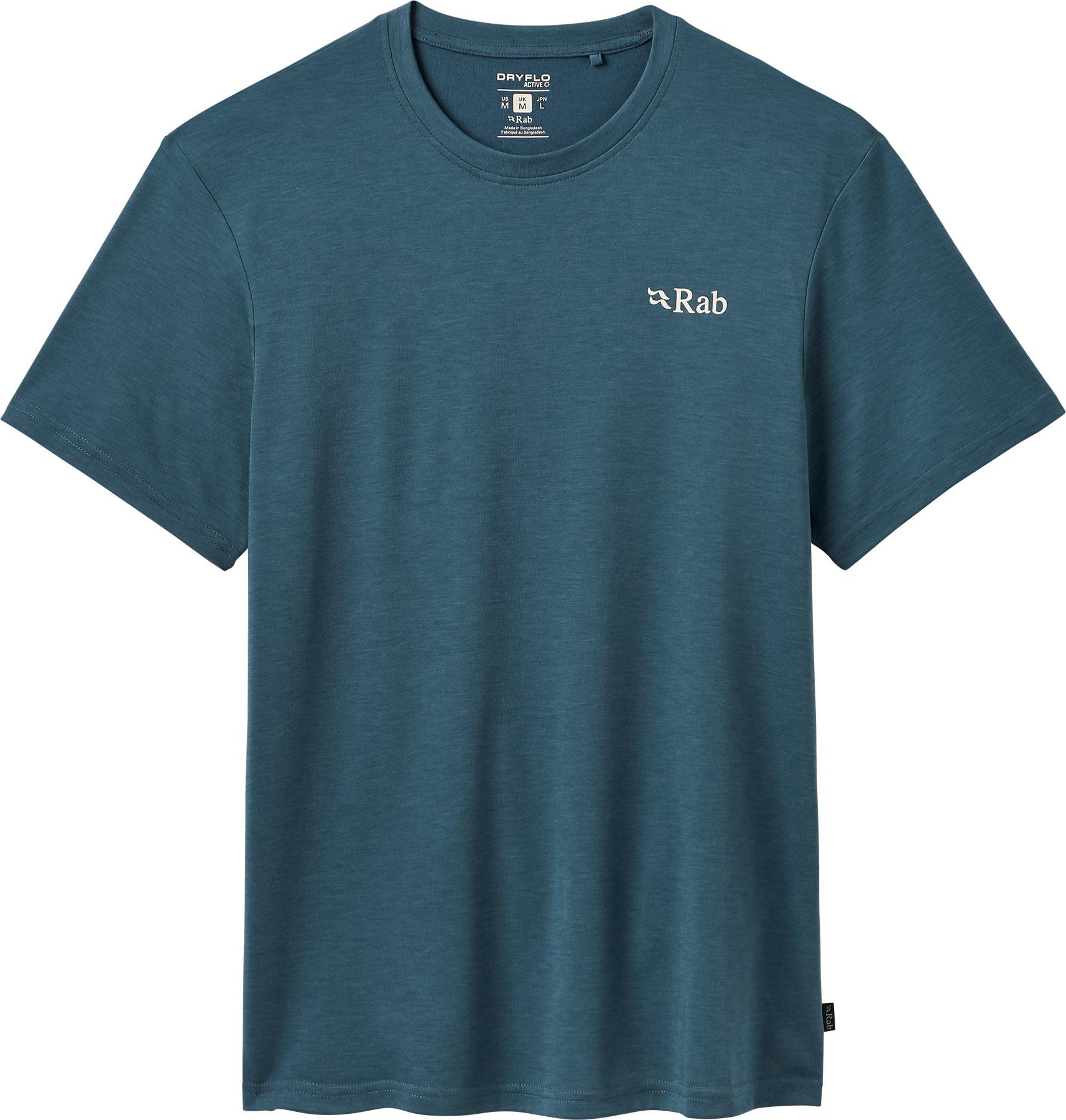
Overview
The Rab Dryflo Tee is a synthetic short-sleeve base layer built around Rab’s in-house Dryflo fabric, which the brand designs to wick sweat and dry fast while keeping a hand-feel that’s softer and more “normal” than the slick, plasticky feel you get from a lot of polyester base layers. It’s aimed at hikers, scramblers, and mountain users who want a next-to-skin layer for temperature regulation rather than heavy insulation, and who’d rather not deal with cotton’s slow-drying, clammy downsides on the trail.
Key Specs
| Spec | Detail |
|---|---|
| Brand | Rab |
| Weight | 143 g (size M, approx.) |
| Fabric | Dryflo™ synthetic knit (polyester-based) |
| Fit | Regular/wearable fit |
| Sleeve | Short sleeve, crew neck |
| Best use | Base layer or standalone hiking tee |
| Odor treatment | Yes, on most Dryflo tees |
Build your Gear Closet
View all of your gear in one place, create packing lists and hit the trail with confidence. Available on iOS, Android and the web.
Get StartedPerformance
Rab’s whole pitch with Dryflo fabric is that it splits the difference between technical synthetics and cotton. According to Rab, Dryflo Active is a synthetic fabric that delivers technical performance while mimicking the comfort, softness, and natural feel you’d expect from cotton, thanks to a blend that contains around 12-15% lyocell, a semi-synthetic fiber, making it soft, smooth, and silky to touch. That lyocell content is the differentiator from a garden-variety poly tee — it’s the reason this fabric doesn’t feel like a running singlet against bare skin.
On the wicking side, the mechanism is straightforward: the polyester’s hydrophobic properties help moisture spread out and evaporate more quickly, and some versions in the lineup add a second, woven layer with small check-pattern holes, which further speeds up the evaporation process while increasing airflow and breathability. In practice, that should translate to a shirt that doesn’t sit soaked against your skin the way a cotton tee does after a climb, though I’d treat that as a reasonable expectation based on the fabric engineering rather than something I’ve measured with a stopwatch myself.
I wasn’t able to track down much dedicated, hands-on user feedback specifically on the short-sleeve Dryflo Tee — it’s a lower-profile SKU compared to Rab’s Force and Syncrino lines, which get more attention in gear roundups. What I did find, though, is useful by extension. Reviewers testing the related Dryflo Solar fabric (used in Rab’s Force tees) noted it handles sweat well, dries quickly enough for warm-weather hiking, and one review of a Dryflo garment described a fit that feels more substantial than many lightweight technical tops, trading airflow for better coverage and a more reassuring feel under a pack. That’s a reasonable proxy for what to expect from the Dryflo Tee’s base fabric family, though the exact weave and weight will vary slightly between Dryflo Active, Air, and Solar variants.
One thing worth flagging: Rab makes several Dryflo-branded tees (Active, Air, Solar) with different performance emphases — Solar adds UPF 40+ sun protection via a tighter double-knit construction, while Active leans into the cotton-like softness angle. If odor control matters to you on multi-day trips, that’s an anti-odor treatment so you can use your tee multiple times baked into the fabric across the range, which should carry over to this tee, though how long that treatment holds up over repeated washes is the kind of long-term durability data that’s hard to find outside of owning one for a season.
At 143 g, this sits in fairly typical territory for a synthetic short-sleeve hiking tee — not feather-light like a bare-bones ultralight singlet, but not heavy either. That weight, combined with the cotton-like hand-feel, suggests Rab is positioning this as a do-it-all trail and travel tee rather than a race-day minimalist piece.
Pros & Cons
Pros
- Softer, more cotton-like hand-feel than typical synthetic base layers, thanks to the lyocell blend used in Dryflo fabrics
- Wicking and evaporation-focused fabric engineering should outperform cotton on sweaty days
- Odor-control treatment common across the Dryflo lineup, useful for multi-day trips without laundry access
- Versatile enough to double as a base layer or standalone casual/hiking tee
Cons
- Limited independent, hands-on user reviews specifically for this SS Tee model — most detailed feedback online covers sibling products (Force, Syncrino)
- No UPF rating unless you’re specifically getting the Dryflo Solar version — check which Dryflo variant you’re buying
- At 143 g it’s not a standout ultralight pick if shaving grams is your top priority
- Long-term durability of the odor-control and moisture-wicking treatments after repeated washing is unverified from available data
Who Should Buy This
This is a solid pick for hikers who want a step up from cotton without paying merino prices or dealing with merino’s slower dry times — someone doing warm-weather day hikes, multi-day trips where a tee needs to double as sleepwear or a town shirt, or anyone who finds typical synthetic base layers too plasticky against the skin. It’s less suited to gram-counters chasing the lightest possible kit or to cold-weather mountaineers who need serious insulation rather than a moisture-management layer.
Verdict
The Rab Dryflo Tee looks like a competent, comfortable synthetic base layer built on a fabric technology with a clear rationale — cotton-like softness paired with synthetic wicking performance — but it’s a harder product to fully vouch for given the thin trail of independent user reviews specifically on this SKU. Based on the fabric science and adjacent product feedback, I’d call it a reasonable buy for general trail use; just go in knowing you’re trusting Rab’s engineering more than a deep bench of field reports. I’d rate it a 7/10, with room to move up or down once more first-hand, long-term reviews surface.