Patagonia Men's Capilene® Thermal Weight Baselayer Zip-Neck Pullover Review
A highly breathable, mid-loft synthetic baselayer built on Polartec Power Grid fabric — ideal for high-output cold-weather activities, but misleadingly named.
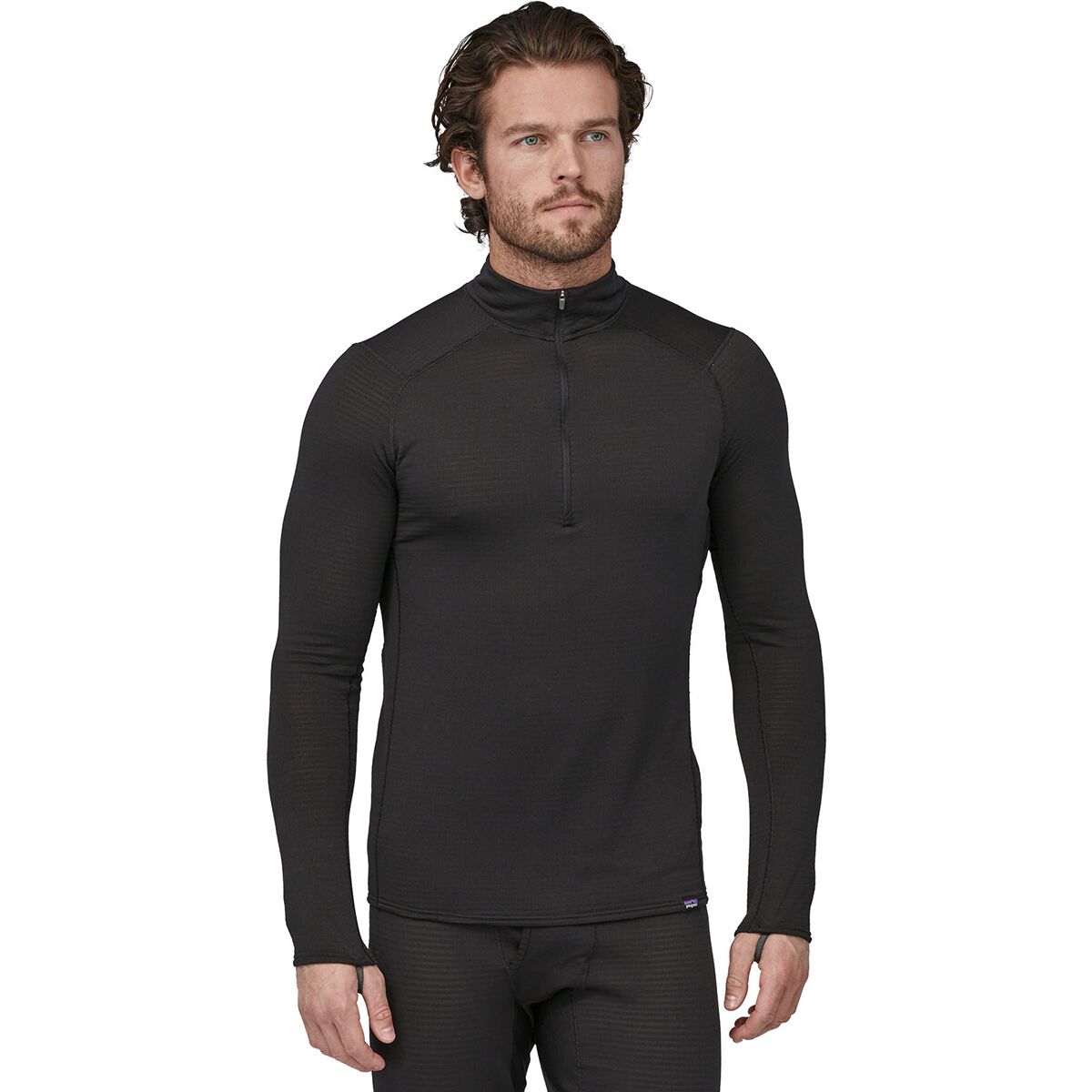
Overview
This is the warmest of Patagonia’s fully synthetic Capilene base layers, and the thermal weight zip-neck has evolved into something more of an all-purpose shirt than earlier “expedition weight” Capilene base layers.
Designed as a next-to-skin baselayer for performance in cold climates, this versatile piece is warm and breathable enough to wear as a light midlayer or fleece during active pursuits in transition seasons.
It’s aimed squarely at high-output cold-weather athletes — ski tourers, winter hikers, and thru-hikers who run hot — though buyers expecting heavy expedition warmth from the “thermal” name will likely be disappointed.
Key Specs
| Spec | Detail |
|---|---|
| Weight | 206 g (7.3 oz) |
| Fabric | Polartec® Power Grid® 92% recycled polyester / 8% spandex |
| Fabric Weight | 3.8 oz / 129 g/m² |
| Odor Control | HeiQ® Pure |
| Fit | Slim |
| Fair Trade Certified | Yes |
| Made In | Colombia |
| Style No. | 43657 |

Would the Men's Capilene® Thermal Weight Baselayer Zip-Neck Pullover earn its spot in your pack?
206 g · 7.3 ozAdd the Patagonia Men's Capilene® Thermal Weight Baselayer Zip-Neck Pullover to your Gear Closet and see exactly what it does to your base weight, then start packing for your next trip.
Free · No credit card · iOS, Android & web · Trusted by 3,000+ backpackers
Performance
Warmth — Temper Your Expectations
Let’s address the name head-on: despite its name, the Patagonia Capilene Thermal Weight Zip-Neck isn’t all that warm. Instead, it provides light to midweight warmth that’s ideal for year-round wear. If you’re coming from an older Patagonia expedition-weight layer — the Power Stretch fleece era — this will feel like a step back. Extremely air-permeable worn alone, it’s quite a bit warmer under a shell, but it’s not as warm as previous “expedition weight” Capilene — it wicks better and dries faster. Think of it as a hard-charging mid-loft layer rather than a cold-static insulator.
That said, its loft traps warmth efficiently — in fact, it’s comparable to a 100% merino layer of the same fabric weight (129 g/m²). And when tested during a 15-hour climb of Mount Stuart in Washington’s Central Cascades — ten hours of hiking and five hours of climbing a 2,500-foot ridge to roughly 9,000 feet — with weather ranging from 40 to 55°F and activity levels swinging from casual to fast, the Capilene Thermal maintained all-day comfort throughout.
Breathability and Moisture Management
This is where the Power Grid construction genuinely earns its keep. The Polartec fabric features a grid construction that creates open-air channels, providing outstanding breathability and moisture-wicking performance. The knit material helps lock in heat when it’s cold and lets it escape as your temperature rises. When sweating hard, the fabric wicks moisture from the skin immediately, drying faster than merino and without ever getting bogged down.
The tradeoff is wind resistance — there is none. Don’t let the smooth outer face fool you. If it’s cold and windy and you’re wearing this alone, the wind will cut right through — fine if you’re doing a very taxing hike, but otherwise, you’ll be layering this with something else. Pair it with a windshell or hardshell and it performs differently: under another fleece layer or Patagonia’s NanoAir and a shell, it’s a great choice for a hard hike or nordic ski in winter.
Comfort and Fit
The lofted Power Grid fabric is luxuriously soft and airy. It doesn’t cling to your skin as much as tighter-fitting base layers like the Smartwool Intraknit Thermal. It’s stretchy, allowing you to move unrestricted on the slopes, at the crag, or on trails. Despite being synthetic, the Capilene Thermal lacks that snaggy, plasticky feel of most polyesters — it’s more like a light gridded fleece, un-suffocating and cozy.
The shirt feels very lightweight, quite stretchy, and has a pretty close fit — classic base layer fit. The outer surface is smooth, the inner surface is grid-like.
Patagonia calls it “slim,” but fit consistency has become a complaint across multiple reviewers.
The fit runs much looser than previous versions, and in testers’ opinion, doesn’t retain heat as well as a close-fitting layer.
If you’re buying blind online, consider sizing down from your usual Patagonia size — or try it in person first.
Odor Control
The Capilene Thermal is coated in HeiQ Pure odor control, a silver ion-based antimicrobial solution that safely blocks odors while maintaining the fabric’s durability and breathability. It’s guaranteed to last the fabric’s lifetime. In testing, HeiQ performs about as well as it gets for synthetic base layers, and the Capilene Thermal remained fairly odor-free and didn’t retain odors between washes.
It won’t match raw merino over a multi-day trip, but it punches well above average for synthetic.
Durability Concerns
Worth flagging. The Capilene Thermal’s thin construction is not as durable as thicker synthetic layers. Expect a bit of pilling, especially if you plan to wear it on its own. Outdoor Gear Lab’s women’s testers reported a more serious finding during their March 2026 update: small holes near the seams and major pilling after just a few weeks of testing. That’s the women’s cut, and results may vary, but it’s a thread worth pulling (so to speak). If you plan to primarily wear the Capilene Thermal under a mid or outer layer, it should last through years of use.
Design Details
The feature set is thoughtfully trail-oriented. Offset shoulder seams eliminate chafing under pack straps, the long center-front zipper vents body heat and is backed by kissing welts for low-bulk comfort next to the skin, and full underarm gussets offer range of motion and chafe-free comfort. The zip length is generous enough to make a real difference on climbs — you can open it halfway and actually feel the relief.
One recurring gripe: the thumb loops. They’re thin elastic straps rather than true integrated thumb holes. Patagonia uses the same uncomfortable minimalist thumb loops in the latest design. The thin, elastic loops can be abrasive during runs or climbing the skin track, often leaving testers wishing they were better integrated into the sleeve. They work in a pinch for keeping the sleeve in place under a mitt, but they’re a compromise.
Pros & Cons
Pros
- Exceptional breathability and moisture management for high-output activity
- Polartec Power Grid fabric is soft and moves with you — no plasticky feel
- Two-sided construction (smooth outer, open-grid inner) layers cleanly under a shell
- HeiQ Pure odor control performs well for a synthetic
- 92% recycled polyester, Fair Trade Certified, genuine sustainability credentials
- Long zip provides real ventilation control on the move
- Offset shoulder seams mean pack straps don’t create hot spots
Cons
- “Thermal weight” name oversells warmth — expect light-to-mid warmth, not expedition-level heat
- Zero wind resistance when worn alone
- Fit has shifted looser in recent versions — size down or try in-store
- Elastic thumb loops are thin and can chafe; not true thumb holes
- Pilling reported, especially as an outer layer; durability is a legitimate concern
- Premium price (~$99–109) for a fabric that can show wear relatively quickly
Who Should Buy This
This is the right layer for aerobic winter athletes who need breathability more than brute warmth — ski tourers, winter trail runners, fast-and-light mountaineers, and thru-hikers who run hot in cold conditions. It works under insulating layers while camping in the cold, under a wind jacket hiking in temperatures from 20° to 60°F, and even doubles as a sleep shirt in the field. If you hike hard and layer smart, this shirt quietly disappears into your system and does its job. If you’re looking for a warm, standalone cold-weather piece or you move slowly in the cold, look at Patagonia’s Crosstrek lineup instead.
Verdict
The Capilene Thermal Weight Zip-Neck is a genuinely excellent baselayer for high-output use — the Power Grid fabric’s breathability is hard to beat at this weight, and the trail-specific details (offset seams, long zip, underarm gussets) show Patagonia actually thought about how this gets worn. Cost is a sticking point — it’s quite a lot of money. You’re paying for a layer that functions well, should last several years with reasonable care, and benefits from a lifetime guarantee that Patagonia actually honors. Just go in with calibrated expectations: this is a performance base layer built for sweaty people, not a cozy thermal you throw on to stay warm at a standstill.
Rating: 7.5 / 10