Macpac Nitro Fleece Pullover Review
Macpac's 140 g Nitro is a bare Polartec Alpha Direct hooded pullover that runs warm and breathes well when moving. It needs a shell the moment the wind picks up.
Overview
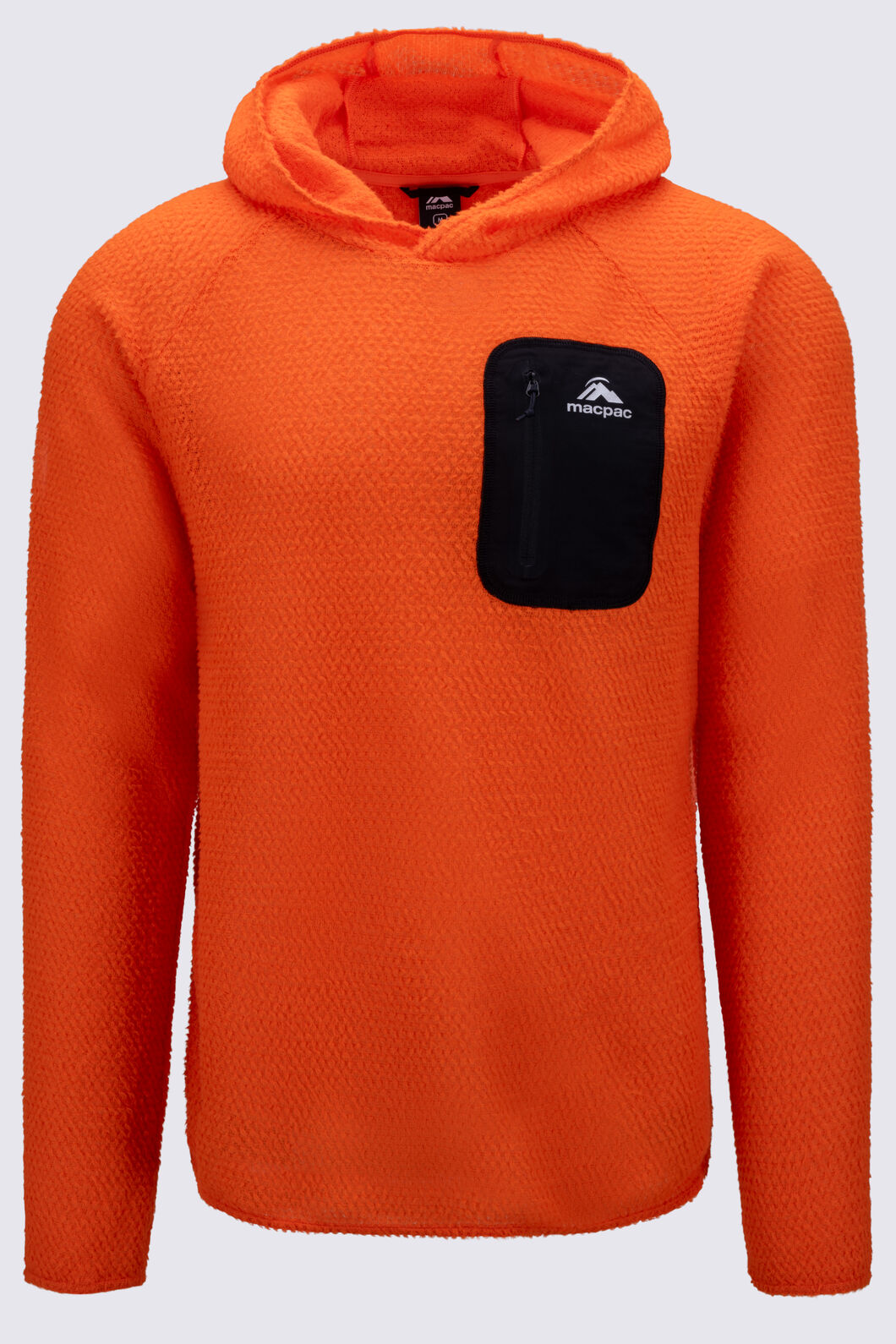
The Nitro is a hooded pullover cut from 90 gsm Polartec Alpha Direct with no face fabric and no lining. At 140 g, it weighs less than many base layers. It is built for people who run hot and want a layer that sheds heat quickly, including alpinists, ski tourers, trail runners and thru-hikers. The trade-off comes with the fabric: the open knit that makes the Nitro so breathable also lets wind pass straight through, and the exposed fibers snag easily.
Key Specs
| Spec | Detail |
|---|---|
| Weight | 140 g (men’s) |
| Fabric | Polartec Alpha Direct, 90 gsm |
| Recycled content | 78% |
| Fit | Slim, technical |
| Hood | Yes, articulated |
| Closure | Pullover, no main zip |
| Pockets | Zippered Napoleon chest pocket |
| Other features | Thumb loops, elasticated hem |
| Series | Macpac Alpine Series |

Would the Nitro Fleece Pullover earn its spot in your pack?
140 g · 4.9 ozAdd the Macpac Nitro Fleece Pullover to your Gear Closet and see exactly what it does to your base weight, then start packing for your next trip.
Free · No credit card · iOS, Android & web · Trusted by 3,000+ backpackers
Performance
Warmth for weight. This is where the Nitro earns its place. Alpha Direct began as a fabric developed with U.S. Special Operations Forces for variable-intensity work in the cold. It combines lofted synthetic fibers with a mesh base grid, and the insulation sits directly against the skin without a lining. An alpinist who wore the Nitro on the Walker Spur and Croz Spur of the Grandes Jorasses, in temperatures between -5°C and -15°C, concluded that no mid layer of the same warmth weighs as little. He also used it on the Haute Route and on a ski descent of Mont Blanc. Worn over a thin base layer and under a shell, it was warm without feeling bulky.
Breathability and drying. Owners keep returning to this point. Bushwalkers in Australia describe it as far more breathable, lighter and less stuffy than a 100-weight fleece. They also say it dries faster than their base layers do. A Wilderness Magazine reviewer called it a mid layer lighter than some base layers and praised its breathability and quick drying. Other testers who run hot say it holds a steady temperature through a day that starts cold and warms by afternoon. Backpacking Light’s testers wore it over a trekking shirt in three-season use and over a fishnet mesh base layer in winter.
Wind. Air permeability is the one consistent complaint. Testers say the Nitro works best under a wind shell, and that combination is where bushwalkers call it almost perfect in cold, gusty weather. Without a shell, any breeze strips the warmth out. That makes the Nitro an active-insulation piece, not a camp or rest-stop garment. On a thru-hike, it is a layer for hiking, with a light wind shirt or rain jacket stowed alongside.
Fit and features. The cut is technical and slim, with long arms and an articulated hood, and Backpacking Light found the proportions well executed. The zippered chest pocket and thumb loops are practical touches. Sizing runs snug: one climber who normally wears a large in Macpac mid layers wanted an XL, so a try-on is worth the effort. The lack of a full zip saves weight but has costs. The Nitro goes on over a base layer or bare skin, and getting it on or off with a helmet in place is awkward. The same climber admitted to delaying putting it on until he was properly cold.
Compressibility. The fabric packs small. The same ski tourer said he barely noticed it at the bottom of a small pack.
Durability. The weak point. The exposed-fiber face is not abrasion-resistant. One Bushwalk Australia owner called it fragile and said it dislikes scrub, and he was on his second. Another owner reported snags that gradually shorten the fabric, a fluffy texture after long use, and a hole from a stray branch on a slightly overgrown track. Others have been more positive: one tester found it resisted wear from pack straps better than its thin look suggests. Across user reports, the fair summary is that it holds up well on open trails and in a pack, but not through thick bush. Trail-runners and alpine users will likely get a longer life out of it than scrub-bashers.
Pros & Cons
Pros
- 140 g with real warmth for the weight
- Breathes well and dumps heat quickly during hard efforts
- Dries faster than conventional fleece and many base layers
- Packs small
- Articulated hood, chest pocket and thumb loops
- 78% recycled content
Cons
- Very little wind resistance, so it needs a shell in a breeze
- Snags easily and is vulnerable to brush and rough abrasion
- No main zip, so it is slow to put on and take off, especially with a helmet
- Slim fit that may call for sizing up
- Not a standalone outer layer; it soaks up snow and is easy to rip
Who Should Buy This
The Nitro suits high-output hikers, runners, ski tourers and climbers who already carry a shell and want an insulating layer that weighs almost nothing and doesn’t overheat them. It is a good fit for three-season thru-hikers on open terrain who run warm. Anyone who needs a layer for standing around camp, hikers who walk through dense scrub, and those who dislike pulling a garment over their head should look elsewhere. A fabric-faced active insulation piece or a full-zip fleece is better for them.
Verdict
The Nitro is one of the lightest and most breathable insulating mid layers available, and it does what it was designed for: keeping a fast-moving body warm without trapping sweat. It asks for a shell in the wind and some care around branches. For hikers willing to work within those limits, it earns a spot in the pack.