Lundhags Makke Pant Review
Lundhags' slim-cut Makke Pant pairs PolyCotton stretch with Schoeller panels and vented pockets. It's tough and well detailed, but not ultralight or waterproof.
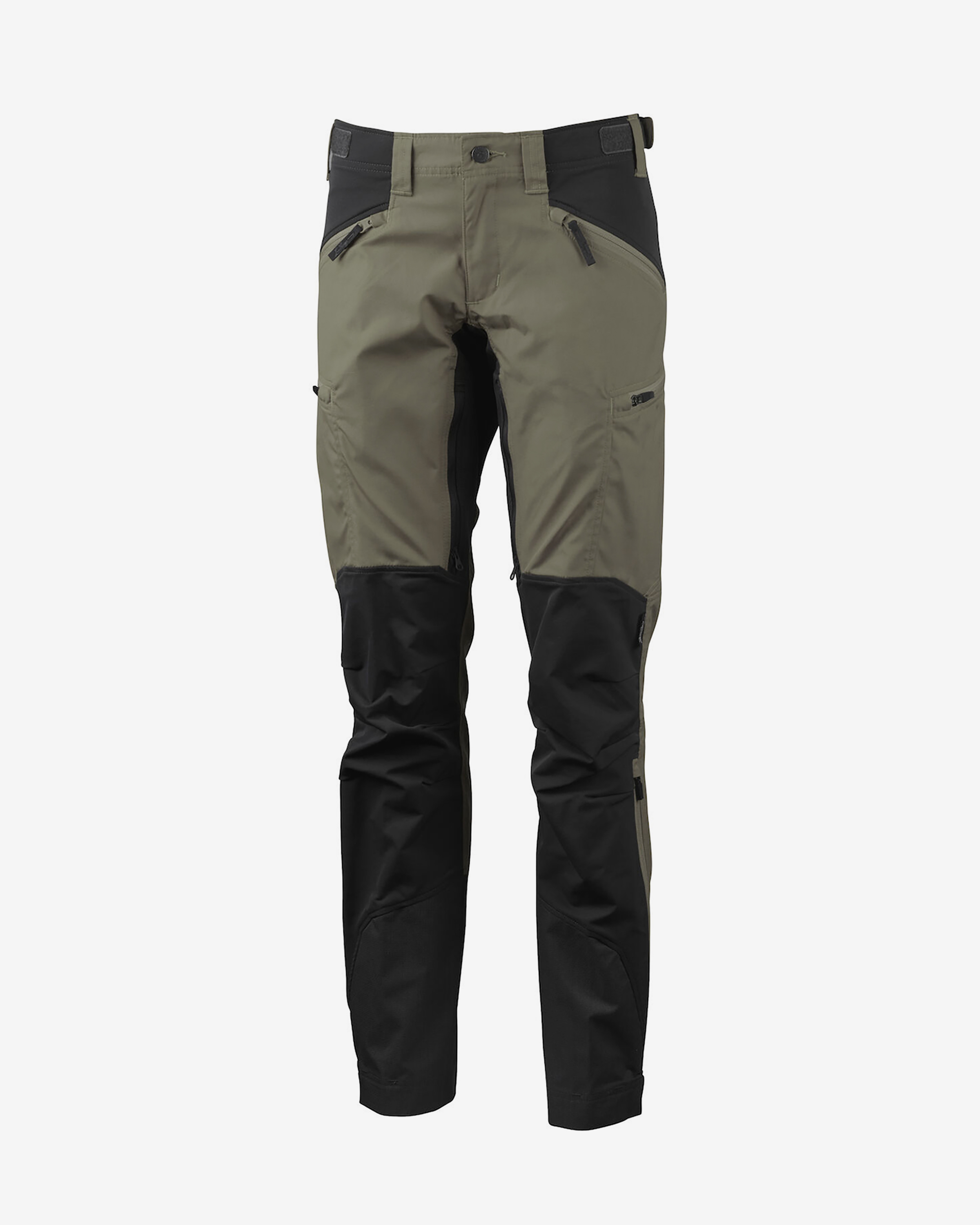
Overview
The Makke Pant is Lundhags’ answer to a question Swedish hillwalkers have been asking for decades: what should a trekking trouser be made of, and where? The reply is a hybrid. A PolyCotton body handles most of the leg, stretch panels sit where the body bends, and a hard-wearing patch guards the ankle where boots chew through cloth. It suits three-season trekkers who want one durable, well-pocketed pair, but at 436 g it is not a gram-counter’s pant.
Key Specs
| Spec | Detail |
|---|---|
| Weight | 436–510 g depending on size |
| Main fabric | 65% polyester, 35% cotton (Lundhags LPC PolyCotton, mechanical stretch) |
| Stretch panels | Schoeller DrySkin (52% polyamide, 41% polyamide micro, 7% elastane) at seat, knees and crotch |
| Reinforcement | Schoeller Keprotec at the inside ankle cuffs |
| Fit | Slim / active |
| Ventilation | Zipped vents on the inner thigh, in the hand pockets and along the lower leg |
| Pockets | Zipped hand pockets and large zipped thigh pockets |
| Other details | Adjustable ankle cuffs, boot lace hook, belt loops |
| Weather resistance | Wind-resistant; not waterproof |
Versions compared
| Image | Version | Weight | vs. lightest |
|---|---|---|---|
| Standard | 436 g (15.4 oz) | lightest |
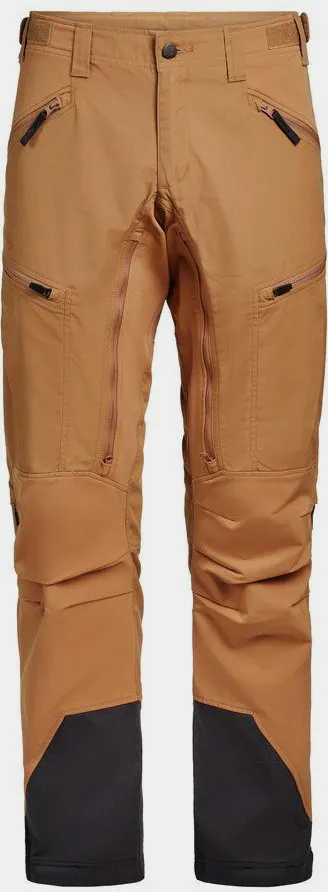 | 56 | 510 g (18.0 oz) | +74 g |

Would the Makke Pant earn its spot in your pack?
436 g · 15.4 ozAdd the Lundhags Makke Pant to your Gear Closet and see exactly what it does to your base weight, then start packing for your next trip.
Free · No credit card · iOS, Android & web · Trusted by 3,000+ backpackers
Performance
Fabric and durability. The PolyCotton body is the Makke’s defining choice. It is closer to a traditional walking trouser than a thin nylon hiker, and owners respond accordingly: the word “robust” turns up across hundreds of retailer reviews, and one wearer reported snagging the pants on a barbed-wire fence without a tear or hole. The Schoeller Keprotec patches at the ankle take the abuse from boot edges, crampon-free scrapes and trail grit. Durability is not unanimous, though. One buyer reported pulled threads on the lower leg after a hike through overgrown path, and another had a popper on a leg cuff fail within minutes of first wear.
Movement. The DrySkin panels at the seat, crotch and knees give the slim cut room to work. Hikers and climbers describe full mobility, and the stretch is enough that people who sized up for a looser fit say the pants still stretch comfortably. The Makke is cut close from waist to knee, and owners with big thighs or calves report it as tight.
Ventilation and weather. This is where the design earns its keep. Zips along the inner thigh, through the pocket bags and down the lower leg let the pant dump heat on a climb, and wearers single out the inner-thigh vents in particular. Owners rate it windproof and breathable for spring-to-autumn use. It is a three-season trouser, not a rain pant: reviewers repeatedly note that it sheds a shower but is not waterproof, and it will wet out in sustained rain. Buyers who wear it over base layers in winter report it works with a long-john layer, but it is not insulated.
Pockets and details. Owners praise the thigh pockets, which look oversized at first but sit flat when empty and swallow a map, phone or snacks when full. Reviewers say no pocket interferes with stride. The ankle width adjustment is simple, and the boot lace hook is a small touch that comparable Lundhags models skip.
Weight. One owner who bought both the Makke and the Lundhags Askro Pro in size 46 recorded 430 g against 400 g, and compared both favorably to a 550 g conventional trekking trouser. That is the Makke’s place: lighter than a traditional hard-wearing pant, heavier than the thin nylon trousers many thru-hikers favor.
Choosing a Version
The two listed versions differ in size, and size drives the weight: the standard listing comes in at 436 g, and the size 56 weighs 510 g, a difference of 74 g. Nothing else about the design changes. The cut is the real decision. Lundhags runs small and slim, and the retailer itself advises going up one size for a looser fit. Several owners say the waist runs notably smaller than the label suggests, and one buyer recommends sizing up two from a normal waist measurement. Long and short leg lengths are produced for some sizes, so tall hikers should check before accepting a high-water hem.
Hikers with a broader build who go to the 56 pay the 74 g penalty for a cut that actually fits. That is the right trade. A tight pant that binds at the knee costs more than 74 g in comfort.
Pros & Cons
Pros
- Abrasion-resistant PolyCotton body that owners report holds up to brush, fences and rock
- Stretch panels at seat, crotch and knees allow a high step and a deep squat
- Thigh, pocket and lower-leg vents for hot climbs
- Large, secure zipped pockets
- Adjustable ankle cuffs and a boot lace hook
- Flattering slim cut that wears well off-trail
Cons
- At 436 g or more, heavier than most ultralight trail pants
- Not waterproof; cotton content slows drying compared with all-synthetic pants
- Runs small, with a slim thigh that suits few muscular builds
- Expensive, a point owners raise even while recommending it
- A few reports of pulled threads and a failed cuff popper
Who Should Buy This
The Makke fits trekkers, hillwalkers and scramblers who want one rugged pant for Scandinavian-style bushwhacking, shoulder-season hiking and mixed use that continues into town. It also suits anyone who has shredded thin nylon pants on brush. Thru-hikers chasing the lowest possible base weight, and anyone hiking in hot, humid country where quick drying beats toughness, should pick a lighter all-synthetic pant instead. Those expecting storm protection will also need rain trousers.
Verdict
The Makke Pant is a durable, well-ventilated, carefully detailed trekking trouser that moves better than its tough fabric suggests. Its weight and its price keep it from ultralight territory, and sizing needs care. For three-season trekking where durability matters more than ounces, it is among the better options.