Finetrack Dry Layer Basic T Review
Finetrack's 46 g water-repellent mesh T-shirt goes under your base layer to fight sweat chill. Here is how it works and who should carry it.
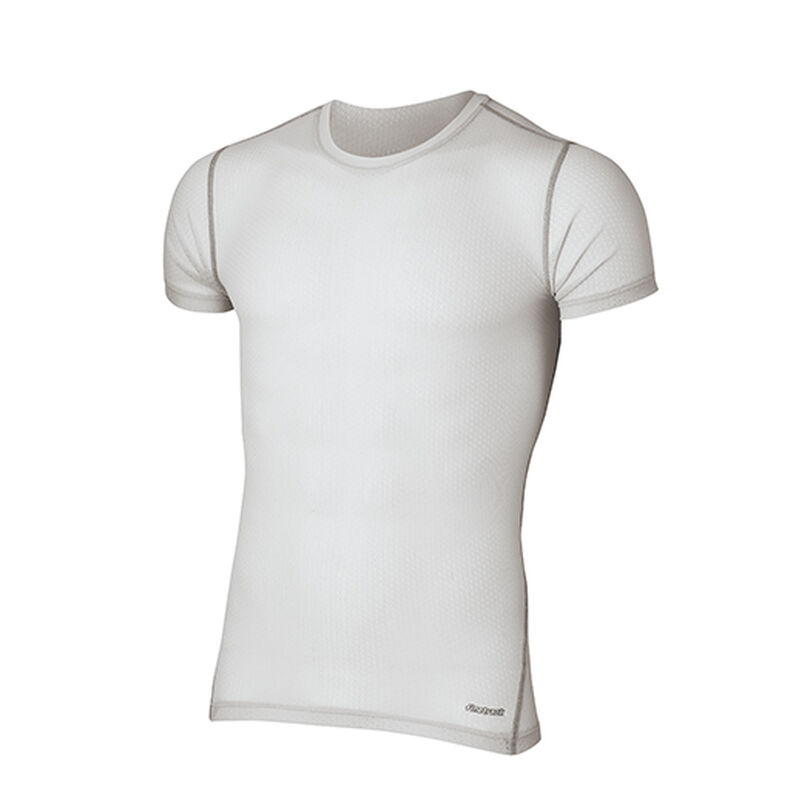
Overview
The Finetrack Dry Layer Basic T is a mesh T-shirt that weighs 46 g and has a water-repellent finish. It is worn directly against the skin, under a regular wicking base layer. Finetrack sells it internationally as the Elemental Layer Basic T. Its job is to keep sweat from pooling against the skin, which cuts the clammy cling during a climb and the shiver when you stop. The trade-off is a fragile, unusual fabric that costs more than most thin tees and feels odd on first wear.
Key Specs
| Spec | Detail |
|---|---|
| Weight | 46 g |
| Material | 100% polyester knit mesh |
| Water repellency | 80 points after 150 washes |
| Treatments | Antibacterial, deodorizing |
| Construction | Skin-friendly sewing |
| Made in | Japan |
| Intended use | General outdoor activities, worn next to skin under a wicking layer |
| Price | About $43 USD (men’s, via Rocksteppers); ¥5,544 on Finetrack’s Japanese store |

Would the Dry Layer Basic T earn its spot in your pack?
46 g · 1.6 ozAdd the Finetrack Dry Layer Basic T to your Gear Closet and see exactly what it does to your base weight, then start packing for your next trip.
Free · No credit card · iOS, Android & web · Trusted by 3,000+ backpackers
Performance
The Dry Layer is not a base layer in the usual sense. A conventional base layer absorbs sweat and spreads it out so it can evaporate, but the wet fabric still sits on your skin. This shirt does the opposite. It is a thin, open mesh with a durable water-repellent finish, so moisture passes through to the wicking layer above and the fabric against your body stays comparatively dry. Finetrack’s pitch is that this blunts sweat chill when you stop, and that it reduces the sticky feeling while you move.
Reviewers describe the effect in similar terms. One Japanese owner reviewing the lineup’s hot-weather sibling noted that water slides off almost instantly, and that even a puddle barely soaks through. A photographer who tested the Elemental Layer on spring ski tours reported that, above treeline in rising wind, he did not get the usual cold that follows heavy sweating. He found his skin and layers dry by the summit and said it handled the sweaty patch under a pack especially well. Finetrack’s sponsored athletes and guides make the same case more dramatically. A freeride skier said his back felt surprisingly dry while hiking a ridge. A guide reported no longer needing to swap into a dry base layer at the top of a climb. Those are brand-curated testimonials, but they match the independent accounts.
The fabric is moderate in thickness and stretchy, and Finetrack says it is sheer enough that a hint of skin shows through. It is designed to balance modest warmth with fast moisture transfer, which is why the company markets it for all seasons. Backpackers should read that as “works in a wide range of temperatures”, not “insulates”. It adds very little warmth, and its value is almost entirely about moisture.
Feel is the main adjustment. SnowBrains’ early write-up called the fabric light, almost flimsy, and very porous. It said the dry, slightly scratchy hand takes some getting used to for anyone accustomed to soft mainstream base layers. Finetrack’s own materials describe the stretch mesh as soft, but the consensus is that it feels like nothing else you wear against your skin.
Durability is the other caveat. The manufacturer warns that repeated friction, hook-and-loop fasteners, branches and hard objects can damage this delicate knit. For a thru-hiker, that means keeping it away from Velcro pack straps and rough shoulder-strap abrasion, and not treating it like a work shirt. The repellent finish is rated at 80 points after 150 washes, about 1.5 times the dry-performance lifespan of the old Skin Mesh it replaced in spring 2020. The antibacterial treatment and the finish’s tendency to leave the fabric dry both help with odor. Finetrack says a dry fabric inhibits the growth of odor-causing bacteria.
One fair counterpoint: a tester noted that on hot summer days he relies on wet skin for cooling and sometimes prefers to sweat. Finetrack offers a nylon Cool version for high heat. The Basic is the all-rounder, but in desert-style heat it can feel like one layer too many.
Pros & Cons
Pros
- At 46 g, the weight penalty is small for a layer that targets sweat chill.
- The finish is rated at 80 points after 150 washes, which is unusually durable for a repellent treatment.
- Owners and guides report a drier feel against the skin, including under a pack.
- Antibacterial and deodorizing treatment helps on multi-day trips.
- Can reduce the need to carry or change into a spare dry base layer.
- Made in Japan, with skin-friendly seams.
Cons
- The delicate knit can be damaged by friction, hook-and-loop fasteners and branches.
- The dry, porous feel takes adjustment and some find it slightly scratchy at first.
- It is semi-sheer and adds a layer, which some hikers will find unnecessary in high heat.
- Priced at roughly $43, it is not cheap for a 46 g shirt that needs careful handling.
- It only works as designed under a wicking layer, and it is not a standalone shirt.
Who Should Buy This
This shirt suits hikers who sweat heavily on climbs and then chill quickly at breaks, passes and camp. That includes shoulder-season backpackers, alpine and winter hikers, and anyone who dislikes putting on a damp base layer at dawn. It also makes sense for ultralighters who want one dry-feeling layer to replace a spare. It is a poor fit for hikers who run hot in desert or humid summer conditions and want a single shirt, for those who dislike a dry, mesh feel against the skin, and for anyone who will wear it under abrasive pack straps for months without replacing it.
Verdict
The Dry Layer Basic T is a well-regarded take on a specific problem. It keeps sweat off the skin for 46 g, and owners and testers consistently say it does that job. It needs gentle treatment and an open mind about how it feels, and it only pays off under a wicking layer. For cool-weather and high-output hiking, it is worth carrying.