Decathlon Simond Merino Resist T-Shirt Review
Decathlon's Simond Merino Resist tee wraps 18.5-micron merino around polyamide threads for a tougher, cheaper wool shirt with mesh venting and lab-tested odor control.
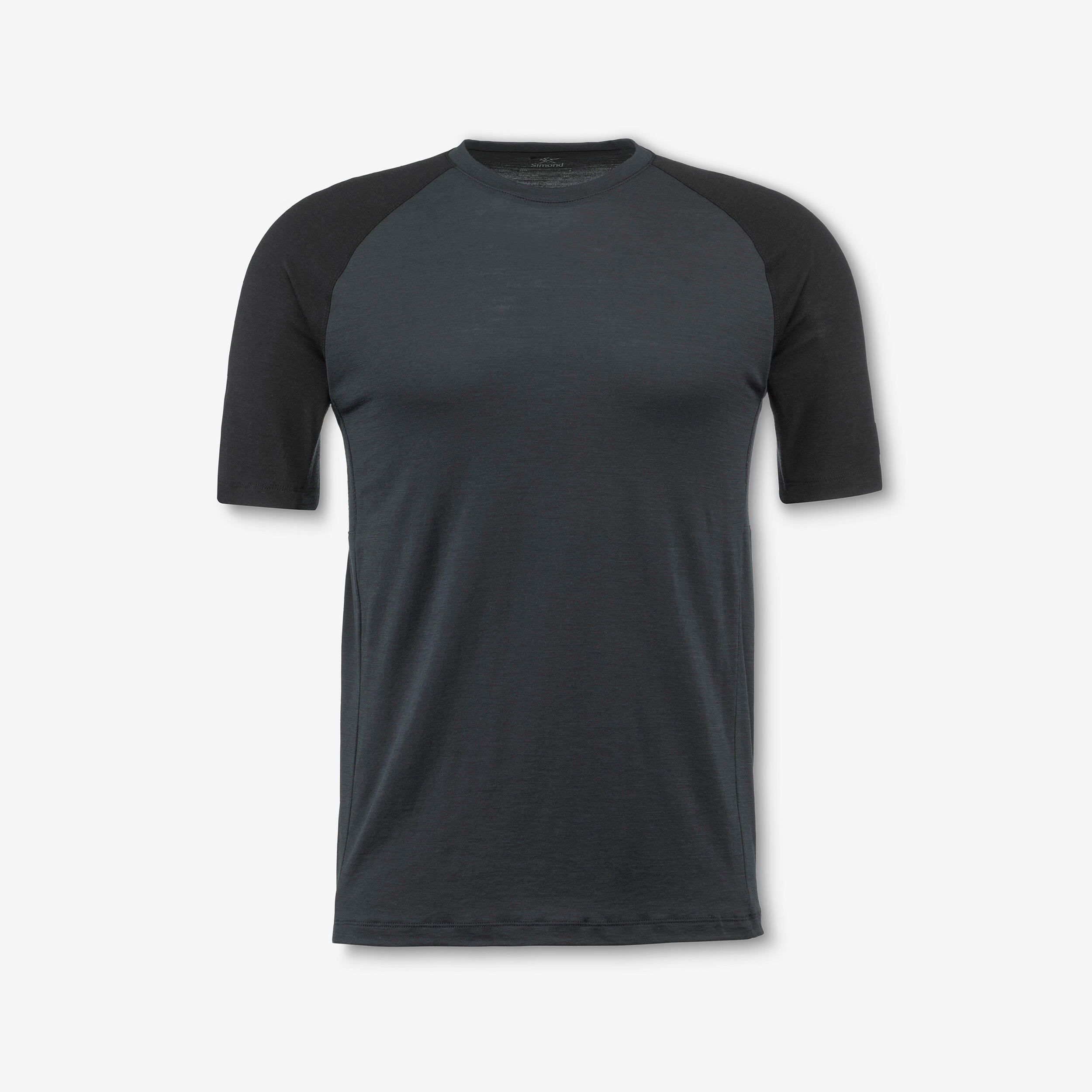
Overview
The Merino Resist is Decathlon’s answer to the oldest complaint about merino tees: they wear through at the pack straps long before they wear out anywhere else. Sold under the Simond mountaineering sub-brand, it builds the fabric from merino fibers wrapped around polyamide threads, adds mesh venting panels, and prices the result well below the established wool brands. The trade-off is a blended fabric that gives up a little of pure merino’s cachet in exchange for toughness.
Key Specs
| Spec | Detail |
|---|---|
| Weight | 137 g (Decathlon’s spec sheet lists 180 g in size L) |
| Fabric composition | 89% merino wool, 11% polyamide |
| Fabric weight | 155 g/m² |
| Merino fineness | 18.5 microns |
| Construction | BETA-SPUN polyamide-wrapped merino threads |
| Ventilation | Mesh inserts |
| Odor control | Lab-tested to ISO 17299-3 |
| Neck / fit | Crew neck, standard fit, no pocket |
| Sub-brand | Simond |

Would the T-shirt Merino Resist earn its spot in your pack?
137 g · 4.8 ozAdd the Decathlon T-shirt Merino Resist to your Gear Closet and see exactly what it does to your base weight, then start packing for your next trip.
Free · No credit card · iOS, Android & web · Trusted by 3,000+ backpackers
Performance
Durability. The wrapped-thread construction is the whole pitch. Instead of blending wool and synthetic fibers loosely, the polyamide forms a sheath around the merino, which Decathlon says raises resistance to friction without costing the wool its softness or thermal behavior. That targets the usual failure points: shoulders under pack straps, and the lower back where a hip belt rubs. A reviewer at Test 4 Outside who wore the long-sleeve Forclaz MT500, a related Decathlon merino/polyamide shirt, reported no premature wear and expected only the mild pilling common to all merino. Owners of Simond’s other merino tees describe shirts that have lasted years of thru-hiking, a good sign for the brand’s approach, though it isn’t direct evidence for this model.
Fabric weight and warmth. At 155 g/m², the Merino Resist sits in the mid-weight range for a summer tee. It is sturdier and a touch warmer than the ultralight 120–130 g/m² wool shirts favored by gram counters. The same 155 g/m² fabric platform shows up in Decathlon’s MT500 neck gaiter, where testers noted it runs heftier than a classic lightweight merino Buff. In practice, that means a shirt that does double duty on cool mornings and doesn’t feel flimsy at camp, but one that won’t be the coolest option in desert heat.
Odor and moisture. The odor claim rests on a laboratory test to ISO 17299-3, the standard used to measure how well a textile limits perspiration smells. Merino has long been the choice for multi-day wear without washing, and owners of Decathlon’s merino range report wearing shirts for consecutive days without any smell. The mesh inserts add ventilation in high-heat areas, and Decathlon pairs them with wool to keep the body dry. Merino’s natural ability to hold moisture without feeling clammy also helps: one owner of a sibling Simond shirt described climbing a 2,000-foot ascent into cold cloud, arriving soaked and still warm.
Feel and fit. The 18.5-micron merino sits at the fine end of the range for hiking shirts, and Decathlon specifies it as non-itchy. The cut is a standard fit with a crew neck and no chest pocket. A two-tone design pairs wool with mesh panels. Owners of Simond’s Travel 500 tees say those shirts run small and recommend sizing up, so shoppers between sizes should try the fit before committing.
Owner satisfaction. The men’s short-sleeve version holds a 4.7 out of 5 average across 371 reviews on Decathlon’s U.S. site. The long-sleeve sibling scores 4.77 across 616 reviews in the U.K., where roughly 85 percent of ratings are five stars.
Pros & Cons
Pros
- Polyamide-wrapped threads target the pack-strap wear that kills ordinary merino tees
- 18.5-micron merino is fine enough for next-to-skin comfort
- Lab-tested odor control to ISO 17299-3
- Mesh inserts add venting where a wool tee runs hottest
- 4.7 out of 5 across hundreds of owner reviews
- Priced well below premium merino brands
Cons
- At 155 g/m², heavier than ultralight wool tees and slower to dry than a synthetic
- Blended fabric rather than pure wool, so it is not for hikers who want only natural fibers
- Polyamide content means it will never feel quite like a 100% merino shirt
- Sister Simond shirts run small, so sizing up is common
- Decathlon’s retail footprint outside Europe is limited, so availability varies by region
Who Should Buy This
This is a shirt for the hiker who carries a pack all day, wears the same top for a week, and is tired of replacing merino tees that develop thin patches at the shoulders. It suits section hikers and thru-hikers on a budget and anyone who wants merino’s odor resistance without a premium-brand price. Gram counters chasing the lightest possible kit, and hikers who run hot in desert conditions, should look at a lighter wool tee or a synthetic. Shoppers who insist on 100% merino won’t find it here.
Verdict
The Merino Resist delivers what most wool tees promise but few manage: a shirt that tolerates pack straps and repeated trips through the wash while keeping merino’s odor control and soft feel. It is a mid-weight, practical workhorse at a low price. A strong buy for pack-heavy trips, less compelling when every gram counts.