Decathlon Merino Resist Short-Sleeve T-Shirt Review
Decathlon's 137 g, 115 gsm merino tee wraps its wool in polyamide for durability. Here's how it holds up for hiking, who it suits, and where it falls short.
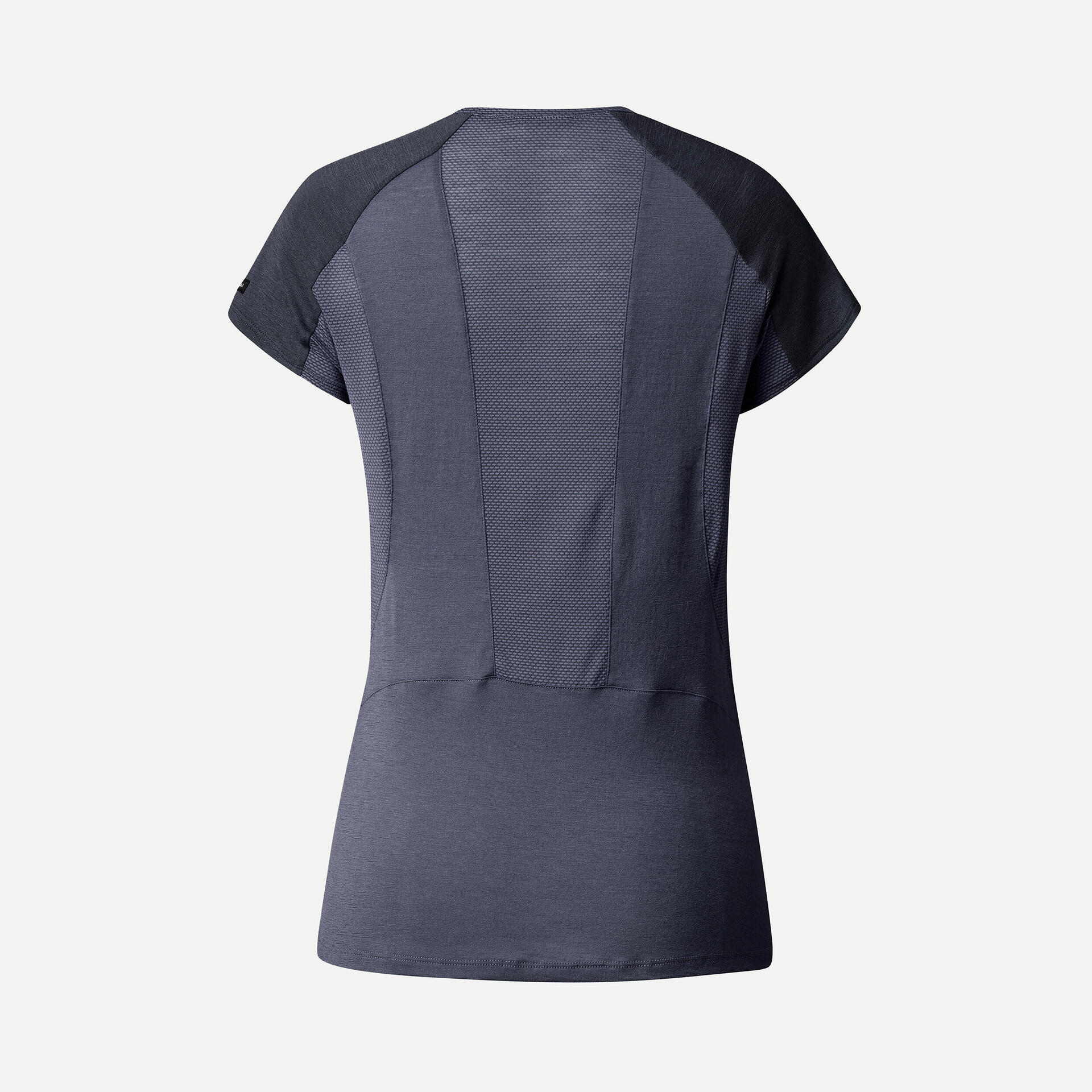
Overview
Decathlon’s Merino Resist is a short-sleeve trekking tee built around a simple idea: wrap fine merino fibers in polyamide so the wool survives pack straps, sweat and repeated washing. At 137 g and 115 gsm, it sits in the lightweight-summer category rather than the cold-weather base layer one. The trade-off is the usual one for Decathlon’s wool line: tougher and cheaper than premium merino, but not as soft.
Key Specs
| Spec | Detail |
|---|---|
| Model number | 356413 |
| Sub-brand | Forclaz |
| Weight | 137 g |
| Fabric weight | 115 gsm |
| Wool fineness | 18.5 microns |
| Construction | Merino fibers wrapped in polyamide |
| Ventilation | Mesh inserts |
| Odor control | Natural merino odor resistance |
| Category | Short-sleeve base layer / trekking tee |

Would the Merino Resist Short-Sleeve T-Shirt earn its spot in your pack?
137 g · 4.8 ozAdd the Decathlon Merino Resist Short-Sleeve T-Shirt to your Gear Closet and see exactly what it does to your base weight, then start packing for your next trip.
Free · No credit card · iOS, Android & web · Trusted by 3,000+ backpackers
Performance
Fabric and durability. The defining feature is the yarn. Decathlon describes its approach as a spun structure in which merino fibers are coated with a fine sheath of polyamide filaments to protect them from rubbing and cuts, without affecting the properties of the wool. That matters most where a merino tee usually fails first: under pack shoulder straps and along the hip belt, where friction thins out untreated wool. Reviewers of the long-sleeve MT500, which uses the same wrapped-wool approach, reported no premature wear in field testing. Short-sleeve owners are best off treating that as a good sign rather than a long-term guarantee, since the 115 gsm fabric here is much thinner than the 190 gsm used in the MT500.
Warmth and breathability. At 115 gsm, this is a warm-weather shirt. The mesh inserts add airflow in the places a pack blocks it, and the 18.5-micron wool is in the fine range that generally avoids the itch of coarser merino. Decathlon’s testing of its merino line points to a benefit that applies to wool in general: it can absorb up to 35 percent of its weight in moisture without feeling damp, which softens the cold snap when a sweaty climb ends at a windy saddle. Testers of the sibling MT500 found that wet wool didn’t feel cold and dried quickly enough to wash mid-trek and wear again the same day.
Odor. Merino’s main selling point on a thru-hike is how many days it can go between washes. Decathlon’s wool fabric is lab-tested to ISO 17299-3 for odor control. The polyamide content costs some of that advantage, though. Reviewers of the MT500 found that it handles two to four days between washes well, but starts to smell after that, and that pure merino lasts longer. Hikers on long, hot stretches should expect the same here: this is a shirt to rinse regularly, not to wear for a week straight.
Fit and comfort. The Forclaz line is cut close to the body, and testers of the MT500 liked how it followed movement and stayed in place under a pack. They also noted it isn’t as soft as Icebreaker, Arc’teryx or Devold, but it is durable and arguably beats Smartwool, at a much lower price. That description fits the short-sleeve too: it is a workmanlike tee, not a luxury one.
Weight in context. At 137 g, it isn’t a gram-counter’s shirt. Merino tees are always a bit heavier than synthetic ones, and a good polyester running tee weighs well under this. What the extra weight buys is a shirt that can serve as both trail top and camp top without smelling like either.
Pros & Cons
Pros
- Polyamide-wrapped merino resists the friction of pack straps better than standard merino
- 18.5-micron wool is fine enough to avoid most itch
- Mesh inserts add ventilation in a pack-heavy area
- Odor control is lab-tested, and good enough for multi-day stretches
- 137 g is reasonable for a durable merino tee
- Budget pricing compared with name-brand merino
Cons
- Not as soft as Icebreaker, Arc’teryx or Devold
- Polyamide content shortens the time between washes compared with pure merino
- Heavier than a synthetic tee
- 115 gsm gives little warmth on cool mornings without another layer
- Mesh inserts add airflow but are a possible wear point under heavy loads
Who Should Buy This
This tee suits three-season backpackers and thru-hikers who want a merino shirt that survives a full season of pack straps without spending premium-brand money. It also suits anyone building a one-shirt trail kit who plans to rinse it every few days. Hikers who put softness first, or who want a week of wear between washes, should look at pure merino from a premium brand. So should those who want the lightest possible top, for whom a synthetic tee is the better option.
Verdict
The Merino Resist is a durable, sensibly weighted merino tee that answers merino’s biggest weakness, wear, for much less than the big names charge. It gives up some softness and some odor resistance to do that. For hikers on a budget, that is a fair deal.