Mammut Contact Sling 8.0 120cm Review
A 53g, 100% Dyneema sewn runner with a uniquely low-profile seam — consistently rated the best climbing sling for alpine draws and multipitch rack management.
Overview
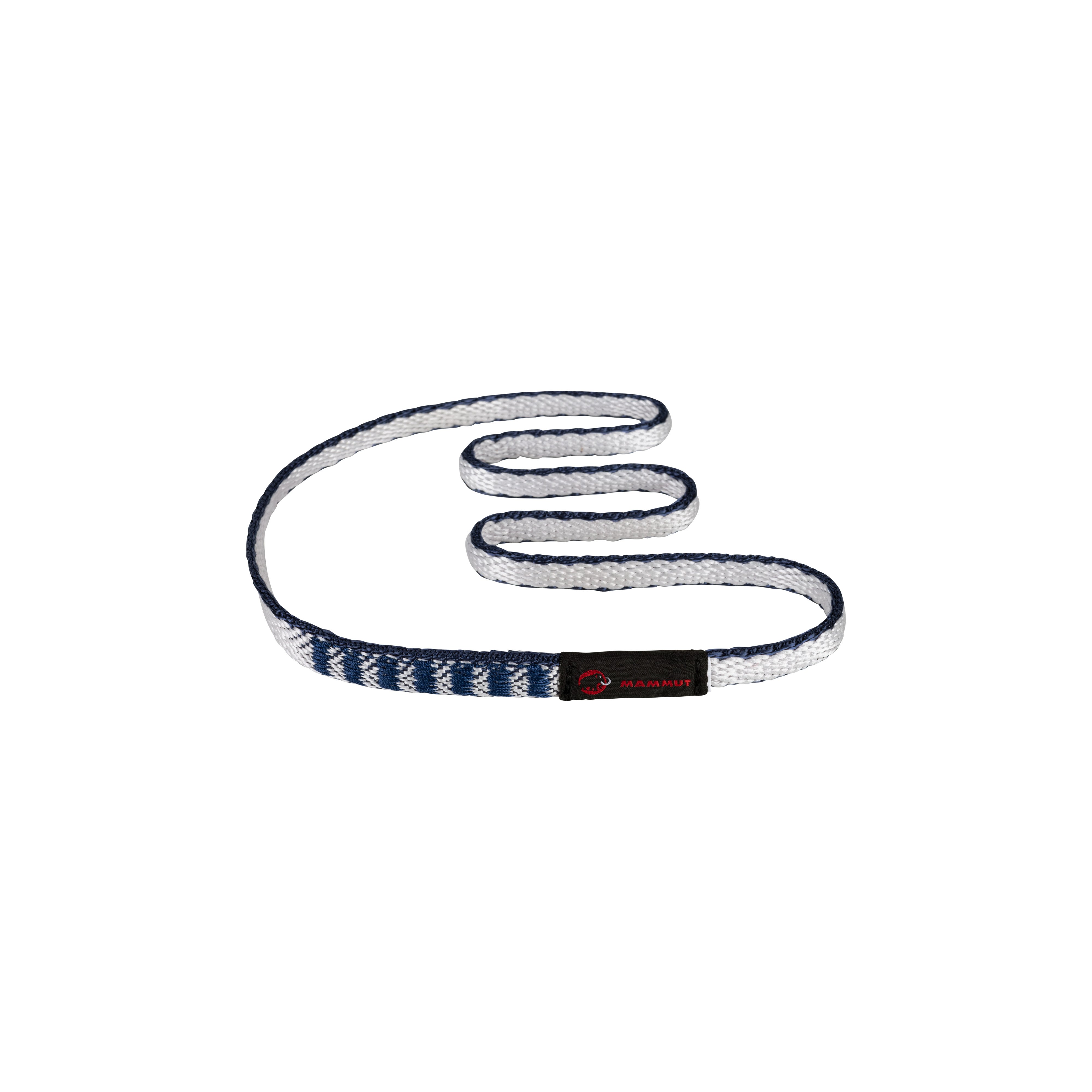
The Mammut Contact Sling 8.0 is a 100% Dyneema sewn runner built around one genuinely clever piece of engineering: a tubular, 8mm-wide webbing paired with Mammut’s proprietary “Contact stitching” technique that keeps the seam exceptionally flat and snag-free. The result is a sling that slides through carabiners and triples into an alpine draw more smoothly than anything else in its class. At 53g for the 120cm length, it sits comfortably at the lighter end of the Dyneema runner market, and it earns consistent top-pick status from virtually every serious gear review outlet that has tested it.
Key Specs
| Spec | Value |
|---|---|
| Weight | 53 g |
| Length | 120 cm |
| Width | 8 mm |
| Material | 100% Dyneema |
| Breaking Load | 22 kN |
| Certifications | UIAA, CE |
| Available Lengths | 30, 60, 120, 180, 240 cm |

Would the Contact Sling 8.0 earn its spot in your pack?
53 g · 1.9 ozAdd the Mammut Contact Sling 8.0 to your Gear Closet and see exactly what it does to your base weight, then start packing for your next trip.
Free · No credit card · iOS, Android & web · Trusted by 3,000+ backpackers
Performance
Handle and Alpine Draw Conversion
This is where the Contact Sling earns its reputation. No other sling triples up into an alpine quickdraw as smoothly or releases as easily as the Mammut Contact — largely because the 8mm webbing is more circular in cross-section than it is flat, which dramatically reduces friction as the sling slides against itself in the crotch of a carabiner. In practice, you can equalize the two sides of the draw with one hand while your other is busy finding the next hold. That’s not a small thing on a wandering pitch at your limit.
The edges of the stitching have no raw edge sticking up to catch on a biner or on the loops of the sling when extending an alpine draw
— a detail that separates the Contact from cheaper Dyneema runners where the bar tack can snag mid-route and force awkward fumbling. That said,
the Dyneema fibers can catch on the rivets of carabiners
, so it’s not entirely frictionless — just far better than the competition.
The Contact Sling was the only Dyneema sling in Outdoor Gear Lab’s testing that handles as nicely as softer nylon runners. Not only is the material silky smooth in the hand, but the round shape means there are no abrasive edges like those found on some other slings.
Weight and Bulk
Its tubular design and Dyneema fibers deliver the same UIAA-mandated 22 kN strength as all climbing slings, but in a design that is only 8mm wide.
At 8mm, the Contact is a full two millimeters narrower than its closest Dyneema competitors — the Petzl Pur’Anneau, Black Diamond Dynex Runner, and Sterling Dyneema Sewn Runner — all of which use flat webbing.
That extra narrowness compounds into meaningful differences on a loaded rack over a long alpine day.
Versatility Across Disciplines
The sling holds up well to climbing abuse through ice season and rock season alike, with a breaking load and build quality that instills confidence while on the sharp end and while building anchors.
The 120cm length is long enough to create equalized multi-point anchors, extend quickdraws to reduce rope drag on wandering pitches, or comfortably girth-hitch large natural features.
The Dyneema Trade-offs You Need to Know
The Contact Sling is a sewn runner — and like every Dyneema sewn runner, it comes with material constraints that deserve more than a footnote.
Knots: An overhand knot in a loaded Dyneema sling can be impossible to undo without a knife. More critically, knots reduce Dyneema’s strength more severely than they reduce nylon’s — a knotted Dyneema sling may retain only 40–50% of its rated strength. That math still lands well above the forces generated in real climbing scenarios — a sewn Dyneema runner rated to 22 kN at 50% reduction still delivers around 11 kN, and the maximum force possible in any real-world climbing scenario is roughly 9 kN in an extremely rare, harsh factor-2 fall — but the practical issue is that those knots can become nearly impossible to undo.
Heat and melting point: Dyneema has a lower melting point (~145°C) compared to nylon (~245°C), which makes it even more critical to avoid rope-on-webbing contact with Dyneema than with nylon.
Stretch: Dyneema stretches only three to five percent, meaning minimal dynamic absorption — if you fall while attached directly to an anchor with a Dyneema sling and no rope in the system, the resulting impact will be as abrupt as if you were attached by steel cable.
Aging: Due to their low weight and small diameter, thin Dyneema slings age faster than wider counterparts or slings made from other materials — experiments have shown that after 3–5 years, breaking load values can decrease to 13–15 kN. Inspect and retire on schedule.
None of these concerns are unique to Mammut; they’re inherent to Dyneema. The Contact Sling manages these trade-offs as well as any sling in its category.
Pros & Cons
Pros
- Smoothest alpine draw conversion of any sling tested — round tubular profile is genuinely different
- Low-profile Contact stitching seam slides cleanly over carabiner gates
- 22 kN breaking load at just 53g in the 120cm length
- Handles better than any other Dyneema runner; silky, not stiff
- Versatile: sport, trad, multipitch, alpine, ice, mixed
- Competitive price point given the quality
Cons
- Dyneema fibers can snag on carabiner rivets
- Knots are extremely difficult (sometimes impossible) to untie after being loaded
- No dynamic stretch — not suitable as a direct tether for shock-loaded falls without rope in the system
- Low melting point (~145°C); rope-on-sling contact is a genuine hazard
- Thin diameter means faster UV and flexion degradation than nylon — needs more frequent inspection and replacement
- Only available in pre-sewn form; you can’t tie your own length from the spool
Who Should Buy This
The Contact Sling 8.0 in 120cm is built for climbers who prioritize efficiency on the rack — multipitch trad and alpine climbers managing rope drag across long, wandering pitches, ice and mixed climbers who need a sling that won’t freeze into a board, and anyone who builds alpine draws as a matter of course. The Mammut Contact 8mm is the benchmark Dyneema sling for any climber who wants the lightest, most packable option for extending protection and building alpine draws. Pair it with a few nylon runners for anchor-building situations where you’ll need to tie and untie knots repeatedly.
Verdict
The Mammut Contact Sling 8.0 120cm is about as close to a consensus best-in-class as you’ll find in climbing gear: it wins Outdoor Gear Lab’s Editors’ Choice award for best overall climbing sling, leading the way in weight, bulk, handle, and the ability to quickly and easily use it as an alpine quickdraw. The material trade-offs are real and worth understanding before you rack up, but they’re manageable with attentive use — and none of them are unique to Mammut. If you’re building out a serious rack, buy these in multiples and supplement with nylon for anchor work. Rating: 9/10