The Best New Ultralight Backpacking Gear in 2026
From ALUULA Graflyte packs to the Exped Ultra 6.5R sleeping pad, here's the most exciting new ultralight backpacking gear hitting trails in 2026.
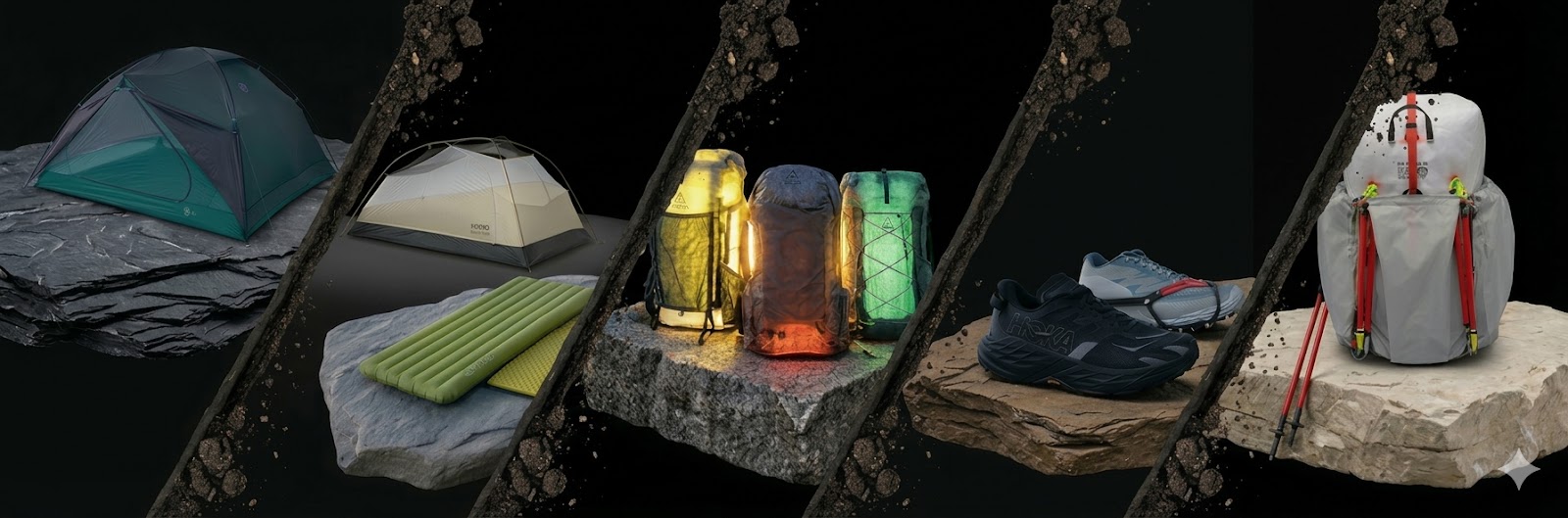
Every spring I do the same ritual: scroll through a season’s worth of new releases, pull out the handful that actually move the needle, and quietly start justifying budget reallocations to my partner. Most years, it’s incremental — a few grams here, a fabric upgrade there. But 2026 is turning out to be a genuinely interesting year for ultralight backpackers.
Two big themes are driving the excitement. First, ALUULA Graflyte — a mono-polymer UHMWPE fabric — has officially gone mainstream, with multiple brands betting heavily on it for packs. Second, there’s a quiet but real surge in sleep system upgrades, with Exped’s new Ultra 6.5R pad making serious noise in the warmth-to-weight conversation. Add in a meaningfully updated rain jacket from Outdoor Research, a legitimately lighter microspike from Kahtoola, and a couple of tent releases worth watching, and you’ve got a season with more than the usual number of real buying decisions to make.
What follows isn’t every new product in 2026 — it’s the stuff that actually changes how I’d build a kit or is worth pulling money away from something I already own.
ALUULA Graflyte: The Fabric Taking Over the Pack Market
If you’ve been paying attention to pack materials, you already know Dyneema Composite Fabric (DCF) and Challenge Ultra. Both are UHMWPE (ultra-high molecular weight polyethylene) composites — incredibly durable and light, but requiring a lamination process that creates a composite structure. ALUULA Graflyte works differently. Unlike most other UHMWPE fabrics, Graflyte doesn’t need to be blended with or laminated to another material. Instead, Aluula’s production fuses UHMWPE fibers together in a unique process that’s meant to produce a material even stronger than UHMWPE composites.
The result is a fabric that’s inherently waterproof, weldable, and extremely light — and two major pack releases this season are built around it.
Gossamer Gear Alchemy Line
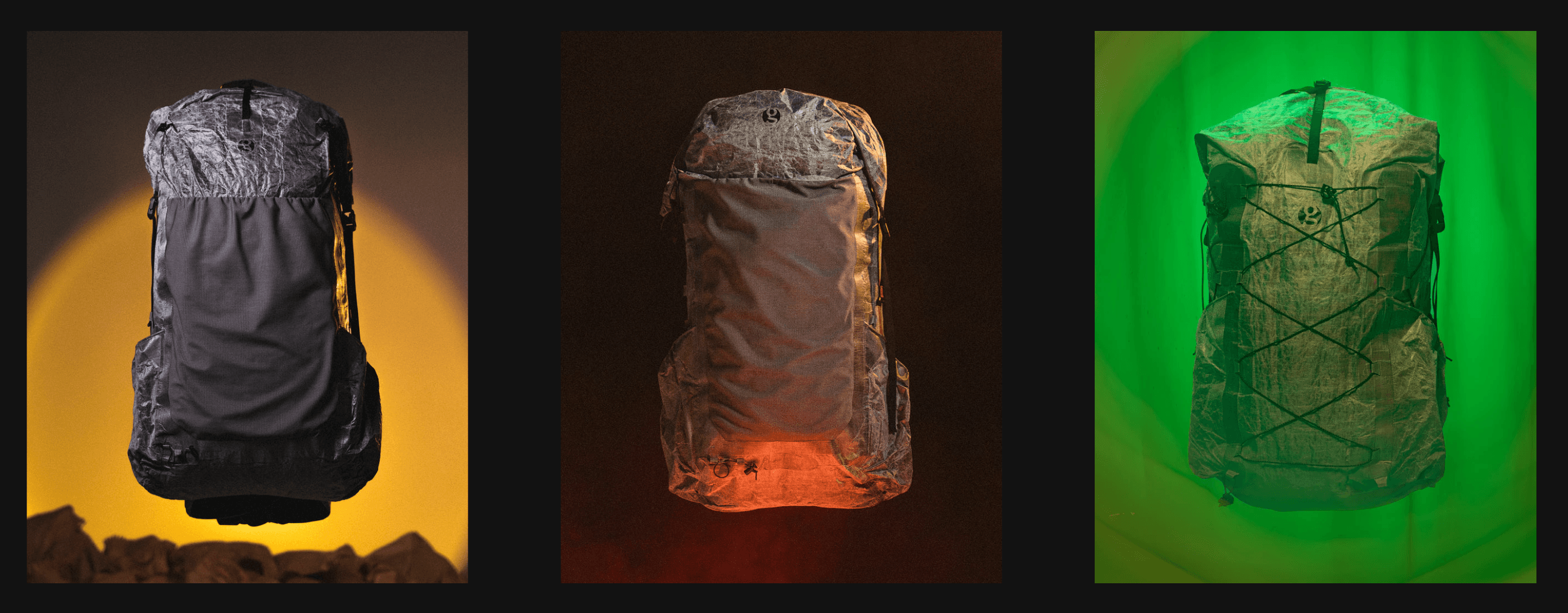
Gossamer Gear went all-in on ALUULA with their new Alchemy collection, a trio of packs spanning three use cases.
The Mirage 40 is the headline act. It weighs a head-turning 1 pound, 3.4 ounces despite having a removable carbon-fiber frame and a fully padded hipbelt. That’s lighter than the Zpacks Arc Haul Ultra series — which has been the benchmark for framed ultralight packs for years. Features include a carbon fiber X-frame with load lifters, a full suite of external pockets, a curved trampoline back panel, and side compression straps. At $450, it’s not cheap, and it’s clearly built for hikers who already have an ultra-dialed kit. It looks like it’s designed for ultralighters who have their lightweight setup completely dialed — as with all ultralight packs, performance under load remains to be tested at scale.
The Murmur 36, Gossamer Gear’s classic frameless option, also got the Alchemy treatment. It’s now waterproof and even more durable than before — a new contender for the best frameless super-ultralight pack. And rounding out the line, the Elixir 20 daypack weighs just 6.2 oz and is made with the same ALUULA Graflyte — waterproof, welded, and outperforming both Dyneema and Challenge ULTRA.
Mountain Hardwear Alakazam
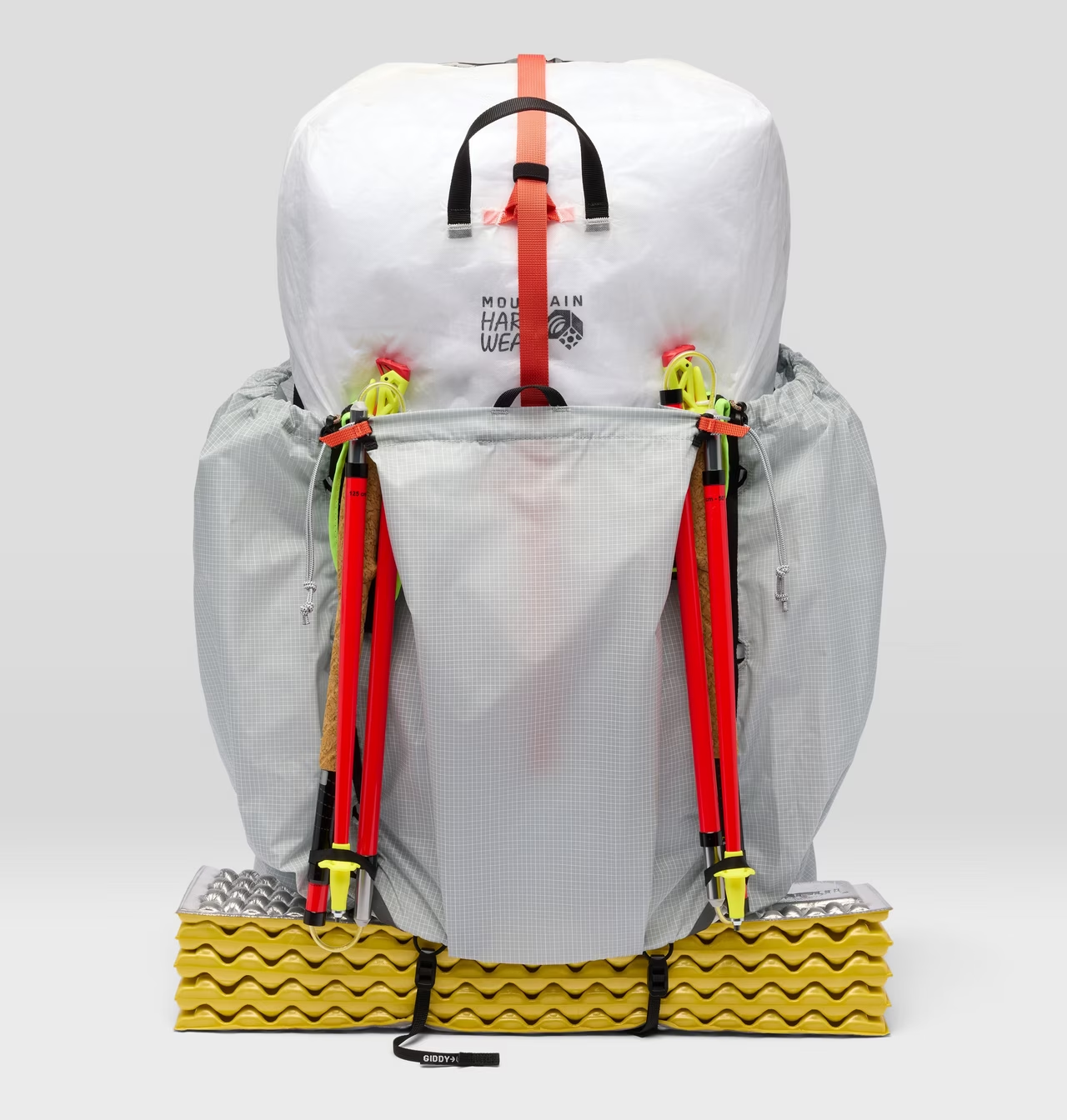
Mountain Hardwear — better known for apparel than packs — made a genuine swing at the ultralight space with the Alakazam. With its UHMWPE ALUULA fabric and 1-pound, 14.3-ounce weight for the 60-liter version, the Alakazam evokes the designs from Hyperlite Mountain Gear. It’s a feature-rich pack, too: it uses a swivel hipbelt that distributes the load naturally, a patented compression system to keep the pack from bouncing during movement, and a V-shaped aluminum frame with dual-density foam shoulder straps and a mesh overlay for airflow.
The catch, as with the Mirage 40, is price: the Alakazam 45L retails for $575. That’s significant even by ultralight pack standards. A super-high price tag combined with odd pocket sizing gives some reviewers pause. Still, if you’re in the market for a premium sub-2-lb framed pack with a brand warranty and a conventional suspension system, there’s nothing quite like it yet.
Shelters: Livability Gets a Bump
Big Agnes Sarvis VST 2
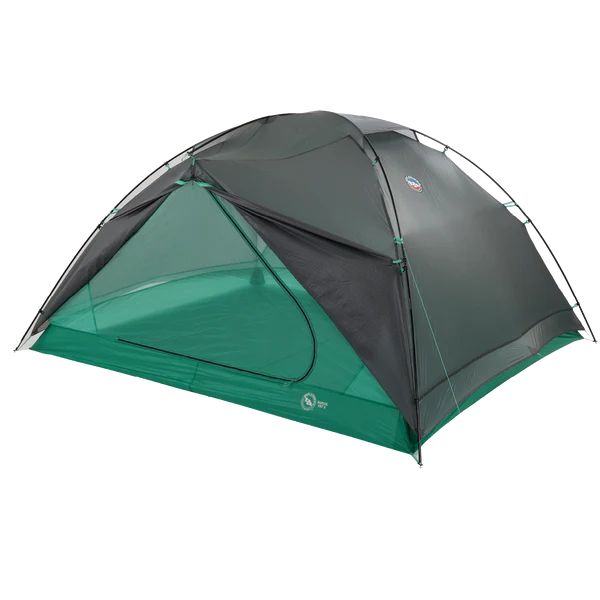
The most intriguing new tent of 2026 is Big Agnes’ new VST line, and specifically the Sarvis VST 2. The new-for-2026 Sarvis VST is a 2.5-pound ultralight freestanding tent with a hybrid single/double wall construction — the ceiling is mesh, but the sidewalls are exposed — giving you fly-first pitching and lower weight, at the cost of increased condensation contact potential with the sidewalls.
The interior is legitimately roomy. At 2.5 pounds, the Sarvis VST offers 32 square feet and can fit two 25-inch pads — something the Copper Spur UL2 can’t claim. It uses proprietary HyperBead fabric for strength and durability, solution-dyed recycled polyester for dimensional stability, and YKK DynaPel fly zippers with no intentionally added PFAS. It’s new and unproven at this point, but the spec sheet is compelling for a two-person freestanding tent under three pounds.
Updated NEMO Dragonfly
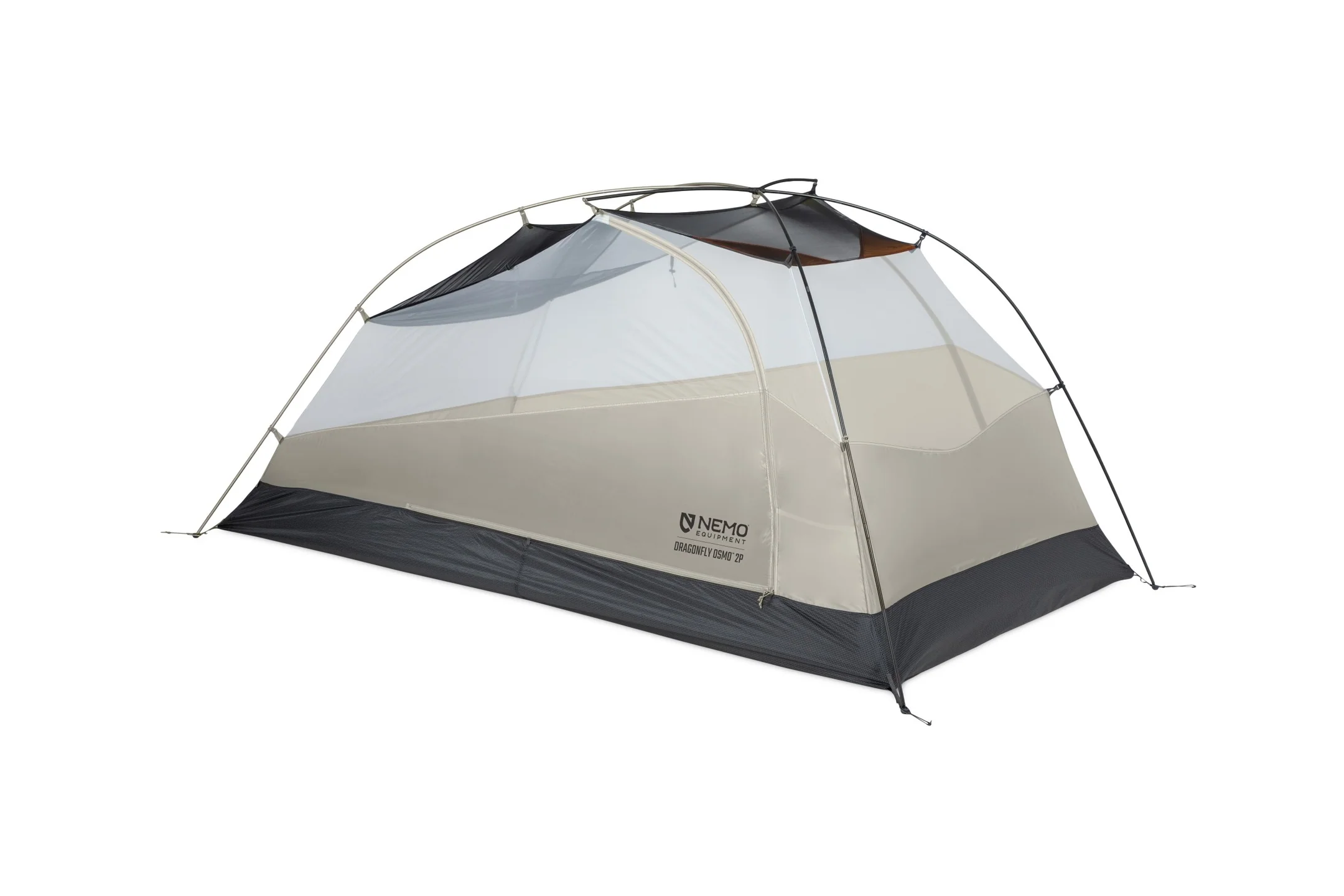
The Dragonfly OSMO is already one of the best freestanding ultralight tents you can buy, and the 2026 update tightens it further. NEMO took what was already a successful formula and tweaked it: a new ridgepole design shifts the peak height closer to the head of the tent and takes the sidewalls closer to vertical for more headroom, and the rain fly now hits closer to the ground for increased protection — with fabrics now solution dyed as well. With a packed weight of 3 pounds, 5 ounces, it remains one of the most well-rounded tents on the market. Not an ultralight tent by strict definition, but a compelling choice if you prioritize livability and weather resistance.
Sleep Systems: Warmth-to-Weight Gets Serious
Exped Ultra 6.5R Sleeping Pad
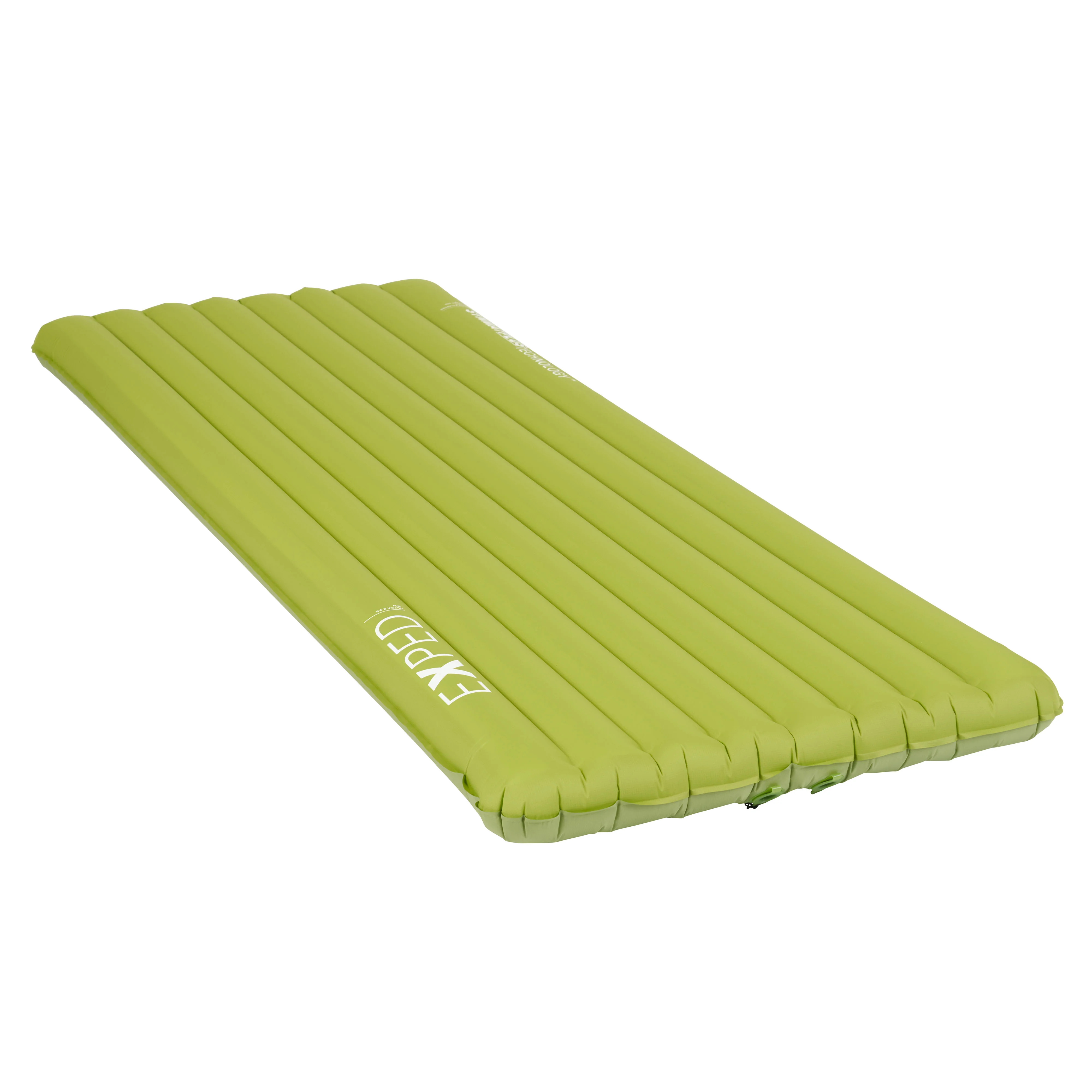
This is one of the most significant sleep system releases in a few years. In 2026, Exped launched a 6.5 R-value sleeping pad that is one of its lightest yet, using new Synmat Plus Technology that boosts warmth and cuts crinkle noise. The flagship mummy version — the one with the strongest warmth-to-weight claim — is highlighted as having the best warmth-to-weight ratio among all-season sleeping pads, weighing 12 ounces and equating to 56.7 grams per R-value.
Context matters here. NEMO’s Tensor Extreme Conditions pad actually has a better warmth-to-weight ratio overall, but Exped’s claim holds up specifically within the “all-season” category — and the Tensor EC’s R-8.5 rating is excessive for most casual or warm-weather camping. If you’re frequently doing shoulder-season trips into the 20s at night and want to consolidate to a single pad, the Ultra 6.5R at $200 across all sizes is worth a serious look.
One trade-off: the Ultra 6.5R uses Synmat Plus Technology, which leverages both reflective foil and synthetic insulation to boost warmth and reduce crinkle noises — an improvement over earlier Exped pads, which were already among the quietest on the market compared to options like the NeoAir.
Rain Protection: OR’s Helium Finally Grows Up
The Outdoor Research Helium has been a thru-hiker staple for years — beloved for its packability, occasionally criticized for its breathability. For spring 2026, OR replaced the Helium Rain entirely with the Helium UL. The newest version features an updated 2.75-layer construction and 15-denier shell, which drops the weight to just 5.7 ounces.
The membrane change is the real story. It’s now made with 2.75L Dermizax instead of 2.5L Pertex Shield+, resulting in improved waterproof breathability and a more textural, less plastic-y feel on the inside face. The “.75” part of that construction equation is a printed inner lining — making the Helium UL improved on the breathability and comfort front.
Honest caveat: breathability is still the Helium UL’s biggest weakness — despite a 20,000mm breathability rating, it falls well short of premium 3-layer shells featuring moisture-wicking liners and Gore-Tex membranes. This is an emergency and shoulder-season shell, not a hard-hiking rain jacket. But at 5.7 ounces with a legitimate 20,000mm waterproof rating and a stuffs-into-its-own-pocket packed size, it’s one of the best pure weight-savings moves you can make in your kit if you’re still carrying something heavier.
Footwear and Traction
HOKA Speedgoat 7
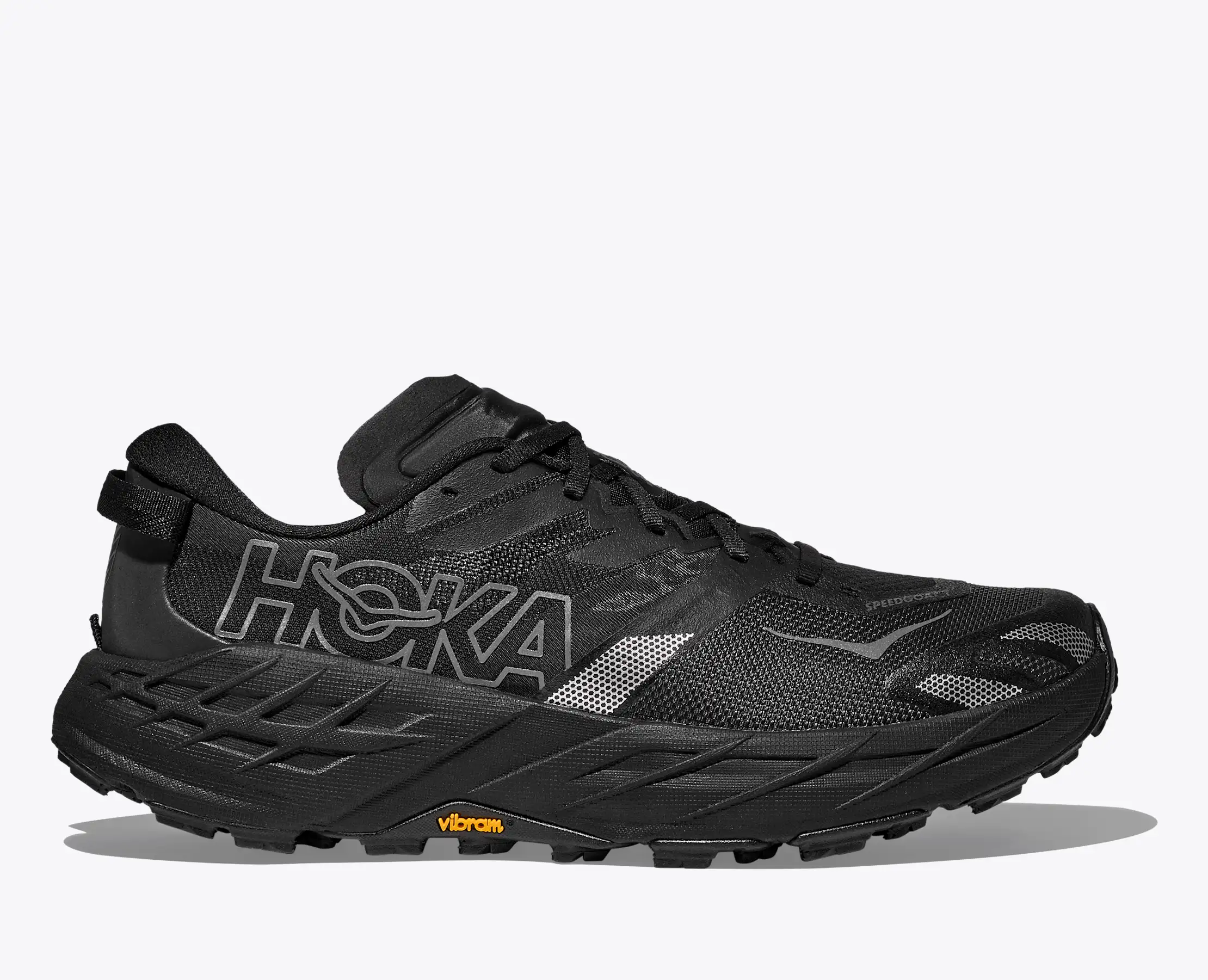
The most popular trail shoe in the ultralight community gets an incremental but meaningful refresh. The Speedgoat 7 boasts bouncier, higher energy return midsole foam, with an improved heel collar and locked-in fit that won’t stretch out — all solid micro-improvements on the 6, and a great shoe for technical terrain. If you already run Speedgoats, the 7 is a genuine step up. If you skipped the 6 (a lot of people did), the 7 is a good reentry point.
Kahtoola MICROspikes Ghost
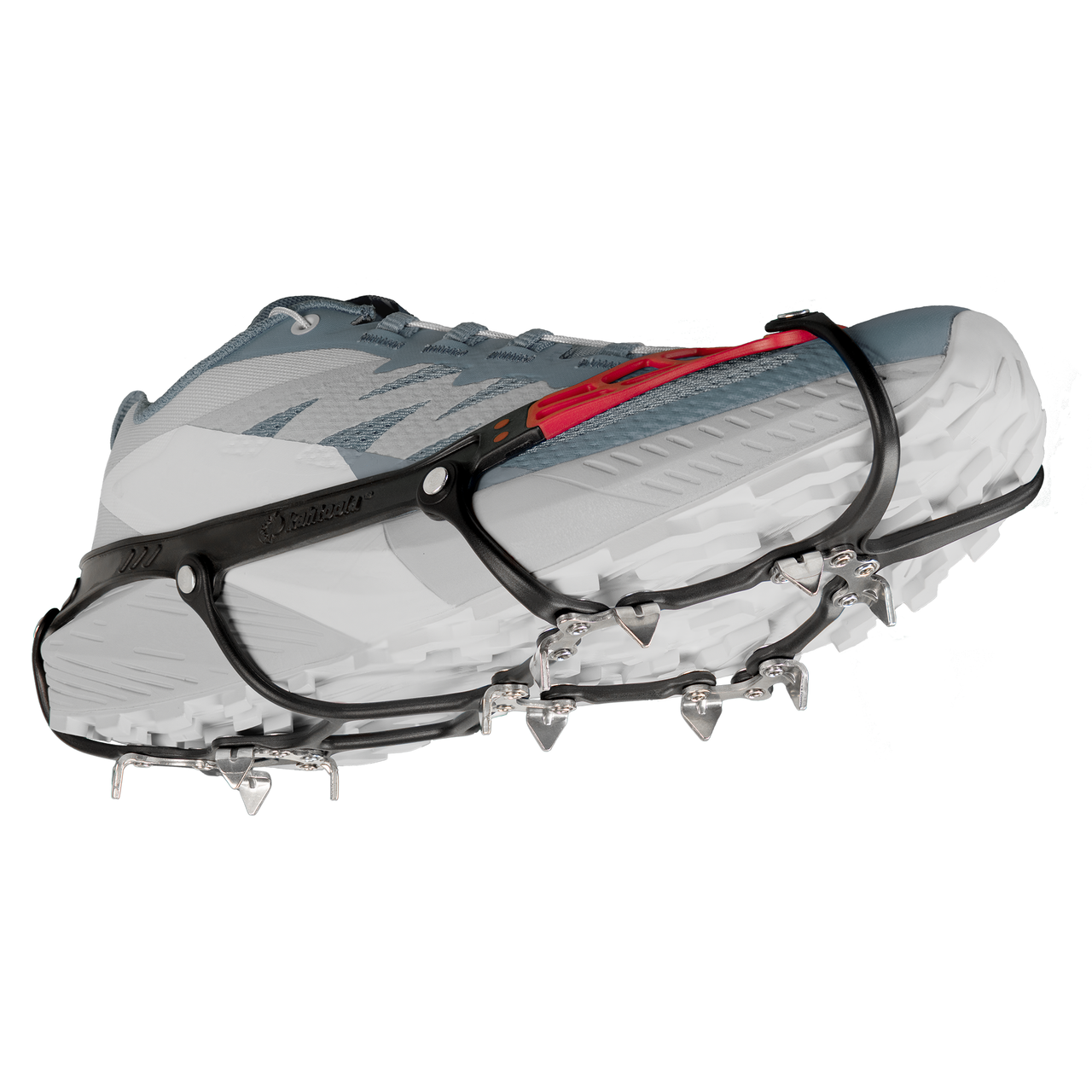
This one deserves more attention in the ultralight community. The MICROspikes Ghost replaces steel chains with a tough TPU matrix to reduce weight by 43%, while 12 heat-treated stainless steel spikes still deliver aggressive grip and a hybrid elastomer provides packability and secure fit.
The numbers: a size medium pair of Ghosts weighs 6.6 ounces (187 grams), compared to 11.8 ounces (336 grams) for standard MICROspikes. That’s a 5.2-ounce savings on a piece of gear you’re only carrying when you need it — exactly the kind of situational item worth trimming. Functionally, reviewers didn’t notice a large difference in the quality of traction provided between the two designs. There’s one caveat: they can ball up a bit more than original MICROspikes on wet, high-moisture snow, because there’s less play in the harness compared to the looser chains on standard MICROspikes. For most three-season thru-hikers crossing icy passes rather than running technical winter routes, that’s an acceptable trade.
Practical Tips
- ALUULA Graflyte is exciting, but early reports suggest it rewards careful handling. It’s not as bulletproof as Dyneema in abrasion scenarios. If your trips involve heavy bushwhacking or rocky scrambles, approach it with eyes open.
- The Exped Ultra 6.5R mummy configuration offers the best warmth-to-weight ratio in the line. If you go rectangular, compare carefully against the NEMO Tensor All-Season (14 oz, R-5.4) before pulling the trigger.
- The Helium UL is not a backcountry storm jacket. Pair it with a wind layer and think of it as your “surprise afternoon shower” insurance policy, not your primary wet-weather armor.
- The Kahtoola Ghost works best with trail runners and soft-sole footwear. If you’re wearing stiff hiking boots, the original MICROspikes still fit and grip better.
- The Big Agnes Sarvis VST is exciting but unproven in the field. Hold off on pulling the trigger until some full-season reviews come in — specifically around the condensation behavior of that hybrid wall design.
- Buy the Gossamer Gear Alchemy lineup based on how you actually use your pack. The Mirage 40 makes sense if you’re carrying 20 lbs or under and want the lightest possible framed option. The Murmur 36 is for genuine gram-weenies who already have a sub-10-lb kit dialed. Don’t buy either if you’re consistently carrying bear canisters, camp chairs, or other bulky items.
Wrapping Up
2026 is a genuinely strong gear year — not because everything is new, but because several long-standing weak points in ultralight systems are finally getting addressed. ALUULA Graflyte is bringing real waterproofing and impressive weight to framed packs; the Exped Ultra 6.5R is forcing the sleeping pad market to reckon with warmth-to-weight tradeoffs at a new level; and the Kahtoola Ghost proves you don’t have to choose between traction and a light pack. If you’re only buying one thing this season, I’d start with the Exped Ultra 6.5R — it’s the most straightforward upgrade for the broadest range of backpackers, at a price that doesn’t require a long conversation with your bank account.