Durston Gear Kakwa 55 Review
The Durston Kakwa 55 is a sub-2-lb ultralight pack that doesn't compromise on load carrying, durability, or pocket design — a rare combination at its $260 price point.
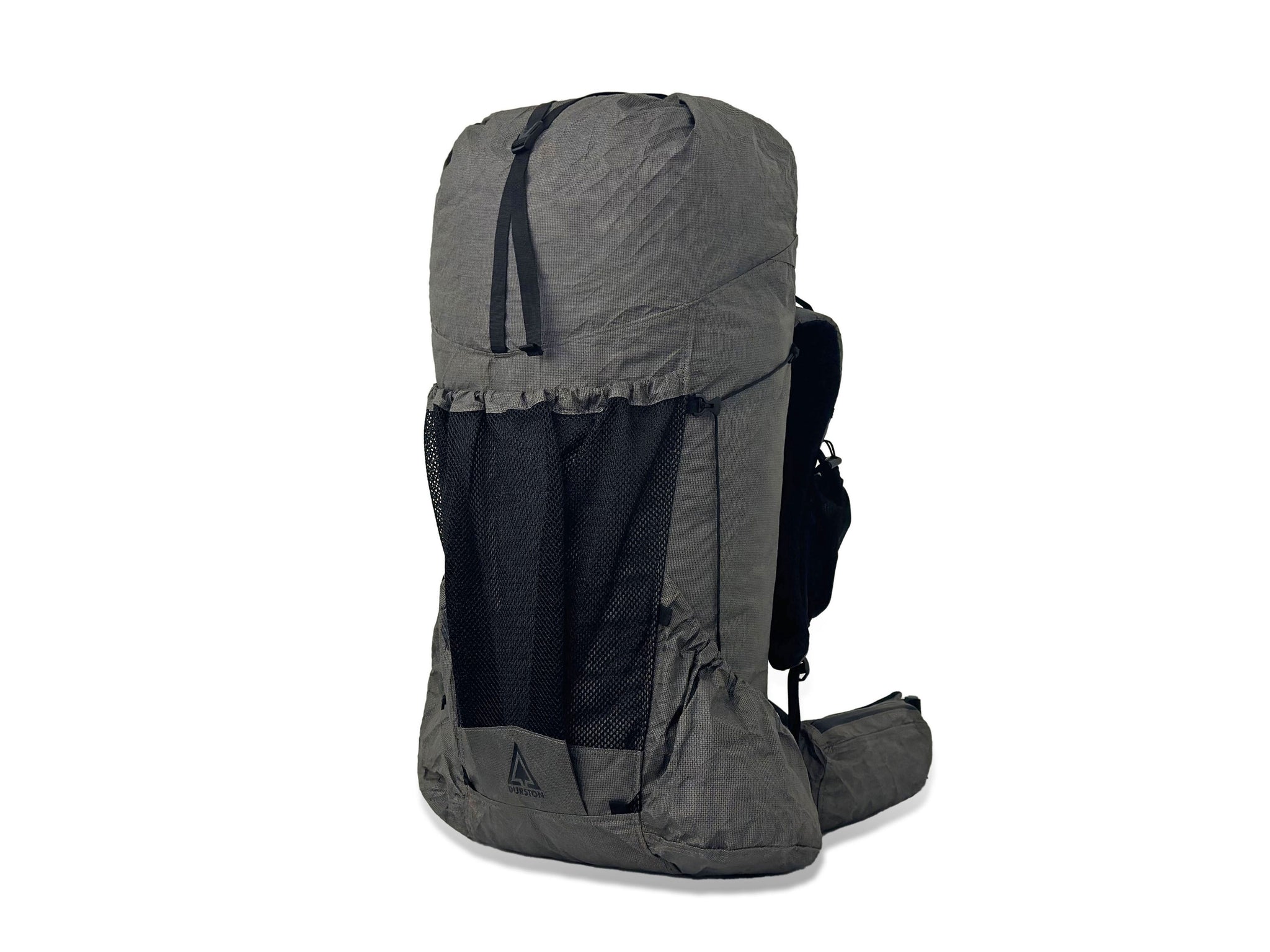
Overview
The Kakwa 55 is Durston’s premium ultralight, multi-day pack designed from first principles of load carrying and ergonomics — developed from Dan Durston’s thousands of miles of backpacking experience — offering class-leading quality, load carrying, materials, and pocket design while staying under 2 lbs. It’s built for thru-hikers and serious multi-day backpackers who want genuine suspension performance without the weight penalty that usually comes with it. If you’ve been burned by frameless or semi-frame packs that fall apart under a real load, this one deserves your attention.
Key Specs
| Spec | Detail |
|---|---|
| Weight | 882g / ~31 oz (size-dependent; 795–882g across sizes) |
| Volume | 55L main compartment + ~15L external pockets |
| Fabric | Ultra 200X (Challenge Outdoor) — UHMWPE laminate |
| Frame | Hollow aluminum inverted U (90g / 3 oz, removable) |
| Back Pad | 5mm foam (15g / 0.5 oz, removable) |
| Max Rated Load | 20 kg / 45 lbs |
| Pockets | 8 total (front mesh, 2 side, 2 hip belt, 2 shoulder strap, 1 side zip) |
| Torso Sizing | Fixed lengths from 15”–22”; hip belt tied to torso size (28”–40”) |
| Waterproof | Yes (laminated film; seams and hydration port are weak points) |
| Price | ~$260 (Ultra 200X); ~$200 (UltraGrid) |
Performance
Load Carrying
This is where the Kakwa earns its reputation. The Kakwa 55 brings genuine load carrying capability into the sub-2-lb weight class. Other packs this light generally sacrifice load carrying by omitting load lifters, using frame stays that lack horizontal structure, and relying on less ergonomic shoulder strap and hip belt shapes — the Kakwa improves that tradeoff through more efficient design and advanced materials, including UHMWPE fabric and hollow aluminum tubing.
The hip belt is sewn directly into the pack and connects to an aluminum hoop instead of straight frame stays, allowing for impressive weight transfer. This tubular aluminum frame stabilizes the pack both vertically and horizontally, which notably limits the amount of “barreling” the pack does when fully loaded. That horizontal rigidity is something most sub-2-lb packs simply don’t offer, and you feel it immediately with a heavier load. One GearJunkie reviewer hauled 30+ pounds on the Colorado Trail during a rainstorm and found the comfort and weight transfer “astoundingly well done.”
Under loads up to about 35 pounds, the Kakwa rides smoothly and stably. Durston claims the pack can handle 45 pounds, but in testing that’s a bit ambitious — most lightweight backpackers won’t approach that weight unless shuttling gear to a base camp. Realistically, expect excellent carry up to around 35 lbs; beyond that, a heavier pack with more padding will serve you better.
Durability
Ultra 200X is the real headline here. It’s dominantly woven UHMWPE fibers — several times stronger and more abrasion resistant than traditional nylon pack fabrics — laminated to a film backing to make the material waterproof, with the ‘X’ version adding a tougher inner film. One reviewer tested the Kakwa as a canyoneering pack in Utah — abrasive slickrock in narrow slot canyons, sandy washes, bushwhacking through thorny brush and cactus — and after half a dozen outings, it still looked almost brand new, with no mesh tears, loose stitches, or sand ingrained in the fabric.
Waterproofing
The laminated fabric itself sheds water well, and in straightforward rain the pack performs admirably. However, seepage through seams and the hydration port creates weak points that prevent the pack from being 100% waterproof. With a pack liner and attention to keeping the hydration port out of the rain, the Kakwa 55 remains a viable option for hikers willing to take modest precautions to keep their gear dry. For a multi-week thru-hike through predictably wet conditions, I’d keep a liner handy regardless.
Pockets & Access
The Kakwa is a classic ultralight roll-top pack with a front mesh stretch pocket and side bottle pockets, shoulder strap pockets, and hip belt pockets, allowing you to access the essentials you need during the day without having to stop and open the main compartment. The large static front mesh pocket uses pleated slack rather than stretch mesh — more durable and less prone to ripping. Two large top-entry side pockets carry water bottles, with one featuring a bonus zippered sub-pocket for a hat or gloves accessible while wearing the pack, rounded out by two large hip belt pockets and a pair of built-in shoulder strap pockets.
Durston deserves credit for listening to community feedback and constantly tweaking the design. The 2024 model notably enlarged the front mesh pocket, and the S-shaped shoulder straps are a thoughtful touch: they curve around the chest instead of running directly over it, which works better for people with more developed chests or breasts than a standard J-shaped strap would.
Fit & Comfort
The hip belt is sewn to the back of the pack at the point where the frame terminates, providing optimal load transfer to the hips — it doesn’t get more efficient than this. The tradeoff is that the length of the hip belt is tied to torso length, which is bound to miss some portion of potential users — particularly people who are very short and very round. Check Durston’s sizing chart carefully before ordering; there’s no getting around a poor fit with a sewn-on hip belt.
The back panel is a mixed story. The frame and back panel feel quite rigid and hard, lacking the plush cushioning found in some competitors, though Durston uses a soft fabric to back the frame. And because there’s no mesh trampoline, the Ultra 200X makes for a sticky, impermeable material against the back — you’ll miss a breathable mesh panel on humid days. Most thru-hikers quickly become acclimated to the sweaty back, but more casual backpackers might be bothered.
One early 2024 buckle design briefly caused issues — Durston introduced a hip belt buckle with clip “wings” meant for cold hands, but it dug into skin under heavy loads and could unbuckle when bending over. Durston reverted to the original design later in 2024. The 2024 and later models should not have this problem.
Off-Trail Use
One legitimate criticism for bushwhackers: the roll-top closure can get hung up easily off-trail when bushwhacking or winter hiking in deep snow, where the pack is in regular contact with overhead branches — frustrating in practice, though unlikely to bother on-trail hikers.
Pros & Cons
Pros
- Best-in-class load carrying for a sub-2-lb pack — load lifters and a sewn hip belt are rare at this weight
- Ultra 200X fabric is tougher than DCF and laughs at abrasion and puncture
- 8-pocket layout covers nearly every on-trail access need without opening the main compartment
- Very competitive $260 price point against packs that cost $400–600 and offer less durability
- Iterative design improvements based on community feedback — the pack keeps getting better
- Tapered shape helps keep the load centered and stable on technical terrain
Cons
- No mesh back panel — expect a sweaty back in warm weather
- Waterproofing has weak points at seams and hydration port; carry a liner in serious rain
- Hip belt fit is locked to torso length — unusual body proportions may be left out
- Roll-top closure snags overhead vegetation during off-trail travel or deep-snow conditions
- The thin back pad doesn’t insulate well from hard objects — you can feel a bear canister poking through
- Nearly always sold out, making it difficult to get one for a near-future trip
- No internal hydration sleeve or bladder hanger (hydration port is present)
Who Should Buy This
The Kakwa 55 is the pack for the hiker who wants to go light but refuses to stop at 25 lbs — think late-season trips with extra insulation, long water carries in the desert, or week-plus food hauls on the CDT. It’s an excellent choice for serious ultralight backpackers who demand long-term durability, built to withstand the rigors of extended adventures and rugged off-trail pursuits. It’s also a legitimate first ultralight pack for someone stepping down from a 4-lb trail pack, since the suspension system is forgiving enough to handle the occasional over-packing day. It’s not the right call if you frequently bushwhack in thick brush, run hot and need airflow at the back, or have a body shape that sits at the edges of Durston’s sizing matrix.
Verdict
The Kakwa 55 does something that should be hard: it delivers real suspension performance — load lifters, a sewn hip belt, horizontal frame rigidity — in a package under 900 grams, wrapped in one of the toughest fabrics available for the weight. With top-of-the-line Ultra 200X fabric, a sub-two-pound weight, an intelligently designed external storage suite, and best-in-class weight transfer, all for an incredible value, it’s easily in contention for the best ultralight backpack on the market. The back ventilation and seam waterproofing are genuine compromises, not marketing spin — but for most thru-hikers and multi-day backpackers, they’re manageable ones. If you can get one in your size before it sells out, buy it.
Rating: 9/10